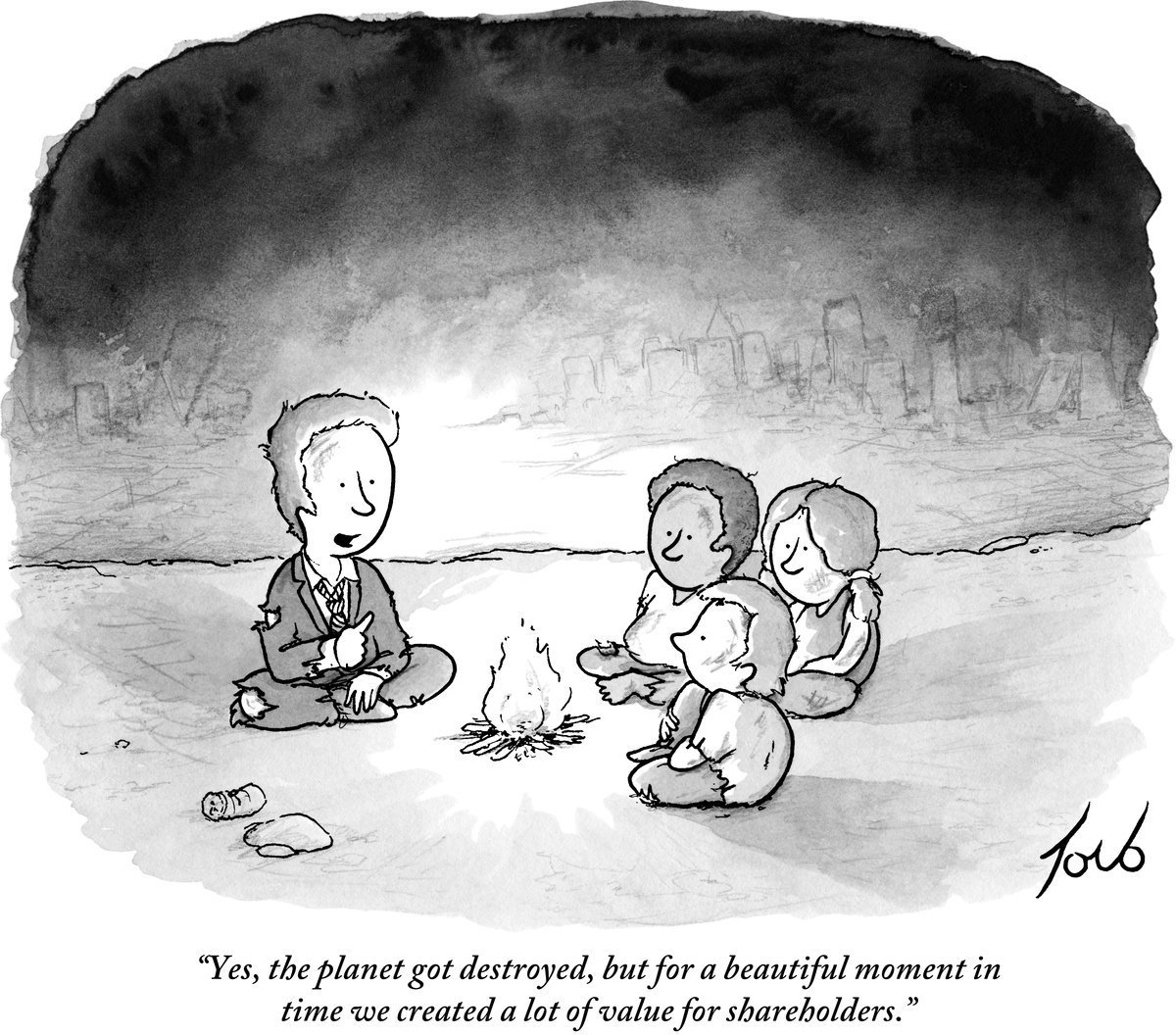
For the New Yorker
Why?
Since we are beginning the semester by introducing various theoretical lenses through which cultural production can be viewed and scrutinized, I thought it best to start with the most overarching consideration: “We are not human beings having a spiritual experience; we are spiritual beings having a human experience” (President Thomas S. Monson quoting Pierre Teilhard de Chardin). And, as spiritual beings, how do we deal with the ethical and moral ramifications of moving through this world?
Keep our discussions and readings about spirituality, ethics, and morality in mind as we talk about gender studies, postcolonialism, Marxism, postmodernism, and other topics since your POV as a moral being colors all other factors.
Required
The Gospel Vision of the Arts, ChurchofJesusChrist.org
If the Church’s website is causing you problems, you can also access a PDF of the piece by clicking here.
Supplementary Readings
- Religion/Spirituality and the Arts
-
The Arts and the Spirit of the Lord, BYU Speeches
“It is sad but true that, almost as a rule, our most gifted members are drawn to the world. They who are most capable to preserve our cultural heritage and to extend it, because of the enticements of the world, seek rather to replace it. That is so easy to do because for the most part they do not have that intent. They think that what they do is to improve it. Unfortunately many of them will live to learn that indeed, ‘Many men struggle to climb to reach the top of the ladder, only to find that it is leaning against the wrong wall.’”The Words Religion and Art, A Very Brief History of Religion and Art, Some Words to Describe Spiritual Art, Conclusions, On the Strange Place of Religion in Contemporary Art
“It seems that art has been basically religious or ritual in nature, even in times and places where there was no word for what we call religion or art. In the 20th century, some writers still told the history of art that way, as if art and religion were essentially a unity. André Malraux may have been one of the last; his picture-book called La Musée imaginaire de la sculpture mondial (1952–54) doesn’t say much, but when it’s leafed through it seems to propose a strange and dramatic religious purpose for the world’s art.”Spirituality, Art21
“‘Spirituality is such a vibrant and integral part of our lives that even our changing times and all the apparent obstacles have not stifled the powerful partnership of spirituality and art in the modern era,’ writes Lynn M. Herbert in her essay for the Companion Book to the Art in the Twenty-First Century series. ‘The realm of the spiritual is mysterious and inviting,’ writes Herbert, ‘It is a place where we are encouraged to explore the unknown.’” - Ethics in Graphic Design
-
How to Practice Ethical Design, Muzli
This is part 2 of the required reading above. “Although we might consider ourselves to be ethical people, many of us aren’t thinking of ethics intentionally in our work. The objective here is to help designers reframe their design goal to be more reflective of human values. Adapted from various experts and ethicists at the University of Washington, IDEO, Google, and Artefact, Ethical Design Thinking encourages designers to think inclusively and consider the social impact of their design goal.”Should Designers Take Responsibility for the Ethics of Their Clients?, AIGIA Eye of Design
“Broadly speaking, my beef is that designers often like to speak of a higher purpose and the seemingly limitless possibility of design for the greater good, but how do they go about fulfilling those ideals on the payroll of a company that flouts them at every turn? Worse, some of the companies designers are so keen to serve are masking a lack of ethics behind a beautifully polished veneer; a selection of morally questionable actions perpetrated by companies on that wish list include the dissemination of fake news, manufacturing products in factories with non-existent rights and high suicide rates among its workers, and driving up the cost of property rental in cities across the world.”Infographics Lie. Here’s How To Spot The B.S., Fast Company
“Time and time again we have seen that data visualizations can easily be manipulated to lie. By misrepresenting, altering, or faking the data they visualize, data scientists can twist public opinion to their benefit and even profit at our expense.” - Ethics According to Mike Monteiro
-
Caveat emptor: be aware that Mike is a hyperbolic speaker/writer who liberally peppers his speech with profanity. There is some good information in here, but there are also a lot of rough edges. Take him with a large grain of salt (more like a giant salt lick).
Ethics Can’t Be a Side Hustle, Dear Design Student
“If you want to do good work, and I really hope you do, start doing it at your day job. Start asking questions about what you’re building. Start asking questions about who benefits from what you’re building. Start asking questions about who gets hurt by what you’re building. And take a look at your team. Does it look like the audience you’re trying to reach? Especially if you’re building something in the social sphere, where trust and safety is paramount. Ask your managers these questions as well. And if you’re not satisfied with their answers stop working. Designing something without understanding the ramifications of what it does is as unethical as designing something you know to be harmful.”Ethics and Paying Rent, Dear Design Student
“Throughout your career, you’ll find yourself in spots where your only options might be doing a little work for one of the Travis Kalanicks of the world, or starving. By all means, don’t starve! Just be honest with yourself about what you’re doing, why you’re doing it, and for how long you’re going to do it. Because once you lose sight of that, the justifications start. (“I’m going to change things from the inside.” ) And realize if you keep making those decisions, they end up defining your career. The idea that you can work unethically, build up a reputation, and then swing that ship around into ethical waters is also a fallacy. By that point, you do indeed have a reputation, but not the one you wanted. You’ll find a bad reputation is the hardest thing in the world to change.”A Designer’s Code of Ethics, Dear Design Student
“Design does not exist in a vacuum. Society is the biggest system we can impact and everything you do is a part of that system, good and bad. Ultimately we must judge the value of our work based on that impact, rather than any aesthetic considerations. An object that is designed to harm people cannot be said to be well-designed, no matter how aesthetically pleasing it might be, because to design it well is to design it to harm others. Nothing a totalitarian regime designs is well-designed because it has been designed by a totalitarian regime.”Doing the Right Thing the Wrong Way, Dear Design Student
“So how do ideas, which start out helpful and by all measure ethically sound, turn into companies with the ethical charm of a decapitated horse head bleeding out onto your silk sheets? Easy. You introduce people. Even easier, you introduce people with a very narrow set of life experiences. […] Especially when those designers have the same life experiences. Celebrate the same holidays. Went to the same school. Look like each other. In other words, white boys solving problems for white boys. They’ve never been harassed, so they don’t think of solving for that problem. And even if they do, they don’t solve that problem from a place of experience. They’ve never had a cab refuse to stop for them, so they don’t solve for that problem. They’ve never had a host refuse to rent them a room based on race, so they don’t solve for that problem. They’ve never had a host be a little too eager to rent them a room, so they don’t solve for that problem. And it’s too easy to think that terrible things don’t actually happen as often as they happen. But they do.” - Ethics in Photography
-
Posing Questions of Photographic Ethics, The New York Times
“During this year’s World Press photo contest, about 20 percent of the entrants that reached the second-to-last round of judging were disqualified for significantly altering images in post processing and Giovanni Troilo was stripped of a first prize in the face of charges of misrepresentation and posing images (the photographer said he had ‘made a mistake,’ but had not intended to deceive). In the vigorous debate that followed, some ridiculed the concept of 'objective photojournalism’ as philosophically tenuous in a postmodern world.”Staging, Manipulation and Truth in Photography, The New York Times
“A staged photo is not acceptable in news pictures that are thought to depict real-world situations and events. Portraiture, fashion and still lifes are, of course, produced and directed, which should be obvious to the viewer. That said, no publication is immune to getting burned. For example, one of our photojournalists covering conflict in Lebanon once gave me a heads-up that I wasn’t going to see a dramatic image of a dead baby being paraded through the streets. That’s because the crowd saw the photographers and actually dug the baby’s corpse from its grave, held it aloft and paraded it. He refused to take that picture.”The Ethics of Photojournalism, PetaPixel
“If this picture would be posted online in any discussion forum, there would be a lot of voices that would support this claim of, ‘how could he take a picture in this situation without providing any sort of help?’ The same arguments could be heard during the migration crisis in Europe or the conflict zones in the Middle East. In my opinion this shows the dilemma of the ethics of photojournalism. On the one hand these kinds of people seek out dangerous situations where they document people that obviously need help; on the other hand, it is impossible for a single photographer to help all these people. So what is the actual solution to this conflict? Should Photojournalism cease to exist, and human suffering go undocumented? Should we all sit in our comforting homes and turn a willfully blind eye to critical areas of the world, while we are in a perfectly safe environment?”Untitled (Cowboy): Behind Richard Prince’s Photographs & Appropriation | 100 Photos | TIME
“His luminous 1989 photographs of Marlboro ads, minus the text, made Richard Prince a deeply controversial—and eventually very wealthy—artist of appropriation.” - Ethics in Illustration
-
(Why) Do illustrators need to talk about ethics ?, Julien Posture
“I’ve recently been asked by the Québec association of illustrators (Illustration Québec) to coordinate an ethical committee that would come up with recommendations about a vast array of topics, from inclusive communication to the stance regarding free labor through the power of representations in our work as illustrators. Before even saying yes, I had to ask myself (and the internet), what does it mean and why is it important to care about ethics as an illustrator?”The True Power of Story, RandyBishopArt.com
This four-part essay outlines Bishop's views on narrative as a powerful force in shaping morality.
“Morality is a philosophical issue that has been pondered on and argued for thousands of years. The purpose of this post is not to weigh in on what I believe to be right or wrong, but to discuss how narrative entertainment can reaffirm or alter one's moral beliefs. I believe there are two separate issues to discuss when it comes to the effect of stories on audiences: content and narrative.”
Design and Ethics – Can You Stick to Your Beliefs?, Digital Arts
“Unlike doctors, lawyers or the police, designers are not often forced to make life-and-death ethical decisions. But the messages designers choose to impart and how they communicate them may have the power to influence many lives. What, then, are a designer’s ethical responsibilities in the creative process?”
- Honesty
-
And Nothing but the Truth, This American Life
“Reporter Nazanin Rafsanjani brings us the story of Brad Blanton, a psychologist who founded a philosophy called "Radical Honesty.” Brad believes that the way to be happy is to tell the truth all the time. This philosophy helped him help a lot of people as a therapist. But it got in the way a little when, in 2006, he left his practice, ran for a seat in the US Congress, and became that rarest of things: a political candidate who never lies.”Why Be Honest?, Psychology Today
"We all lie. Admittedly, most of do so only occasionally. But we still all do. Yet most of us also consider ourselves honest. In his book, The (Honest) Truth about Dishonesty, Dan Ariely offers evidence that we’re able to believe we’re honest even though we lie or cheat by doing so only in little ways. We’re therefore able to tell ourselves we’re mostly honest—that is, we’re only dishonest in ways that we think don’t matter. Apparently this strategy works: most of us don’t suffer serious cognitive dissonance over our integrity.”How Honesty Could Make You Happier, The New York Times
“I’ve been keeping an honesty journal for the past several months. With honesty much in the news lately — you might even say honesty is having a cultural moment — I wanted to reflect on my own. My 6-year-old daughter once told me that telling the truth made her feel “gold in her brain.” Could upping my personal honesty light up a pleasure center in my own brain?”
Response Questions
Respond to one question below in your weekly Reading Response. Remember to cite specific instances from the text to support your views.
- Preseident Kimball’s examples are largely from male artist, from hundreds of years ago, and involve very traditional mediums. How might you reconcile his non-professional, classical view of creative fields with contemporary applications?
- How might religion, spirituality, morality, and/or ethics impact what you choose to do within your creative practice? Be clear and specific about what those aspects encourage you to do and what they might direct you to avoid.
- In Glaser’s twelve-question Road to Hell, where do you find your limit and why? Why were the previous questions OK, but the remaining out of bounds? Now consider these jobs come to you when you have a spouse and children depending on you, and these jobs come after a couple of years of employment. Do you find yourself more willing to bend your morals or less? Why?