Sleepy Stan
Why?
Critical practices is an umbrella term that stems from the work of Anthony Dunne and Fiona Raby where design is used as a critical tool—to dissect socio-political issues and the design field itself to achieve aims outside of the commercial markets. It’s less about problem solving, and more about problem finding or problem framing. Under the auspices of critical practices are a few sub-practices: critical design, associative design, and speculative design. Keep in mind, that since these are emerging fields, terminology is still being debated. You’ll see some readings where “critical practices” and “critical design” are used synonymously. You’ll also see “critical design” and “speculative design” used similarly. Matt Malpass (supplementary reading) is the only one who differentiates between “critical design” and “associative design;” most people see those are the same thing.
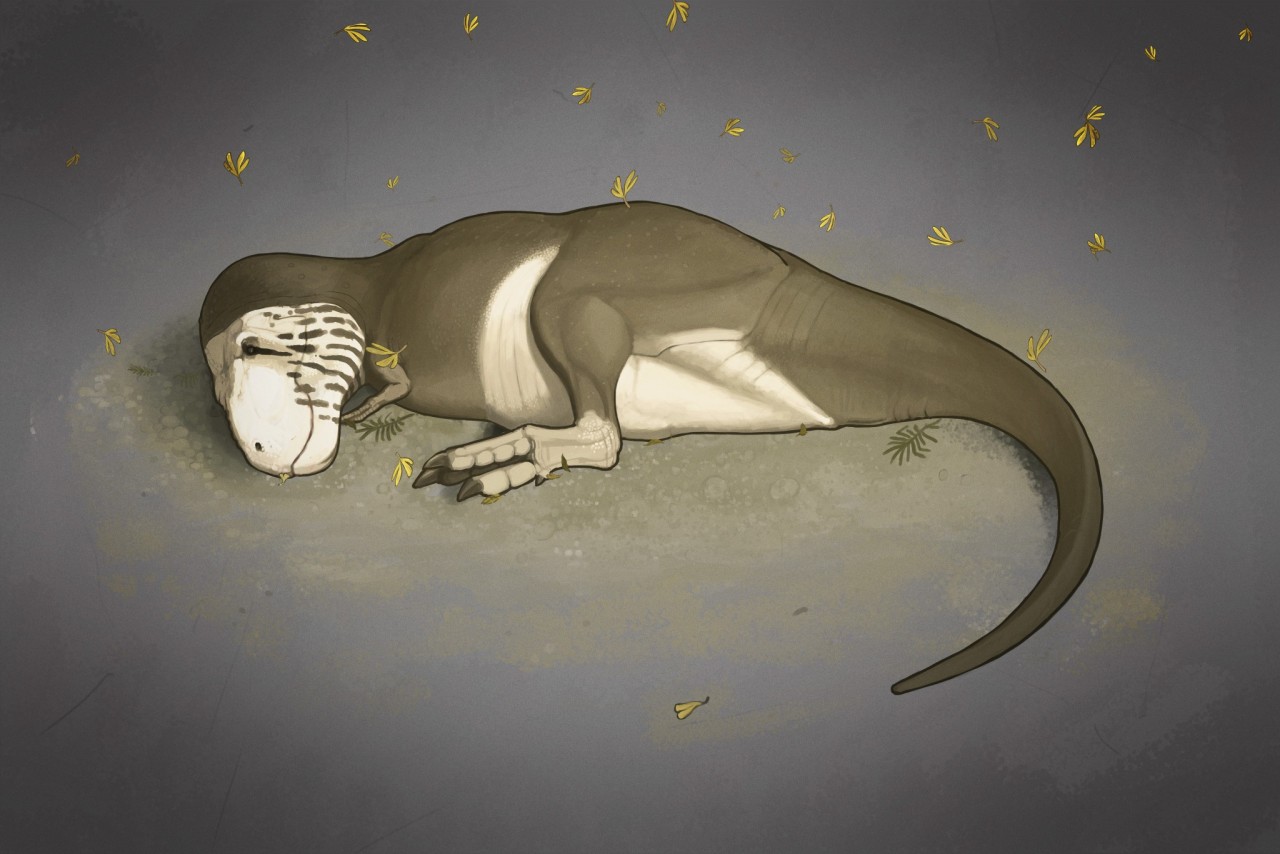
Speculative design is a key methodology within critical design. Speculative design is generally thought of as a forward looking practice—imagining possible futures. Another version of speculative design is design fiction which uses narrative prototypes (stories, films, television) to posit potential futures. One of the readings below is particularly interesting in that it involves looking backwards to speculate on what dinosaurs may have actually looked like and acted, rather than the standard illustrations to which we’ve become accustomed. Even in that case, design is being used as a critical practice to question the status quo.
Since this is our last reading for the semester, I hope that this gets you thinking not just about your design in the present, but your design in the future, and how you might be able to use your designs to challenge the status quo.
Required
Supplementary Readings
- Critical Design
-
What is Critical About Critical Design?
“Critical design is a research through design methodology that foregrounds the ethics of design practice, reveals potentially hidden agendas and values, and explores alternative design values. While it seems to be a timely fit for today’s socially, aesthetically, and ethically oriented approaches to HCI, its adoption seems surprisingly limited. We argue that its central concepts and methods are unclear and difficult to adopt. Rather than merely attempting to decode the intentions of its originators, Dunne and Raby, we instead turn to traditions of critical thought in the past 150 years to explore a range of critical ideas and their practical uses. We then suggest ways that these ideas and uses can be leveraged as practical resources for HCI researchers interested in critical design. We also offer readings of two designs, which are not billed as critical designs, but which we argue are critical using a broader formulation of the concept than the one found in the current literature.”Critical Design/Critical Futures 2015: Critical Design + Critical Futures
“How are contemporary designers and design theorists envisaging modes of design that are critical, future directed and challenge the status quo? In this round table panel, we explore and discuss the different ways in which forms of critical design are now being conceptualized and enacted from "speculative design” and transitional design to “discursive design” and beyond. Does the turn to critical design constitute a new kind of political and social engagement? Does it imply the need for new modes of critical design thinking beyond design thinking? Does it imply new modes of design pedagogy? Charlie Cannon, Susan Yelavich, Paolo Cardini and Cameron Tonkinwise.”
Critical Design and Empathetic Opportunities
“Dr Matt Malpass, programme quality coordinator and course coordinator of MA Industrial Design @ Central St Martins, gives a talk about critical design and empathy for social innovation.”
Critical Design as Approach to Next Thinking, The Design Journal
“Critical design offers opportunities to benefit considerably the future design thinking. This practice is based on premises that are meaningful for the whole design discipline if adopted as an integral part of design process. There are two valuable aspects, identified and discussed in this paper, that are underestimated or even omitted as quality criteria of the traditional industrial design practice, but are at the core of the critical design practice: it is critically concerned with future and aware of design’s potential in shaping it towards the preferable; and it is aimed at challenging the ideological constraints that limit the designers and the society, and impede the true progress of the humanity. Critical design thinking can be studied and applied as approach to favour the development of personal understanding and promote professional growth of all designers. It is proposed as a resource for expanding the meaning of design thinking.”
Beyond Design Thinking: an Incomplete Design Taxonomy, Critical Design Critical Futures
This article is a brief overview of contemporary thinking within design and covers the following movements and methodologies: design thinking, human-centered design, participatory design, critical design, discursive design, speculative design, design fiction, and positive sum design.
Unpleasant Design & Hostile Urban Architecture, 99% Invisible
The critical design part of this is the artists who chose to respond to and frustrate the “unpleasant design” near the end of the podcast.
“Benches in parks, train stations, bus shelters and other public places are meant to offer seating, but only for a limited duration. Many elements of such seats are subtly or overtly restrictive. Arm rests, for instance, indeed provide spaces to rest arms, but they also prevent people from lying down or sitting in anything but a prescribed position. This type of design strategy is sometimes classified as ‘hostile architecture,’ or simply: ‘unpleasant design.’”
Speculative Everything: Design, Fiction, and Social Dreaming
“How to use design as a tool to create not only things but ideas, to speculate about possible futures.Today designers often focus on making technology easy to use, sexy, and consumable. In Speculative Everything, Anthony Dunne and Fiona Raby propose a kind of design that is used as a tool to create not only things but ideas. For them, design is a means of speculating about how things could be—to imagine possible futures. This is not the usual sort of predicting or forecasting, spotting trends and extrapolating; these kinds of predictions have been proven wrong, again and again. Instead, Dunne and Raby pose ‘what if’ questions that are intended to open debate and discussion about the kind of future people want (and do not want).Speculative Everything offers a tour through an emerging cultural landscape of design ideas, ideals, and approaches.”
- Speculative Design
-
Design is [Speculative] Futures Design Thinking: A New Toolkit for Preemptive Design
“Speculative Design is an approach that considers alternate futures for technology and society. Through prototyping and/or defining scenarios, important discussions about ethics or the impact of design on the environment and culture can be brought to the forefront of the design process. Sometimes considered alarmist and sensational, it’s still a powerful tool for design. Companies are applying this approach to business strategies or articulating visions for emerging technologies. They are speculating on everything from the future of their products to eliciting communities for input to developing new services. Speculative Design’s potential for application is so diverse that it can be used as a lens to consider a more holistic approach to problems and uncover new questions about the future that we may have never asked. Phil shares several projects from Apple’s early vision of the iPad to how governments are using it to design new services today. He also covers some basic framework for how to begin looking at the future and consider all the potential factors and environments that could influence your products or services.”
Anthony Dunne, Fiona Raby. “Speculative Everything” Book Presentation
Presentation starts at 05:31. “Speculative design allows us to see the public status quo from an unexpected side, and offers projects of radical change. A solar kitchen restaurant, a cloud-seeding truck, and a phantom-limb sensation recorder: speculative designers generate new perspectives and identify more desirable modes of existence. Dunne and Raby contend that if we speculate more—about everything—reality will become more malleable. In support of their argument, they cite examples from their own design and teaching and from other projects from fine art, design, architecture, cinema, and photography.”
Speculative Everything: Design, Fiction, and Social Dreaming
“How to use design as a tool to create not only things but ideas, to speculate about possible futures.Today designers often focus on making technology easy to use, sexy, and consumable. In Speculative Everything, Anthony Dunne and Fiona Raby propose a kind of design that is used as a tool to create not only things but ideas. For them, design is a means of speculating about how things could be—to imagine possible futures. This is not the usual sort of predicting or forecasting, spotting trends and extrapolating; these kinds of predictions have been proven wrong, again and again. Instead, Dunne and Raby pose ‘what if’ questions that are intended to open debate and discussion about the kind of future people want (and do not want).Speculative Everything offers a tour through an emerging cultural landscape of design ideas, ideals, and approaches.”
- Design Fiction
-
Near Future Laboratory
“Near Future Laboratory is a thinking, making, design, development and research practice based in California and Europe. Our goal is to understand how imaginations and hypothesis become materialized to swerve the present into new, more habitable near future worlds. Our practice involves working closely with creative, thoughtful experts within various domains of work depending on the needs of any particular project. Our associations with a wide network of well-respected and accomplished practitioners makes it possible to work from concept development to construction of unique digital designs.”
Design Fiction: A Short Essay on Design, Science, Fact and Fiction
I recommend chapters 1, 2, and 4. “Design fiction as I am discussing it here is a conflation of design, science fact, and science fiction. It is a amalgamation of practices that together bends the expectations as to what each does on its own and ties them together into something new. It is a way of materializing ideas and speculations without the pragmatic curtailing that often happens when dead weights are fastened to the imagination.”
A Design Fiction Evening, with Julian Bleecker, James Bridle, Nick Foster, Cliff Kuang and Scott Paterson
Each speaker presents separately, followed by a panel discussion at the end.
Sci-Fi Writer Bruce Sterling Explains the Intriguing New Concept of Design Fiction, Slate
“Slate: So what is a design fiction? Sterling: It’s the deliberate use of diegetic prototypes to suspend disbelief about change. That’s the best definition we’ve come up with. The important word there is diegetic. It means you’re thinking very seriously about potential objects and services and trying to get people to concentrate on those rather than entire worlds or political trends or geopolitical strategies. It’s not a kind of fiction. It’s a kind of design. It tells worlds rather than stories.”
Design Is A Method Of Action: A Design Fiction Primer
“A multidisciplinary group of fourteen artists, scientists, designers, writers, science fiction writers, and futurists gathered in detroit for the purpose of articulating a collective vision for the near future, namely the ‘TBD catalog.’ Rooted in the practice of world building, design fiction, and rapid prototyping, this view would express itself through a catalog of speculative objects, somewhere along the lines of sky mall, a sears roebuck mail order catalog, and the whole earth catalog, but for a future that is ten to fifteen years away.”
What Sci-Fi Gets Wrong, Design Fiction Could Get Right, Vice
“There is a sense in which design fiction can be viewed simply as prediction: an attempt to square fact with fiction. Designers strive to create a vision so good, the future moves to imitate the art. As Bleecker points out, “Minority Report interface” is now a watchword for computer interaction designers. The challenge for design fiction becomes whether or not one’s insight is good enough that one’s creativity can become reality. To deploy a less futuristic metaphor: everyone wants to back the winning horse.”
Response Questions
Remember to cite specific instances from the text to support your views.
- What do you make of the Dunne and Raby quote in the Malpass essay: “The design profession needs to mature and find ways of operating outside the tight constraints of servicing industry”?
- Since design may be viewed as a form of storytelling, what do you make of Malpass’ notion that to prove critical practices’ “continuing importance, it is essential to examine and understand design and critical practice not in terms of the arts, but rather in relation to traditional ideas of satire, narrative, and rationality”?
- How might speculative design and/or design fiction work within your particular field?
- Indicating that we live in a very different world than the design luminaries of the ’60s and ’70, Dunne and Raby state that in order to design a better present through envisioning different futures, “we need more pluralism in design, not of style but of ideology and values.” What do you think about that?