11.2: Truth in the Modern Age and Beyond, part II

Post-truth in the Postmodern Era
Read by Sat Mar 20,
Reading Response due Wed Mar 24,
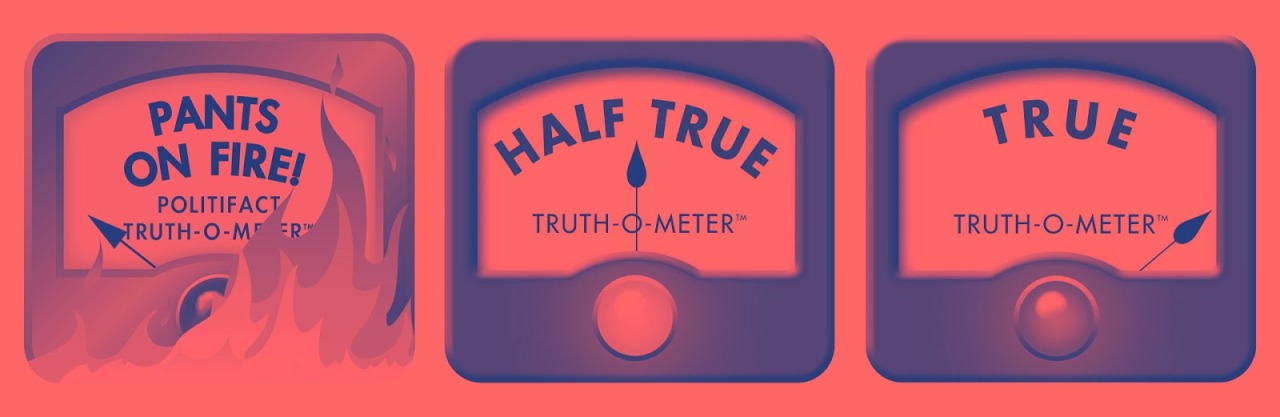
PolitiFact's Truth-o-meter
PolitiFact’s Truth-o-meter

Why?

Prior to Modernism, society generally held truth to be unalterable, absolute, and universal. Modernism began to question commonly held beliefs—religion, laws, aesthetics, and so on. Post-modernism threw Truth (capital “T”) out the window. It is now said that we live in a post-truth world. The Oxford Dictionaries noticed at 2000% spike in the use of the term “post-truth” in 2016 over 2015, and so declared it the word of the year in 2016. They define post-truth as an adjective “relating to or denoting circumstances in which objective facts are less influential in shaping public opinion than appeals to emotion and personal belief.” This set of readings covers truth, post-truth, and how truth directly ties to design work.

Required

Supplementary Readings

Post-Truth
Breaking News, Radiolab
“Simon Adler takes us down a technological rabbit hole of strangely contorted faces and words made out of thin air. And a wonderland full of computer scientists, journalists, and digital detectives forces us to rethink even the things we see with our very own eyes.”
Are We Living in a Post-truth Era? Yes, but That’s Because We’re a Post-truth Species, ideas.ted.com
“A cursory look at history reveals that propaganda and disinformation are nothing new. In fact, humans have always lived in the age of post-truth. Homo sapiens is a post-truth species, who conquered this planet thanks above all to the unique human ability to create and spread fictions. We are the only mammals that can cooperate with numerous strangers because only we can invent fictional stories, spread them around, and convince millions of others to believe in them. As long as everybody believes in the same fictions, we all obey the same laws and can thereby cooperate effectively.”
Truth Isn’t the Problem—We Are, The Wall Street Journal
“The term ‘post-truth’ has been around for decades, but its big moment came in 2016, with the Brexit vote in the U.K. and the presidential candidacy of Donald Trump. Usage of post-truth shot up twentyfold, according to the Oxford Dictionaries, which chose it as the 'word of the year’ for 2016. Since then, the term has become a commonplace in political commentary. It is not applied approvingly. To dub ours the era of post-truth is not to praise it.”
On Being Genuine, ChurchofJesusChrist.org
“Although modern historians have questioned the truthfulness of this story, the term ‘Potemkin village’ has entered the world’s vocabulary. It now refers to any attempt to make others believe we are better than we really are.”
Truth in Graphic Design
Infographics Lie. Here’s How To Spot The B.S., Fast Company
“Time and time again we have seen that data visualizations can easily be manipulated to lie. By misrepresenting, altering, or faking the data they visualize, data scientists can twist public opinion to their benefit and even profit at our expense.”
Are Some Fonts More Believable Than Others?, Fast Company
“Are some fonts more believable than others? A curious experiment by documentary filmmaker Errol Morris suggests as much. After polling approximately 45,000 unsuspecting readers on nytimes.com, Morris discovered that subjects were more likely to believe a statement when it was written in Baskerville than when it was written in Computer Modern, Georgia, Helvetica, Trebuchet, or Comic Sans. Baskerville: truth’s favorite typeface?”
Errol Morris: How Typography Shapes Our Perception Of Truth, Fast Company
“The results of Morris’s experiment were published online in a two-part essay called Hear, All Ye People; Hearken, O Earth! and have now been put into print, as the 44th edition of the Pentagram Papers, the monograph that the design firm Pentagram sends to an exclusive list of individuals each year. Pentagram partner and long-time Morris collaborator Michael Bierut put together the typographically exquisite monograph, with with the help of designer Jessica Svendsen.
Hear, All Ye People; Hearken, O Earth (Part 1), The New York Times

“My quiz wasn’t really a test of the optimism or pessimism of the reader. There was a hidden agenda. It was a test of the effect of typefaces on truth. Or to be precise, the effect on credulity. Are there certain typefaces that compel a belief that the sentences they are written in are true?”

Part II: “Hear, All Ye People; Hearken, O Earth (Part 2)

The original quiz: “Are You an Optimist or a Pessimist?

Truth in Illustration

I have not found any solid writings concerning truth and illlustration, so please send anything you find my way.

Truth in Photography
Posing Questions of Photographic Ethics, The New York Times
“During this year’s World Press photo contest, about 20 percent of the entrants that reached the second-to-last round of judging were disqualified for significantly altering images in post processing and Giovanni Troilo was stripped of a first prize in the face of charges of misrepresentation and posing images (the photographer said he had ‘made a mistake,’ but had not intended to deceive). In the vigorous debate that followed, some ridiculed the concept of 'objective photojournalism’ as philosophically tenuous in a postmodern world.”
Why Facts Aren’t Always Truths in Photography, Time
“Steve McCurry, a photographer who has reached iconic status following the publication of his Afghan Girl portrait in National Geographic in 1985, has found himself at the center of a controversy over image manipulation. The Magnum member is accused of photoshopping elements out of his photographs—a ‘mistake’ McCurry has blamed on bad procedures at his studio.”
Staging, Manipulation and Truth in Photography, The New York Times
“During this year’s tumultuous World Press photo competition, a large number of images were disqualified because of manipulation or excessive digital postprocessing. In addition, one major prize was revoked amid allegations of staging and misleading captioning. These events sparked months of spirited discussion and introspection about ethical practices in photojournalism. In response, the World Press organization is changing its rules for next year’s contest and creating a code of ethics for photographers entering the contest. […] To further the conversation on these ethical concerns, Lens asked several photographers and editors to comment on the issue and to share their experiences in the field. After reading those essays, we invite you to add your thoughts about staging journalistic photos in the comments below. We will add selected comments of fewer than 250 words to this text to further the conversation.”
Fauxtography, Snopes
“Numerous photographs and videos circulate on the Internet. Some are real. Some are fake. Some are real, but have been given false backstories.

Response Questions

Remember to cite specific instances from the text to support your views.

  • Consider Picasso’s quote, “We all know that Art is not truth. Art is a lie that makes us realize truth, at least the truth that is given us to understand. The artist must know the manner whereby to convince others of the truthfulness of his lies. If he only shows in his work that he has searched, and re-searched, for the way to put over lies, he would never accomplish anything.” Combined with the information from the readings, what do you make of this?
  • How might the notion of epistemic responsibility impact your work in your field?
  • Members of the Church believe the words of Moroni when he states that “by the power of the Holy Ghost ye may know the truth of all things.” How might science, logic, reason, and facts play into this belief system? For example, the Church has always been pro-science (Orson Pratt taught astronomy courses in the 1850s, an astronomical observatory was built on the south-east corner of Temple Square in 1869, our current prophet is a physician who believes in vaccinations, and BYU actively teaches evolution). Does a personal belief always trump science or vice versa? Why or why not?
11.1: Postmodernist Media, Semiotics, Aesthetics, part II: Electric Boogaloo

The digital revolution
Read by Thu Mar 18,
Reading Response due Wed Mar 24,
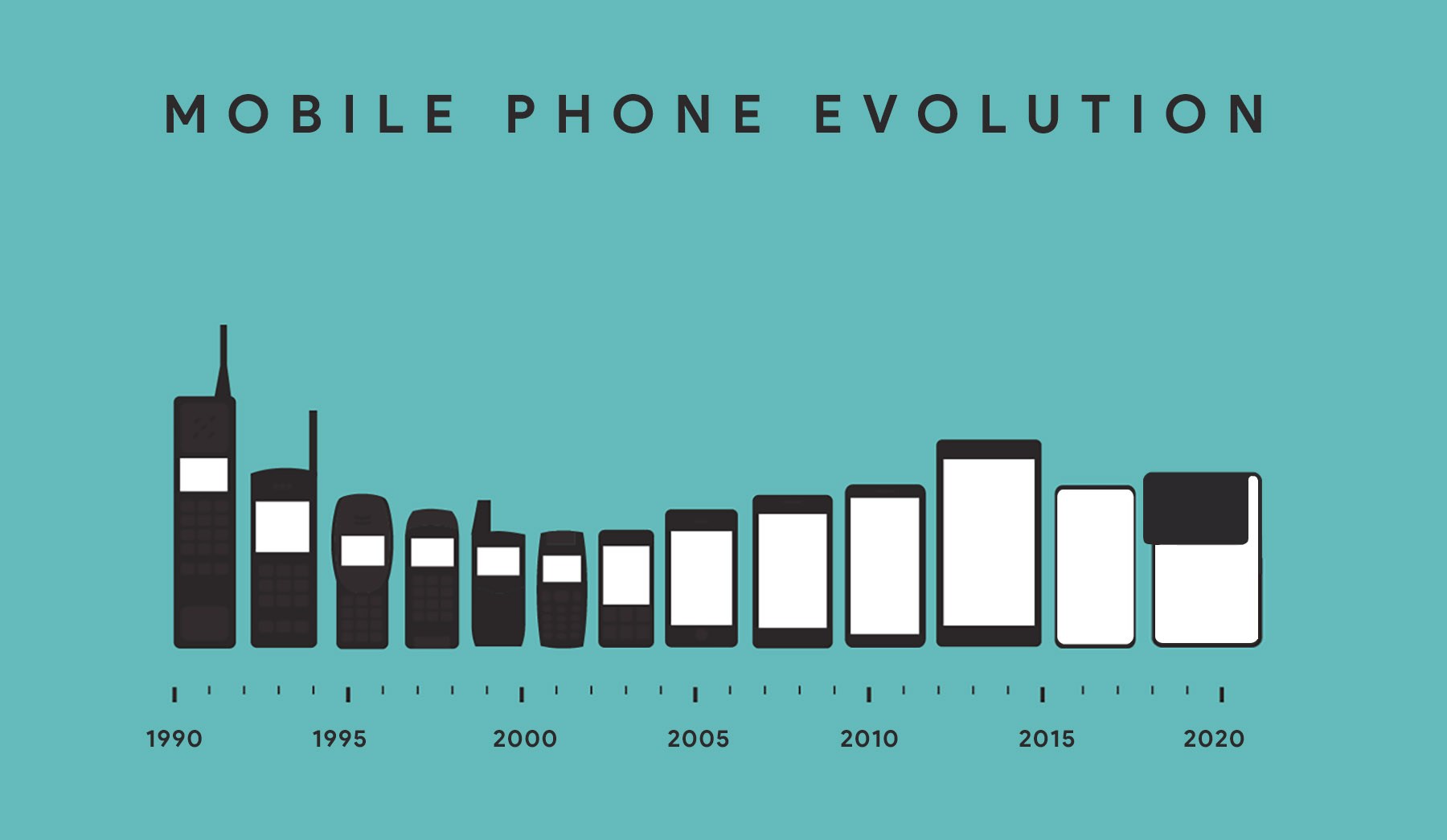
Mobile Phone Evolution
Source

Why?

Part of the shift from Modernism to Postmodernism was fueled by the digital revolution. As computers became faster, smaller, and more prevalent, global information became more accessible, new digital tools were available to companies and the general public, and the way we all think, speak, and act was changed. Few creative industries were as impacted as design. Photoshop, along with other design and image-manipulation tools, disrupted not only industries, but also our relationship to truth. The world had to start looking and thinking more critically about the veracity of photographic images. In addition, photography’s static nature had to make way for dynamic manifestations including hyperlinked images, GIFs, AI-generated imagery, new cameraless photography fields, and more. Focusing on this drastic shift is important in understanding design disciplines as ever-changing, unstable, and ripe for innovation.

Required

How Photoshop Changed the Way We Work, Creative Bloq
Toward a Hyperphotography, After Photography

Supplementary Readings

Timeline

View larger

Photoshop and Design Evolution
Startup Memories—The Beginning of Photoshop
“In this documentary, the founders of Adobe Photoshop—John Knoll, Thomas Knoll, Russell Brown, and Steve Guttman—tell the story of how an amazing coincidence of circumstances, that came together at just the right time 20 years ago, spawned a cultural paradigm shift unparalleled in our lifetime.”
Graphic Means: A History of Graphic Design Production
“Imagine designing and printing a brochure—without a computer. How would you set the type—making sure it fit your layout? How would you crop the images? How would you place those images alongside your text? And what would you hand over to the offset printer when you were done? Up until just 30 years ago when the desktop computer debuted, this whole process would have been primarily done by hand, and with the aide of fascinating machines that used a variety of ways to get type and image on to the printed page.”
Before there was Photoshop | graphic design tools | Photoshop 25th anniversary
“Follow along as Sean Adams mocks up a layout with a variety of traditional design tools. Join lynda.com as we celebrate 25 years of Photoshop with inspiring stories from luminaries who have helped shape the most prolific design tool of our time.”
The evolution of a tool palette | Photoshop 25th anniversary
“For over two decades, Photoshop has been an essential part of the digital artist’s toolset. To celebrate its 25th anniversary, we’ve taken a look back at Photoshop’s history: from the rise of desktop publishing and digital photography, to the evolution of Photoshop’s tool palette and its sometimes controversial but necessary role in modern photojournalism.”
The Internet
Evolution of the Web
This interactive timeline of the Internet allows you to see major events, the advent of various browsers, and usage and user figures.
Birth of the Internet
"In 1968, the nation’s top computer scientists and members of the U.S. government gathered inside the Rustler Lodge atop the Alta Ski Resort in Salt Lake County, Utah. They were about to change the world. It was during that meeting that this group talked about the novel idea of connecting computers together into the world’s first far-reaching communications network. A year later, four institutions—UCLA, the Stanford Research Institute, University of California at Santa Barbara and the University of Utah—became the first “nodes” to that network, then known as ARPANET, the Advanced Research Projects Agency Network. It was the precursor to what we now call the internet.”
Lo and Behold: Reveries of the Connected World
“Filmmaker Werner Herzog presents a history of the internet, starting with its birth in 1969, and ponders the joys and sorrows of its social influence.”
Post-Photography
Post-Photography: The Unknown Image, Elephant
“The photographic medium has been changing at an unprecedented pace in the last two decades. We now all have a camera in our pockets (or bags, or on our desks) or there’s one hovering over our heads ready to snap our image. So taking a picture, being at the right place at the right time (in the tradition of Cartier-Bresson’s decisive moment) is no longer the challenge. In our image-saturated world, the challenge is what to do with all these images, and photographers are finding innovative strategies for dealing with photographic material. For the artist-photographers in this piece, a picture is just a platform, the starting point (or end point) of a lengthy process, taking photography to places it has never been before.”
Post-Photography
“The real world is full of cameras; the virtual world is full of images. Where does all this photographic activity leave the artist-photographer? Post-Photography tries to answer that question by investigating the exciting new language of photographic image-making that is emerging in the digital age of anything-is-possible and everything-has-been-done-before. Found imagery has become increasingly important in post-photographic practice, with the internet serving as a laboratory for a major kind of image-making experimentation. But artists also continue to create entirely original works using avant-garde techniques drawn from both the digital and analogue eras. This book is split into six sections - Something Borrowed, Something New, Layers of Reality, Eye-Spy, Material Visions, Post-Photojournalism and All the World Is Staged - which cover the key strategies adopted by 53 of the most exciting and innovative artist-photographers of the 21st century, drawn from all over the world.”
Photography after Photography: Memory and Representation in the Digital Age
“Thanks to the tremendous impact of the digital process and its capacity for manipulation, our current notions of what photography is as well as what a photograph represents is changing. Accompanying an international exhibit sponsored by the Siemens Kulturprogramm, this collection of essays brings together a multitude of positions on the subject. For those who do not know much about photographic issues, whether historic or contemporary, this wide-ranging study is an interesting and fruitful place to start. The body of essays review, debate, and probe the potential of new technologies without ignoring the natural interactivity between photography and social norms. In that sense, this book can be read as a platform for cultural as well as artistic speculation. Now that we can technically alter the qualities of what used to be the smallest element, the pixel, we are verging on reinventing all notions of representation.”
Image Simulations, Computer Manipulations, Some Considerations, Photography after Photography: Memory and Representation in the Digital Age
“The identification of photography with objectivity is a modern idea, and the fascination with the precision of its rendering has only partly characterized its reception. Certainly, the artistic practice of photography incorporated markers of the effort to evade the mechanicity of ‘straight’ photography. The deceptive manipulation of images is another matter. The use of faked photographs is a long-standing political trick, in the form both of photographs misappropriated or changed after they were produced and in ones set up for the camera. Before lithography enabled newspapers to use photographs directly around 1880, photographs were at the mercy of the engravers who prepared the printing plates for reproduction. Even now cropping and airbrushing are decisive methods of manipulating existing imagery, and set-up or staged (‘restaged’) images are always a possibility.”

Response Questions

Remember to cite specific instances from the text to support your views.

  • Photoshop and its ilk have overwritten so many jobs that used to exist 20–30 years ago. That also means that designers, illustrators, and photographers today now do, or know how to do jobs that used to belong to specialists—they wear many hats. Do you see that as a good or bad thing? Why?
  • Think back to the readings on Marshall McLuhan and how the medium supercedes the message or individual messages created through the medium. How does this shape your thinking of Photoshop and digital photography?
  • Who do you think makes a larger impact on the world, the programmers, engineers, and industrial designers who create design programs, computers, digital cameras, etc., or the artists who use the tools?
  • Harkening back to McLuhan again, what does the shift from analog to digital mean? How is that shaping how we think and act? For example, do you have your best friend’s phone number memorized, or is it just in your phone? Ho many physical music albums do you own vs. how many live on the cloud or a hard drive? How do you experience or access those albums? How many photos do you have on your camera/cloud account? How do you parse those?
  • In what ways has the internet altered the fabric of our lives? In what ways has it just doubled down on pre-existing structures (power structures, information structures, social structures)?