11.2: Truth in the Modern Age and Beyond, part II

Post-truth in the Postmodern Era
Read by Sat Mar 20,
Reading Response due Wed Mar 24,
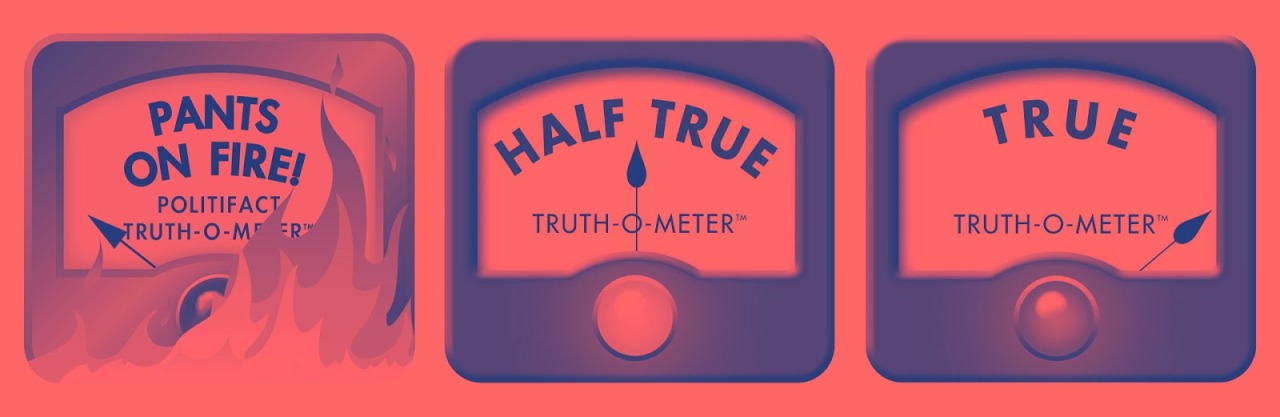
PolitiFact's Truth-o-meter
PolitiFact’s Truth-o-meter

Why?

Prior to Modernism, society generally held truth to be unalterable, absolute, and universal. Modernism began to question commonly held beliefs—religion, laws, aesthetics, and so on. Post-modernism threw Truth (capital “T”) out the window. It is now said that we live in a post-truth world. The Oxford Dictionaries noticed at 2000% spike in the use of the term “post-truth” in 2016 over 2015, and so declared it the word of the year in 2016. They define post-truth as an adjective “relating to or denoting circumstances in which objective facts are less influential in shaping public opinion than appeals to emotion and personal belief.” This set of readings covers truth, post-truth, and how truth directly ties to design work.

Required

Supplementary Readings

Post-Truth
Breaking News, Radiolab
“Simon Adler takes us down a technological rabbit hole of strangely contorted faces and words made out of thin air. And a wonderland full of computer scientists, journalists, and digital detectives forces us to rethink even the things we see with our very own eyes.”
Are We Living in a Post-truth Era? Yes, but That’s Because We’re a Post-truth Species, ideas.ted.com
“A cursory look at history reveals that propaganda and disinformation are nothing new. In fact, humans have always lived in the age of post-truth. Homo sapiens is a post-truth species, who conquered this planet thanks above all to the unique human ability to create and spread fictions. We are the only mammals that can cooperate with numerous strangers because only we can invent fictional stories, spread them around, and convince millions of others to believe in them. As long as everybody believes in the same fictions, we all obey the same laws and can thereby cooperate effectively.”
Truth Isn’t the Problem—We Are, The Wall Street Journal
“The term ‘post-truth’ has been around for decades, but its big moment came in 2016, with the Brexit vote in the U.K. and the presidential candidacy of Donald Trump. Usage of post-truth shot up twentyfold, according to the Oxford Dictionaries, which chose it as the 'word of the year’ for 2016. Since then, the term has become a commonplace in political commentary. It is not applied approvingly. To dub ours the era of post-truth is not to praise it.”
On Being Genuine, ChurchofJesusChrist.org
“Although modern historians have questioned the truthfulness of this story, the term ‘Potemkin village’ has entered the world’s vocabulary. It now refers to any attempt to make others believe we are better than we really are.”
Truth in Graphic Design
Infographics Lie. Here’s How To Spot The B.S., Fast Company
“Time and time again we have seen that data visualizations can easily be manipulated to lie. By misrepresenting, altering, or faking the data they visualize, data scientists can twist public opinion to their benefit and even profit at our expense.”
Are Some Fonts More Believable Than Others?, Fast Company
“Are some fonts more believable than others? A curious experiment by documentary filmmaker Errol Morris suggests as much. After polling approximately 45,000 unsuspecting readers on nytimes.com, Morris discovered that subjects were more likely to believe a statement when it was written in Baskerville than when it was written in Computer Modern, Georgia, Helvetica, Trebuchet, or Comic Sans. Baskerville: truth’s favorite typeface?”
Errol Morris: How Typography Shapes Our Perception Of Truth, Fast Company
“The results of Morris’s experiment were published online in a two-part essay called Hear, All Ye People; Hearken, O Earth! and have now been put into print, as the 44th edition of the Pentagram Papers, the monograph that the design firm Pentagram sends to an exclusive list of individuals each year. Pentagram partner and long-time Morris collaborator Michael Bierut put together the typographically exquisite monograph, with with the help of designer Jessica Svendsen.
Hear, All Ye People; Hearken, O Earth (Part 1), The New York Times

“My quiz wasn’t really a test of the optimism or pessimism of the reader. There was a hidden agenda. It was a test of the effect of typefaces on truth. Or to be precise, the effect on credulity. Are there certain typefaces that compel a belief that the sentences they are written in are true?”

Part II: “Hear, All Ye People; Hearken, O Earth (Part 2)

The original quiz: “Are You an Optimist or a Pessimist?

Truth in Illustration

I have not found any solid writings concerning truth and illlustration, so please send anything you find my way.

Truth in Photography
Posing Questions of Photographic Ethics, The New York Times
“During this year’s World Press photo contest, about 20 percent of the entrants that reached the second-to-last round of judging were disqualified for significantly altering images in post processing and Giovanni Troilo was stripped of a first prize in the face of charges of misrepresentation and posing images (the photographer said he had ‘made a mistake,’ but had not intended to deceive). In the vigorous debate that followed, some ridiculed the concept of 'objective photojournalism’ as philosophically tenuous in a postmodern world.”
Why Facts Aren’t Always Truths in Photography, Time
“Steve McCurry, a photographer who has reached iconic status following the publication of his Afghan Girl portrait in National Geographic in 1985, has found himself at the center of a controversy over image manipulation. The Magnum member is accused of photoshopping elements out of his photographs—a ‘mistake’ McCurry has blamed on bad procedures at his studio.”
Staging, Manipulation and Truth in Photography, The New York Times
“During this year’s tumultuous World Press photo competition, a large number of images were disqualified because of manipulation or excessive digital postprocessing. In addition, one major prize was revoked amid allegations of staging and misleading captioning. These events sparked months of spirited discussion and introspection about ethical practices in photojournalism. In response, the World Press organization is changing its rules for next year’s contest and creating a code of ethics for photographers entering the contest. […] To further the conversation on these ethical concerns, Lens asked several photographers and editors to comment on the issue and to share their experiences in the field. After reading those essays, we invite you to add your thoughts about staging journalistic photos in the comments below. We will add selected comments of fewer than 250 words to this text to further the conversation.”
Fauxtography, Snopes
“Numerous photographs and videos circulate on the Internet. Some are real. Some are fake. Some are real, but have been given false backstories.

Response Questions

Remember to cite specific instances from the text to support your views.

  • Consider Picasso’s quote, “We all know that Art is not truth. Art is a lie that makes us realize truth, at least the truth that is given us to understand. The artist must know the manner whereby to convince others of the truthfulness of his lies. If he only shows in his work that he has searched, and re-searched, for the way to put over lies, he would never accomplish anything.” Combined with the information from the readings, what do you make of this?
  • How might the notion of epistemic responsibility impact your work in your field?
  • Members of the Church believe the words of Moroni when he states that “by the power of the Holy Ghost ye may know the truth of all things.” How might science, logic, reason, and facts play into this belief system? For example, the Church has always been pro-science (Orson Pratt taught astronomy courses in the 1850s, an astronomical observatory was built on the south-east corner of Temple Square in 1869, our current prophet is a physician who believes in vaccinations, and BYU actively teaches evolution). Does a personal belief always trump science or vice versa? Why or why not?
2.2: Truth in the modern age and beyond, part 1

Oh, Say, What is Truth?
Read by Sat Jan 16,
Reading Response due Wed Jan 20,
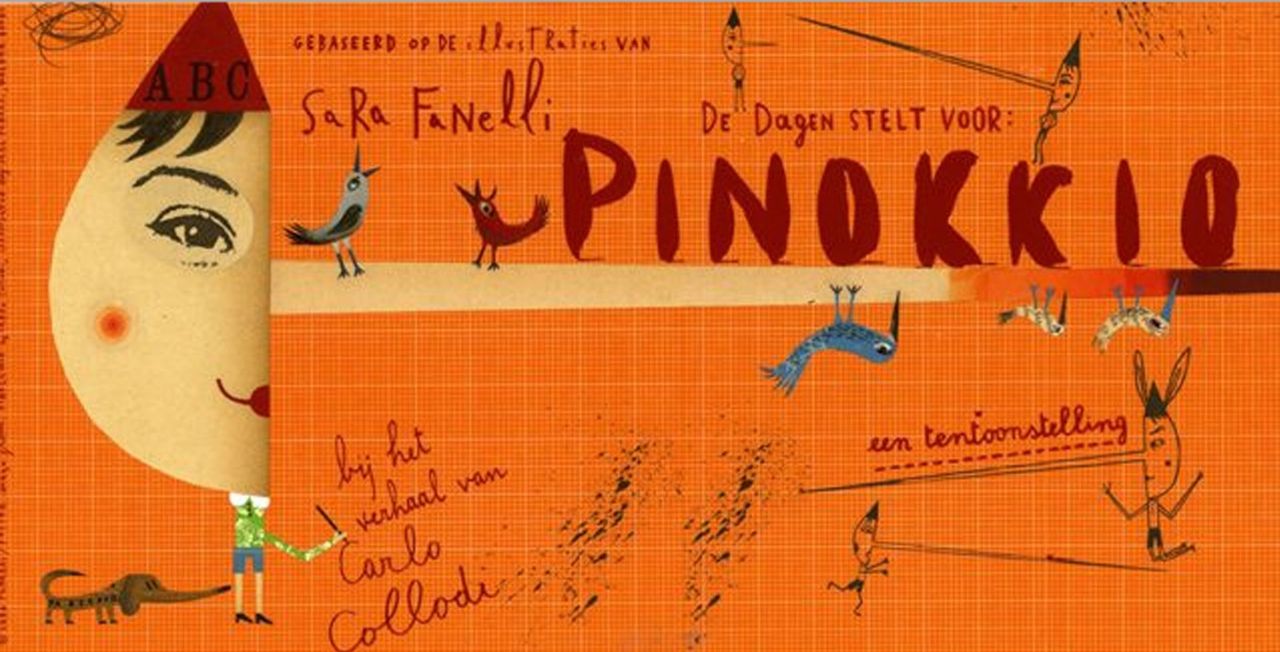
Sara Finelli ,Pinokkio (Pinocchio), 2003
Sara Finelli
Pinokkio (Pinocchio), 2003

Why?

President Kimball stated: “There are relative truths, and there are also absolute truths which are the same yesterday, today, and forever—never changing. These absolute truths are not altered by the opinions of men. As science has expanded our understanding of the physical world, certain accepted ideas of science have had to be abandoned in the interest of truth.” The ideas we discuss in class are our best attempts at understanding our world and how we can operate in it. But some of these ideas may prove to be less useful or productive in the future. That is the nature of the game.d

So far in class, we have discussed a number of theories—abstracted, conceptual bases of our fields. At times we have even considered examples and illustrations of these theories as they are put into practice, or seen in the wild. Some may even seem very compelling and logical. These are important ideas to know and understand, but truth is only discovered through the Spirit, not philosophical machinations. Our ultimate goal should be obtaining and understanding absolute truths. This does not mean that all relative truths are useless and should not be considered, but some are more useful than others for our time on earth. The readings below range from the religious to the philosophical, to understand how the world has looked at truth, facts, honesty, and reality.

There is some terminology that may come up that will be important to understand:

  • Ontology: “As a first approximation, ontology is the study of what there is. Some contest this formulation of what ontology is, so it’s only a first approximation. Many classical philosophical problems are problems in ontology: the question whether or not there is a god, or the problem of the existence of universals, etc.. These are all problems in ontology in the sense that they deal with whether or not a certain thing, or more broadly entity, exists.”1 In short, ontology is concerned with truth as an abstract.
  • Epistemology: “Plato’s epistemology was an attempt to understand what it was to know, and how knowledge (unlike mere true opinion) is good for the knower. Locke’s epistemology was an attempt to understand the operations of human understanding, Kant’s epistemology was an attempt to understand the conditions of the possibility of human understanding, and Russell’s epistemology was an attempt to understand how modern science could be justified by appeal to sensory experience.”2 In short, epistemology is concerned in how humans come to know or understand truth.

Required

What is Truth?, The Great Courses
Absolute Truth, ChurchofJesusChrist.org

Supplementary Readings

Truth and Knowledge (Philosophy)
What is Philosophy?: Crash Course Philosophy #1, PBS Digital Studios
“Today Hank begins to teach you about Philosophy by discussing the historical origins of philosophy in ancient Greece, and its three main divisions: metaphysics, epistemology, and value theory. He will also introduce logic, and how you’re going to use it to understand and critically evaluate a whole host of different worldviews throughout this course. And also, hopefully, the rest of your life.”
Cartesian Skepticism – Neo, Meet Rene: Crash Course Philosophy #5, PBS Digital Studios
“This week Hank introduces skepticism, exploring everything from the nature of reality through the eyes of a 17th century philosopher and, of course, The Matrix.”
Locke, Berkeley, & Empiricism: Crash Course Philosophy #6, PBS Digital Studios
“This week we answer skeptics like Descartes with empiricism. Hank explains John Locke’s primary and secondary qualities and why George Berkeley doesn’t think that distinction works – leaving us with literally nothing but our minds, ideas, and perceptions.”
The Meaning of Knowledge: Crash Course Philosophy #7, PBS Digital Studios
“On today’s episode… CATS. Also: Hank talks about some philosophy stuff, like a few of the key concepts philosophers use when discussing belief and knowledge, such as what defines an assertion and a proposition, and that belief is a kind of propositional attitude. Hank also discusses forms of justification and the traditional definition of knowledge, which Edmund Gettier just totally messed with, using his Gettier cases.”
PHILOSOPHY – Kant: On Metaphysical Knowledge, Wireless Philosophy
“Kant famously claims that we have synthetic apriori knowledge. Indeed, this claim is absolutely central to all of his philosophy. But what is synthetic apriori knowledge? Scott Edgar helpfully breaks-down this category of knowledge by first walking through Kant’s distinction between empirical and apriori knowledge and then his distinction between analytic and synthetic judgments. The interaction between these distinctions is then illustrated with numerous examples, making it clear why Kant, unlike Hume, thought that there is knowledge that is both apriori and synthetic and that this is the type of knowledge philosophers seek.”
PHILOSOPHY – Epistemology: Introduction to Theory of Knowledge, Wireless Philosophy
“In this Wireless Philosophy video, Jennifer Nagel (University of Toronto) launches our Theory of Knowledge series. We look at the line between knowing and just believing something, focusing on factors like truth and confidence.”
PHILOSOPHY – Epistemology: Analyzing Knowledge #1 (The Gettier Problem), Wireless Philosophy
“Is knowledge the same as justified true belief? In this Wireless Philosophy video, Jennifer Nagel (University of Toronto) discusses a Gettier case, a scenario in which someone has justified true belief but not knowledge. We’ll look at a Gettier case from Edmund Gettier’s famous 1963 paper on this topic, and a structurally similar case from 8th century Classical Indian philosophy.”
PHILOSOPHY – Epistemology: Analyzing Knowledge #2 (No-False-Lemma and No-Defeater Approaches), Wireless Philosophy
“If we can’t analyze knowledge simply as justified true belief, can we add one more ingredient to produce a successful analysis? In this Wireless Philosophy video, Jennifer Nagel examines two ‘extra ingredient’ analyses of knowledge: Michael Clark’s ‘no false lemma’ analysis, and the fancier ‘no undefeated defeaters’ analysis of Keith Lehrer and Thomas Paxson.”
PHILOSOPHY – Epistemology: Analyzing Knowledge #3 (Causal and Reliabilist Theories), Wireless Philosophy
“Is knowledge a matter of being causally connected to the world in the right way? In this Wireless Philosophy video, Jennifer Nagel (University of Toronto) examines the causal theory of knowledge proposed by Alvin Goldman in 1967, and then discusses the problems with the causal theory that led Goldman to formulate his influential reliabilist theory of knowledge.”
PHILOSOPHY – Epistemology: Analyzing Knowledge #4 (Tracking Theories), Wireless Philosophy
“Problems for the causal theory of knowledge led epistemologists to propose that knowledge is a matter of tracking the truth. Fred Dretske and Robert Nozick developed this idea using counterfactual conditions. In this Wireless Philosophy video, Geoff Pynn (Northern Illinois University) examines the tracking idea, consider how it improves on the causal theory, and then discuss some well known objections to the theories advanced by Dretske and Nozick.”
Art and Epistemology, Internet Encyclopedia of Philosophy

“The relationship between art and epistemology has been forever tenuous and fraught with much debate. It seems fairly obvious that we gain something meaningful from experiences and interactions with works of art. It does not seem so obvious whether or not the experiences we have with art can produce propositional knowledge that is constituted by true justified belief. In what follows I will give some historical background on the debate and flesh out some of the important issues surrounding the question ‘(What) can we learn from art?’”

The Cave : A Parable Told by Orson Welles

An animated version of Plato's allegory of the cave. “In the allegory, Socrates describes a group of people who have lived chained to the wall of a cave all their lives, facing a blank wall. The people watch shadows projected on the wall from objects passing in front of a fire behind them and give names to these shadows. The shadows are the prisoners' reality but are not accurate representations of the real world. Three higher levels exist: the natural sciences; mathematics, geometry, and deductive logic; and the theory of forms. Socrates explains how the philosopher is like a prisoner who is freed from the cave and comes to understand that the shadows on the wall are not reality at all. A philosopher aims to understand and perceive the higher levels of reality. However, the other inmates of the cave do not even desire to leave their prison, for they know no better life.”1

  1. “Allegory of the Cave,” Wikipedia, accessed February 4, 2021, https://www.wikiwand.com/en/Allegory_of_the_cave
Truth and Knowledge in the Gospel
Absolute Truth, Churchofjesuschrist.org
“This true way of life is not a matter of opinion. There are absolute truths and relative truths. The rules of dietetics have changed many times in my lifetime. Many scientific findings have changed from year to year. The scientists taught for decades that the world was once a nebulous, molten mass cast off from the sun, and later many scientists said it once was a whirl of dust which solidified. There are many ideas advanced to the world that have been changed to meet the needs of the truth as it has been discovered. There are relative truths, and there are also absolute truths which are the same yesterday, today, and forever—never changing.”
The Truth of All Things, Churchofjesuschrist.org
“Mom put the responsibility of developing faith and finding answers on me. She knew that the important answers would come from my seeking truth the way that Heavenly Father has prescribed. She knew that I needed to find the truth. She knew that I needed to be sincere in my questions and be willing to act on what I already knew to be true. She knew that I needed to study and pray and that I needed to develop greater patience as I sought answers from the Lord. Willingness to be patient is part of our search for truth and part of the Lord’s pattern of revealing truth.”
He Hath Filled the Hungry with Good Things, Churchofjesuschrist.org
“As the world slouches toward the 21st century, many long for something, sometimes cry out for something, but too often scarcely know for what. The economic condition in the world, speaking generally and certainly not specifically, is probably better than it has ever been in history, but the human heart is still anxious and often filled with great stress. We live in an “information age” that has a world of data available literally at our fingertips, yet the meaning of that information and the satisfaction of using knowledge in some moral context seems farther away for many than ever before.”
What is Truth?, Churchofjesuschrist.org
“Part of the reason for poor judgment comes from the tendency of mankind to blur the line between belief and truth. We too often confuse belief with truth, thinking that because something makes sense or is convenient, it must be true. Conversely, we sometimes don’t believe truth or reject it—because it would require us to change or admit that we were wrong. Often, truth is rejected because it doesn’t appear to be consistent with previous experiences. When the opinions or ‘truths’ of others contradict our own, instead of considering the possibility that there could be information that might be helpful and augment or complement what we know, we often jump to conclusions or make assumptions that the other person is misinformed, mentally challenged, or even intentionally trying to deceive. Unfortunately, this tendency can spread to all areas of our lives—from sports to family relationships and from religion to politics.”
On Being Genuine, ChurchofJesusChrist.org
“Although modern historians have questioned the truthfulness of this story, the term ‘Potemkin village’ has entered the world’s vocabulary. It now refers to any attempt to make others believe we are better than we really are.”
Honesty
And Nothing but the Truth, This American Life
“Reporter Nazanin Rafsanjani brings us the story of Brad Blanton, a psychologist who founded a philosophy called "Radical Honesty.” Brad believes that the way to be happy is to tell the truth all the time. This philosophy helped him help a lot of people as a therapist. But it got in the way a little when, in 2006, he left his practice, ran for a seat in the US Congress, and became that rarest of things: a political candidate who never lies.”
Why Be Honest?, Psychology Today
"We all lie. Admittedly, most of do so only occasionally. But we still all do. Yet most of us also consider ourselves honest. In his book, The (Honest) Truth about Dishonesty, Dan Ariely offers evidence that we’re able to believe we’re honest even though we lie or cheat by doing so only in little ways. We’re therefore able to tell ourselves we’re mostly honest—that is, we’re only dishonest in ways that we think don’t matter. Apparently this strategy works: most of us don’t suffer serious cognitive dissonance over our integrity.”
How Honesty Could Make You Happier, The New York Times
“I’ve been keeping an honesty journal for the past several months. With honesty much in the news lately — you might even say honesty is having a cultural moment — I wanted to reflect on my own. My 6-year-old daughter once told me that telling the truth made her feel “gold in her brain.” Could upping my personal honesty light up a pleasure center in my own brain?”

Response Questions

Remember to cite specific instances from the text to support your views.

  • Compare an LDS view of truth with some of the philosophical views of truth. Where do they overlap and where do they differ?
  • Based on your readings, how might you define “truth?” How might that definition shape your life and your work in your field?
  • What might be the cases for dishonesty, or is it always wrong in every situation?
  • Do you consider your field to be an inherently truthful or dishonest field? Why or why not?
  1. “Logic and Ontology,” Stanford Encyclopedia of Philosophy, October 11, 2017, https://plato.stanford.edu/entries/logic-ontology/#Ont.
  2. “Epistemology,” Stanford Encyclopedia of Philosophy, April 11, 2020, https://plato.stanford.edu/entries/epistemology/.