4.2: Money, Patronage, and Class as Cultural Lenses

How Money and Economies Shape Art Worlds
Read by Sat Jan 30,
Reading Response due Wed Feb 03,
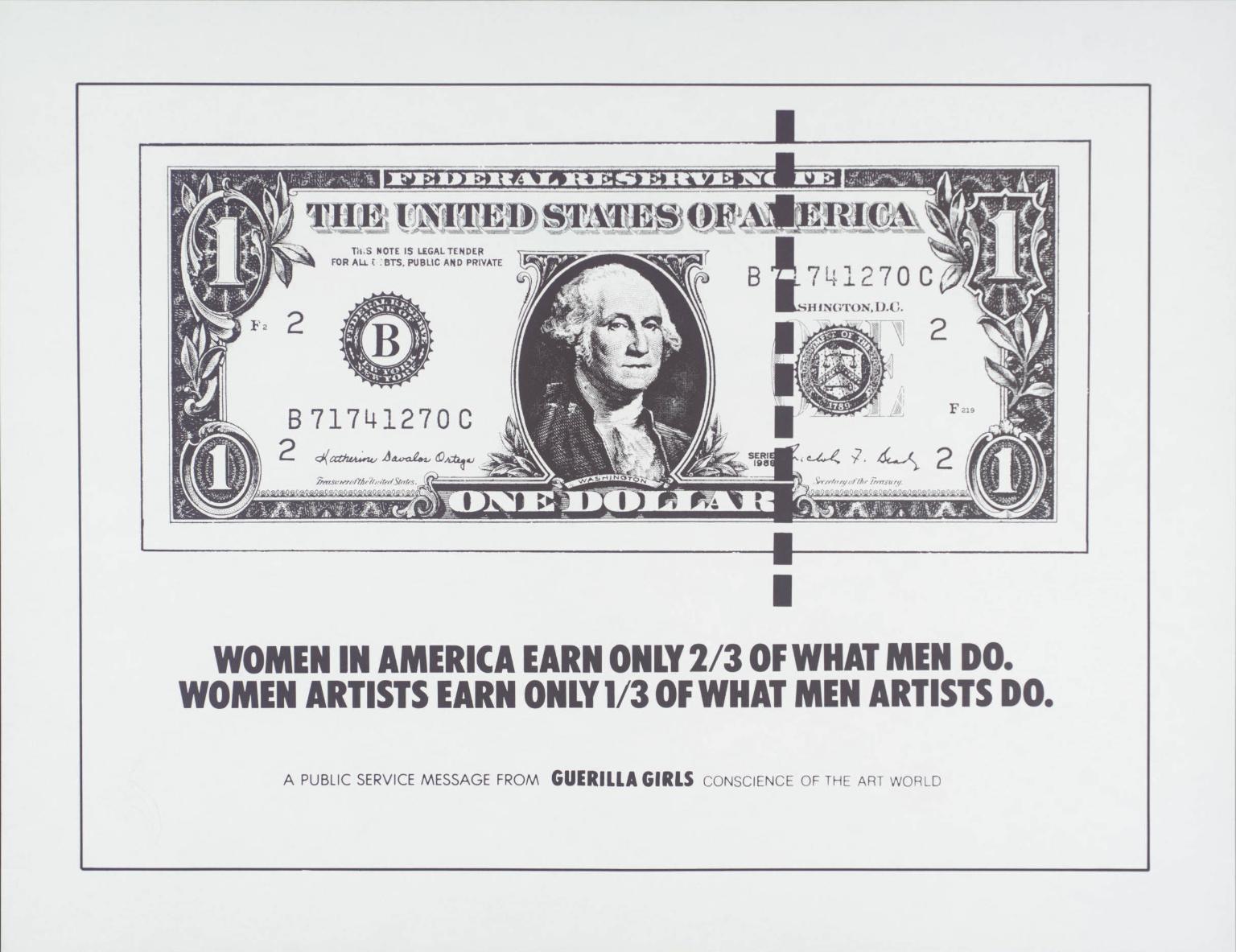
Guerilla Girls (1985–), Women In America Earn Only 2/3 Of What Men Do, 1985
Guerrilla Girls (1985–)
Women In America Earn Only 2/3 Of What Men Do, 1985
Screenprint on paper
Image: 430 × 560 mm

Why?

Economies are a shaping factor in culture. Markets dictate to artists and deseigners what sells (and therefore which creations would be beneficial to make). Are people buying large work or small work? Are they buying highly saturated imagery, black and white, or pastel color palettes? If the economy is struggling, do people buy from your field, or is it seen as a luxury? What ideologies are inherent in economic systems? What might the U.S.’s cultural landscape look like if it offered a base living wage to artists? Will your dream job even exist in ten years? These are all important considerations that function to focus attention on and away from different aspects of culture and cultural production.

Graphic designers, illustrators, and photographers often have clients who are footing the bill. As such, the clients have a large impact on the direction of projects—aesthetic/conceptual input, timelines, resources, etc. In animation, there is often either a client or a perceived audience. Pixar makes movies based on time-tested formulas for plot, character, humor, MPAA rating, color, and so on to appeal to a broad audience and therefore to make a larger profit. I’m not saying the profit is bad or client input taints your creative vision, but it is important to be honest and transparent about the factors that shape your work. When you know your parameters (and which parameters you can transgress), you don’t waste time and resources, and you can find the beauty in constraints.

We start with a dive into economic theory. Our introduction to Marxism is partly to understand alternative systems to capitalism (thereby better understanding capitalism), but mainly to lay a foundation for subsequent cultural theory we’ll be reading that employs a Marxist lens to examine literature, film, music, and art (and not necessarily calling for the violent overthrow of the capitalist system). If the hair on the back of your neck bristles at the mention of Marxism because it is often equated with “godless communists,” I just ask that you set bias aside and seek to understand the theory to better understand culture. I never ask that you tacitly agree with anything that we read in this class, only that you seek to understand it. If you disagree with it after understanding it, then you have a much more solid footing in your argument against it.

Required

How the Death of Mid-Budget Cinema Left a Generation of Iconic Filmmakers MIA, Flavorwire
Capitalism and Socialism: Crash Course World History #33
Marxisms: Classical Marxism, Cultural Theory and Popular Culture

Supplementary Readings

Design Economies
Economies of Design (excerpts)
“Economics and design have never been particularly good bedfellows. One suggests certainties and statistics or, at least, attempts to get a clear understanding of what is going on in the big picture of world events or the smaller one of firms and individuals. The other proposes sensations and aesthetics, opening up myriad ways of doing things, of living, of functioning in the world. One tries to demonstrate the knowable, the other is constantly pushing towards the unknowable. Putting these together creates a seemingly impossible nexus. This book is concerned with the various economies in contemporary capitalism that make design and the ways by which design contributes to the making of economies.”
The Design Economy: The Value of Design to the UK
“Design Council has championed the contribution and importance of design since 1944. Our research and evidence is a vital way we’re able to assess the value of design. The Design Economy is the most comprehensive account ever of design’s contribution to the UK economy.”
Cultural Pay
AIGA Survey of Design Salaries
“Periodically AIGA conducts an extensive compensation survey for the communication design profession—the largest of its kind. See the 2014 survey at designsalaries.aiga.org—and log in as an AIGA member to explore detailed results for job titles by company type, size or location. The AIGA Survey of Design Salaries 2014 draws on an extensive pool of designers and others allied to the profession, and includes responses from nearly 9,000 design professionals in the United States. The survey was conducted on AIGA’s behalf by Readex Research, an independent research company in Minnesota. The AIGA Survey of Design Salaries is commissioned by AIGA in cooperation with Communication Arts magazine. As the principal source of information on the design economy, AIGA produces this salary survey as part of a comprehensive program of activities developed to serve the professional designer with strategies for success.”
CREATIVZ
“CREATIVZ is a conversation about how artists in the United States live and work and what they need to sustain and strengthen their careers. It’s part of a research project from the Center for Cultural Innovation and the National Endowment for the Arts, with additional support from the Doris Duke Charitable Foundation and the Surdna Foundation.”
W.A.G.E.
“Founded in 2008, Working Artists and the Greater Economy (W.A.G.E.) is a New York-based activist organization focused on regulating the payment of artist fees by nonprofit art institutions and establishing a sustainable labor relation between artists and the institutions that contract their labor.”
Economies of Education
Why Get an MFA?, The New York Times
“Do you care about the oppressive lack of diversity in M.F.A. programs—what Junot Díaz calls ’M.F.A. vs. P.O.C.’ [People of Color]—that seems to translate into the astonishingly narrow range of contemporary writing? How is any of this relevant for you?”
An M.F.A. Degree Is Too Expensive, and That’s Only the Start of the Problem, Vulture
“What’s different now is that MFA programs are exorbitantly priced luxury items. At the top-shelf East Coast schools like Yale, RISD, SVA, and Columbia, the two-year cost can top $100,000. This doesn’t include room, board, materials, etc. Add all that in, and you’re hovering near a quarter-million dollars. No matter how wonderful the M.F.A. experience, that’s straight-up highway robbery.”
Debating an MFA? The Lowdown on Art School Risks and Returns, HuffPost
“So how will you know which program is right for you? Should the current metrical obsession with determining success in higher education by the rate of post-graduation employment be translated into art world terms? If sales are to serve as the marker, then tradition-bound programs stressing craft would win. If visibility is the barometer, then the interdisciplinary programs that turn out idiosyncratic hipsters who talk big and make quirky assemblages stand out. If eligibility for teaching is what you seek—cognizant that the field is overwhelmingly composed of poorly paid adjuncts—then the statistical dominance of introductory courses in drawing and design should suggest to you that cultivating technical skills will open more doors.”
Is Getting an MFA Worth the Price?, Artnet News
“We tracked down where each artist on the list went to graduate school, either from publicly available sources or by contacting the artists or their representatives. (For a very few, we were unable to find any information; we’ve left their fields blank in the attached table.) With that data in hand, we could then look for patterns as to how educational choices correlate with this measure of early-career success.”
Can You Make Your Own MFA?, Temporary Art Review
“Now like most young hopeful artists I was filled with the confidence and hubris pretty much required to embark on such a career in the first place, and felt pretty convinced that my decision was sound and I wouldn’t look back. Years later, while I have made the absolute most of my education, my move to the United States and the community I entered in Chicago, I would be happier without the debt that has hung around my neck like an albatross the last 14 years. The list of things I could’ve done, had it not been for the debt is long, so I do my best to not obsess over it – but my experience, and the knowledge that that debt is not easily alleviated by the teaching opportunities available at this point, leads me to think of some other solutions.”
Economic Marxism(s)
Are Marx’s ‘Capital’ and Althusser’s ‘Reading Capital’ Still Relevant Today?, Public Seminar
“As such, Capital necessarily remains immediately relevant into the present for understanding capitalism beyond its various contingent, superficial transformations, as a system possessing its proper logic, structures, and dynamics. […] In short, in the face of the massively disorienting and potentially catastrophic transformations of capitalism that we witness all around us today, transformations that have only accelerated since the turn of this century, if we wish to understand the forces currently driving globalization, general automation, and the corresponding immiseration of the better part of humanity as more and more humans are put to work in ever deteriorating conditions, Althusser and through him Marx tell us that we learn nothing from even the most erudite statistical compilations and neoliberal analyses of GDP, employment, profitability, growth and all the other real, but ultimately superficial and merely descriptive categories of economic calculation.”
Capital: Critique of Political Economy
Marx’s critique of capitalism sets it up as a necessary stepping stone toward the more logical and equitable communism. There are three volumes. The best place to start is probably volume 1, chapter 1.
The Communist Manifesto
This seminal work by Marx and Engels set out their thinking about politics, power, and revolution. You can also find it online.
Socialism/Communism and the Church
Socialism and the United Order
“Marion G. Romney compares and contrasts the theoretical underpinnings and practical implementation of socialism and the United Order.” Note: Romney uses his own definition of socialism that suits his purpose and against which he can argue, but it is just one definition of many. His points about secular vs. theocratic governments are salient.
United Orders
“‘United orders’ refers to the cooperative enterprises established in LDS communities of the Great Basin, Mexico, and Canada during the last quarter of the nineteenth century in an effort to better establish ideal Christian community and group economic self-sufficiency.”

Response Questions

Remember to cite specific instances from the text to support your views.

  • How might the market shape your field including technology, styles, mediums/platforms, subject matter, context, etc.?
  • What may be ways to influence, or control markets and economies rather than just be a passive participant in them?
  • What kinds of value can art and design have? For example, there is monetary value and there is personal value. What other kinds of value can they have? How is that value assigned, evaluated, and manipulated?
4.1: History as a Cultural Lens

We Come to Know Design Through History, but What Exactly is History?
Read by Thu Jan 28,
Reading Response due Wed Feb 03,
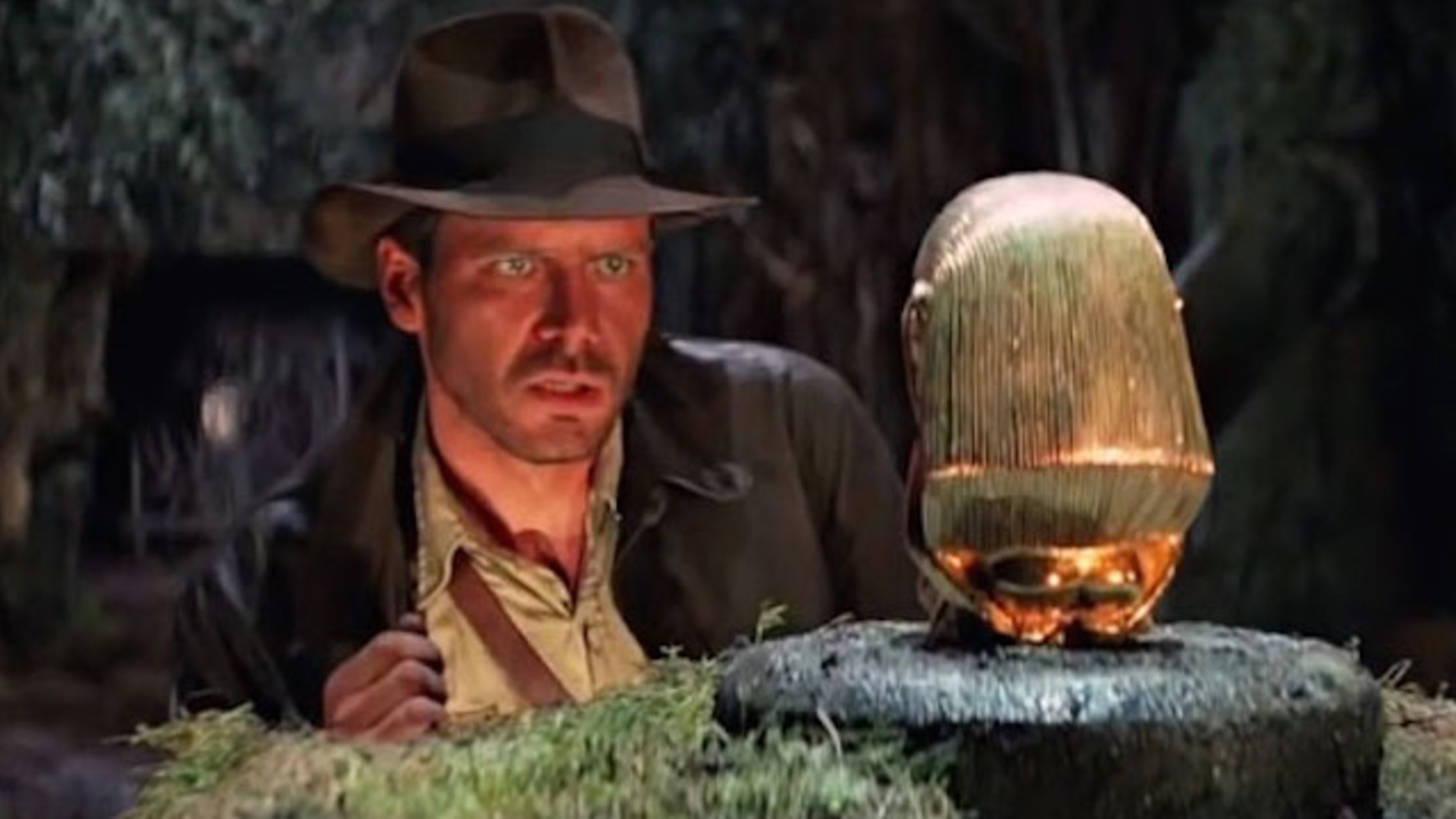
Indiana Jones and the Raiders of the Lost Ark (1981)
Indiana Jones and the Raiders of the Lost Ark, 1981
Directed by Steven Spielberg; written by Lawrence Kasdan, George Lucas, and Philip Kaufman

Why?

Experience governs how we understand our world. This experience can be gained empirically—through our senses—and logically—by learning from others and deducing from our experiences. Concepts, such as “design,” are primarily understood through witnesses. Practitioners and teachers define what design is by teaching your methods, materials, theories, and histories. Histories are generally what govern the others. What design has been defines what design is now. The materials and tools employed in the past (even the recent past), are what you are taught to use in the present. Aesthetics of the past are inherited and deployed in the here and now.

The past is what happened, history is how it is remembered. As such, it is important to look closely at what history is, how it is shaped and communicated, and how it molds our understanding of design and culture. We also need to differentiate between history—“A narration of incidents, esp. (in later use) professedly true ones; a narrative, a story”—and myth—“A popular conception of a person or thing which exaggerates or idealizes the truth.”1, 2 It also begs the questions, who is telling the stories, are we learning a true history or a mythology, can we understand design outside of history, and what might design look like that is void of history?

Required

Note: I am including the TED video, not so much for the life-coach, self-help aspect, but to consider what she is saying as a more personal way to contemplate how we tell the stories of history.

How Changing Your Story Can Change Your Life, TED
Design History and the History of Design

Supplementary Readings

Historiography
The Stories We Tell Ourselves, The New York Times
“If we reflect on the stories we tell about ourselves, both to others and to ourselves, we may well find out things about who we are that complicate the view we would prefer to be identified with.”
The Stories We Tell Ourselves, Psychology Today
“None of us wants to be seen as the villain of our own, or of other people’s, lives. Quite the opposite, we want to be regarded well. The stories we tell are attempts to maintain that respect. Even our confessions of failure are equally efforts to show that we are repentant, that we are good people at heart for whom the current malfeasance is mostly an irregularity.”
Myth and History, Encyclopædia Britannica
“Myth and history represent alternative ways of looking at the past. Defining history is hardly easier than defining myth, but a historical approach necessarily involves both establishing a chronological framework for events and comparing and contrasting rival traditions in order to produce a coherent account. The latter process, in particular, requires the presence of writing in order that conflicting versions of the past may be recorded and evaluated. Where writing is absent, or where literacy is restricted, traditions embedded in myths through oral transmission may constitute the principal sources of authority for the past.”
Why Design History? A Multi-National Perspective on the State and Purpose of the Field
“This article asks: what is the significance of design history within higher education? It reviews the practice and purpose of design history, in the education of historically aware and critically engaged designers, as an emerging independent discipline, and in terms of what the subject has to offer allied fields such as history, sociology, cultural studies, history of technology, area studies and anthropology. It considers the development and current state of design history as it is taught in the UK and non-Anglophone Europe (including France, Italy, Scandinavia, Spain, Turkey and Greece), in the US, Australia and East Asia. The argument that follows is grounded in recent design historical scholarship, combined with the views of design historians working in the abovementioned countries, in order to provide both a contemporary perspective on current practice and suggestions about possible futures.”
The Redundancy of Design History
“Of course, this failure of design history to affect practice may be explained by the fact that most designers, on the whole, don’t read. But some do, and particularly those engaged in postgraduate or paper is not another clarion call to practitioners to underpin their practice with more history and theory. We have had enough of such ill-defined, badly informed invocations. Read? Read what? appreciate your traditions? Whose traditions? So, the key problem is not more design history but better design history.”
What is History?, History Today
“Four historians consider the most fundamental question of all, one famously posed by E.H. Carr almost 60 years ago.”
Myth, History, and Theory, History and Theory
“Myth and history are generally considered antithetical modes of explanation. Writers of each tend to distrust the data of the other. Many historians of the modern period see their task as one of removing all trace of myth from the historical record. Many students of myth consider history to have less explanatory power than traditional narra- tives. Since the Greeks, logos (word as demonstrable truth) has been opposed to mythos (word as authoritative pronouncement). In more general terms myth may be defined as any set of unexamined assumptions. Some modern historians have become aware that much so-called factual history is interfused with such assumptions. What we call history is at best mythistory. Some even suggest that there can be no real distinction between the discourses of myth and history, between fact and fiction.”
Has The World Already Ended? Or Just History?, PBS Idea Channel
“Things are… tense…. It’s tough to deny that right now, the world can feel a bit like a standoffish middle school dance… with nukes. Foreign policy, geopolitics, international defense, and even long standing institutions like the European Union and, depending upon who you ask, democracy itself… have uncertain futures. Rather than indulging in our inner chicken little, it may be useful to know this isn’t, of course, the first time some people have felt like the end is nigh. As a matter of fact, depending upon who you ask–and we will… ask–it’s possible that either the world… OR HISTORY… has already ended; though at the end… of both of those things, and this episode, maybe we can find a beginning. Let’s talk some Francis Fukuyama and Jean Baudrillard.”
Unreliable Narrators
Every Marriage Is a Courthouse, This American Life
“The second cartoon Chris Ware and John Kuramoto made for our TV show, animating a story told by Radiolab host Robert Krulwich and his wife, Tamar.”
Who Can You Trust? Unreliable Narrators, It's Lit!, PBS Digital Studios
“Who is the most powerful character in fiction? Villains may doom the world, heroes may save it, but no one has more control over the plot than the narrator - expositing the who, what, where, when and how directly into the reader’s mind. But how can you tell that the person telling you the story is telling you the whole story?”
The Fix Is In, This American Life

“There are all sorts of situations in which we suspect the fix is in, but we almost never find out for certain. On today's show, for once, we find out. The whole program is devoted to one story, in which we go inside the back rooms of one multinational corporation and hear the intricate workings—recorded on tape—of how they put the fix in.”

Mythology
Myth and History, Encyclopædia Britannica
“Myth and history represent alternative ways of looking at the past. Defining history is hardly easier than defining myth, but a historical approach necessarily involves both establishing a chronological framework for events and comparing and contrasting rival traditions in order to produce a coherent account. The latter process, in particular, requires the presence of writing in order that conflicting versions of the past may be recorded and evaluated. Where writing is absent, or where literacy is restricted, traditions embedded in myths through oral transmission may constitute the principal sources of authority for the past.”
Myth, History, and Theory, History and Theory
“Myth and history are generally considered antithetical modes of explanation. Writers of each tend to distrust the data of the other. Many historians of the modern period see their task as one of removing all trace of myth from the historical record. Many students of myth consider history to have less explanatory power than traditional narra- tives. Since the Greeks, logos (word as demonstrable truth) has been opposed to mythos (word as authoritative pronouncement). In more general terms myth may be defined as any set of unexamined assumptions. Some modern historians have become aware that much so-called factual history is interfused with such assumptions. What we call history is at best mythistory. Some even suggest that there can be no real distinction between the discourses of myth and history, between fact and fiction.”
What Is Myth? Crash Course World Mythology #1
“Welcome to Crash Course World Mythology, our latest adventure (and this series may be literally adventurous) in education. Over the next 40 episodes or so, we and Mike Rugnetta are going to learn about the world by looking at the foundational stories of a bunch of different cultural traditions. We’re going to look at the ways that people’s stories define them, and the ways they shape their culture. We’re going to learn about gods, goddesses, heroes, and tricksters, and a lot more. We’re going to walk the blurry line between myth and religion, and we’re going to like it.”

Response Questions

Remember to cite specific instances from the text to support your views.

  • How much does history impact your view of design? Imagine that design did not exist as a concept—that animation, illustration, graphic design, and photography were never invented or developed. How might that alter the way that you work or the way that you talk about your work?
  • If our understanding of design is based on its past performance, how might the stories that are perpetuated about design impact how it is practiced?
  • Consider the sources of the histories you have been taught, particularly around art and design. How reliable are they? What biases might they hold? How might that shape your understanding of design?
  1. “History, n.,” Oxford English Dictionary, accessed January 2, 2021, https://www-oed-com.erl.lib.byu.edu/view/Entry/87324.
  2. “Myth, n.,” Oxford English Dictionary, accessed January 2, 2021, https://www-oed-com.erl.lib.byu.edu/view/Entry/124670.