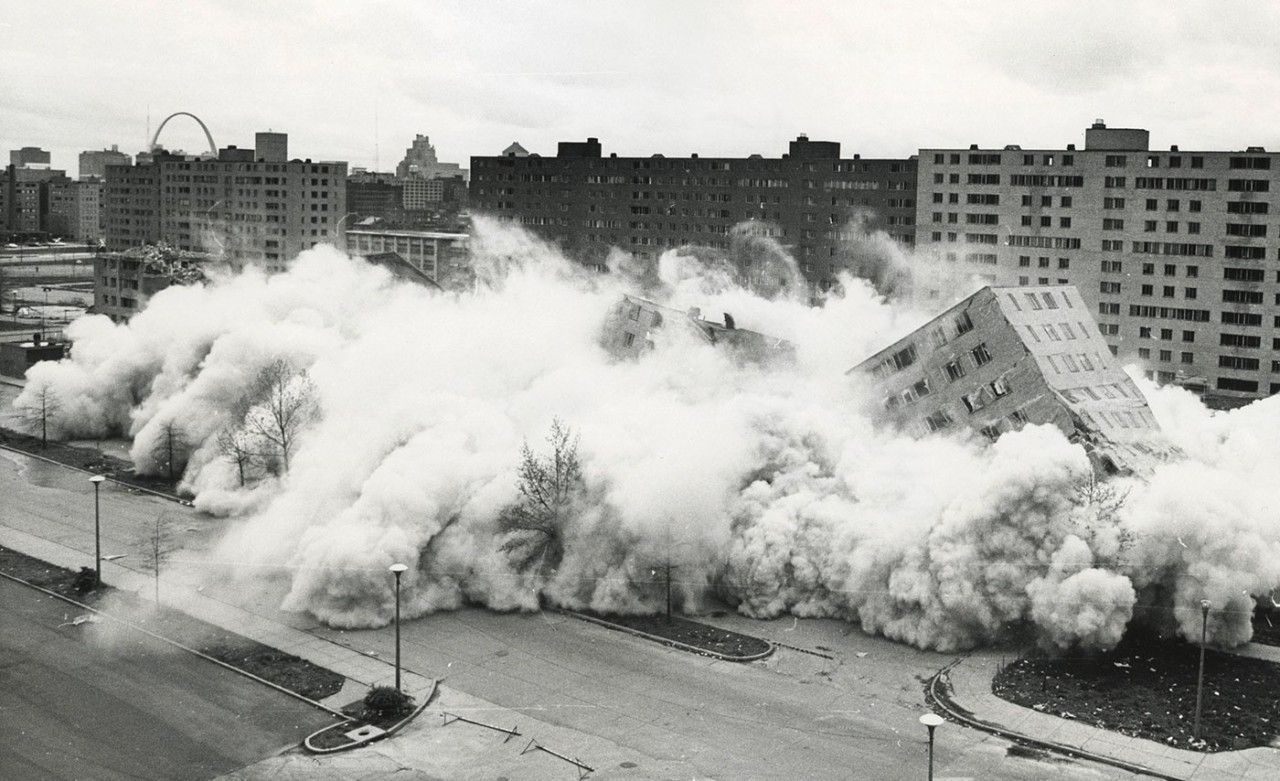
Why?
There is much debate over when Modernism died and when Postmodernism began (or if either actually did). There is also debate over whether we are still in a Postmodern age, or if we have moved on to Post-Postmodernism, Metamodernism, Pseudomodernism, Jive Modernism, or any number of other permutations. The readings you have below help to define how academics see Postmodernism and the shift from Modernism. It’s up to you to determine if you think we are currently in a Modern, Postmodern, or Post-Postmodern condition and what that means.
Required
Supplementary Readings
- Timeline
- Postmodernism
-
Postmodern and Late Modern: the Essential Definitions, Chicago Review
“Clement Greenberg, long acknowledged as the theorist of American Modernism, defined Postmodernism in 1979 as the antithesis of all he loved: that is, as the lowering of aesthetic standards caused by 'the democratization of culture under industrialism.’ Like our 'Decadence’ columnist, he saw the danger as a lack of hierarchy in artistic judgment although he did not go so far as the Frenchman in calling it simply 'nihilism’. Another art critic, Walter Darby Bannard, writing in the same prestigious magazine five years later, continued Greenberg’s crusade against the heathens and restated the same (non-) definitions, except with more brutal elaboration: ‘Postmodernism is aimless, anarchic, amorphous, self-indulgent, inclusive, horizontally structured and aims for the popular.’”Introduction & Chapter 2, Postmodernism, or, the Cultural Logic of Late Capitalism
“Fredric Jameson’s most wide-ranging work seeks to crystalize a definition of ‘postmodernism.’ Jameson’s inquiry looks at the postmodern across a wide landscape, from ‘high’ art to ‘low,’ from market ideology to architecture, from painting to ‘punk’ film, from video art to literature.” Full book: Postmodernism, or the Cultural Logic of Late Capitalism, 438 pages.Good History/Bad History, Looking Closer: Critical Writings on Graphic Design
“The eighties were a decade of comebacks: suspenders, mini-skirts, Roy Orbison, Sugar Ray Leonard…. But the really big comeback was history. We got rid of history in the sixties; saw what the world looked like without it in the seventies; and begged it to come back in the eighties. And it did; it came back with a vengeance. In design, history came back as well. Suddenly, there were countless books-big, glossy, oversize volumes-and starchy little journals devoted to the history of design. Careers were constructed around this fascination. Conferences, too. And there’s nothing wrong with studying the history of design. In fact, it’s healthy and smart, especially for design professionals. At the same time, the indiscriminate use of history has produced some really bad, unhealthy design. History in itself isn’t bad, but its influence can be.”Did We Ever Stop Being Postmodern?, Design Observer
“One probable reason for this decision is that postmodernity is simply too complicated to reference and explain in short introductory wall texts, which would have to be loaded with great gobbets of Jameson and Lyotard. Large-scale exhibitions in public museums must always strike a balance between doing a subject adequate intellectual justice and appealing to ordinary visitors who are likely to know little or nothing about the theme.”Postmodernism: What is It Good For?, Up Close
“On this episode of the Up Close podcast, literary theorist Professor Brian McHale explains the origins and trajectory of postmodernism, muses on its role in our cultural expression, and speculates on its demise.”Episode 21: Climate of Denial, Ministry of Culture
“Human-caused climate change is real and growing in impact. Yet many Americans see climate change as a belief that they can opt out of. Two belief structures are to blame: American Protestantism and postmodernism.”Is Mormonism a Postmodern Religion?, Patheos
“I want to explain three postmodern themes and describe how they relate to Mormon theology. These postmodern themes often reveal a hidden tension within the Mormon faith, caused by seemingly paradoxical claims and suggestions. These themes are continuing revelation, the theological hierarchy of the church, and its approach to pluralism.”
Response Questions
Remember to cite specific instances from the text to support your views.
- Modernism’s concerns with purity, reductionism, futurism, and utopias started to fall apart in the 1960s through the 1970s. How would you characterize Postmodernism?
- How might second wave feminism, the civil rights movement, and postcolonial theory that pushed for plurality over single visions have led to the downfall of Modernism?
- Make note of the various characteristics of Postmodernism stated within the various readings. Do you see those as still in effect today, or have we moved into a new era? What may be the events or technologies that signal that we are beyond Postmodernism?