8.2: Pre-Modernism to Early Modernism

The Birth of Modernism
Read by Sat Feb 27,
Reading Response due Wed Mar 03,
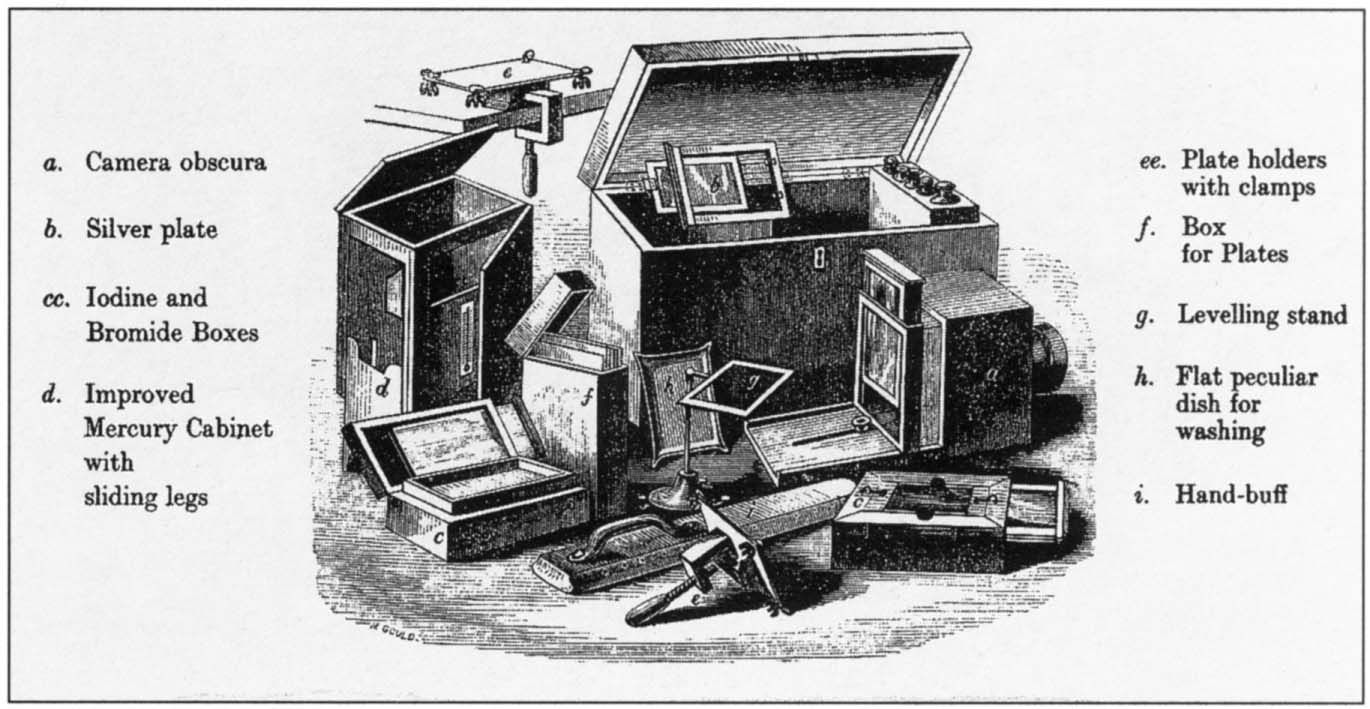
Daguerrotype Equipment

Why?

To better understand where current practice came from, and where it may go, we need to look back over the last 100+ years to gain insights, and spot trends and trajectories. For the next few weeks, we will be studying historical perspective that will reveal useful information about issues in contemporary design. To begin, we will study 19th century technological and aesthetic innovations in the lead-up to and the early days of the Modern era—said to begin around 1870. In particular, the readings below focus on early camera photography, the Arts and Crafts Movement, Post-Impressionism, and Impressionism.

Required

Supplementary Readings

Timeline

View larger

19th Century Camera Photography
Julia Margaret Cameron
“On the bicentenary of the birth of Julia Margaret Cameron (1815-1879), this film explores the life and work of one of the most important and innovative photographers of the 19th century.”
Photography and the Civil War, 1861–1865, Heilbrunn Timeline of Art History, the Metropolitan Museum of Art
“Mathew B. Brady secured permission from Lincoln to follow the troops in what was expected to be a short and glorious war; he saw only the first engagement, however, and lost his wagons and equipment in the tumult of defeat. Deciding to forgo further action himself, Brady instead financed a corps of field photographers who, together with those employed by the Union military command and by Alexander Gardner, made the first extended photographic coverage of a war.”
The Daguerreian Era and Early American Photography on Paper, 1839–60, Heilbrunn Timeline of Art History, the Metropolitan Museum of Art
“Elite daguerreotype studios were outfitted with colorful velvet tapestry, frescoed ceilings, six-light chandeliers, and, of course, impressive daguerreotype portraits of kings and queens, politicians, and even Native American chiefs (2005.100.82) displayed on the walls, dressed up in fine frames. Nevertheless, the medium’s success in America was built upon the patronage of the average worker who desired a simple likeness to keep for himself, or more likely, to send to a loved one as the era’s most enduring pledge of friendship.”
The Rise of Paper Photography in 1850s France, Heilbrunn Timeline of Art History, the Metropolitan Museum of Art
“While the 1840s were overwhelmingly dominated by the daguerreotype —magically precise, one-of-a-kind images on highly polished, silver-plated sheets of copper—the 1850s saw the rise of paper photography, invented by the Englishman William Henry Fox Talbot . His ‘calotype’ process, though lacking the clarity of daguerreotypes, had one distinct advantage: from a single negative, scores—even hundreds—of virtually identical photographic prints could be produced, and their paper support made them more easily integrated into the realm of graphic arts; they could be pasted in albums, matted and framed like engravings, or tipped into printed books.”
Early Photographers of the American West: 1860s–70s, Heilbrunn Timeline of Art History, the Metropolitan Museum of Art
“If the Civil War was the greatest test of the young American republic’s commitment to its founding precepts, it was also the watershed in its history. The feudal agrarian life gave way to the dominance of the industrialized North, which now turned its well-oiled centralized organization and genius for engineering toward the West, launching across the continent wave upon wave of migration and exploration, consolidation and appropriation. The camera went along for the ride, often in the hands of one of Mathew B. Brady’s and Alexander Gardner’s well-trained field photographers such as Timothy H. O’Sullivan.”
The Industrialization of French Photography after 1860, Heilbrunn Timeline of Art History, the Metropolitan Museum of Art
“Within a quarter-century of its birth, photography had established a ubiquitous presence in society. The medium’s most profound and lasting expressions, however, were no longer the work of its leading professionals, but rather of those who consciously set themselves apart from the accepted rules of commercial practice and took photography into new arenas of technique, subject, and expression.”
Photographers in Egypt, Heilbrunn Timeline of Art History, the Metropolitan Museum of Art
“With the exception of the Englishman Francis Frith, the earliest photographers chose the paper negative over the glass plate for its ease of handling during perilous voyages and in extreme climates. The process was naturally attuned to the unique qualities of the Egyptian landscape; the paper fibers beautifully enhanced the textures of sand and stone and exaggerated the strong contrasts of sunlight and shadow.”
Daguerre (1787–1851) and the Invention of Photography, Heilbrunn Timeline of Art History, the Metropolitan Museum of Art
“On January 7, 1839, members of the French Académie des Sciences were shown products of an invention that would forever change the nature of visual representation: photography. The astonishingly precise pictures they saw were the work of Louis-Jacques-Mandé Daguerre (1787–1851), a Romantic painter and printmaker most famous until then as the proprietor of the Diorama, a popular Parisian spectacle featuring theatrical painting and lighting effects. Each daguerreotype (as Daguerre dubbed his invention) was a one-of-a-kind image on a highly polished, silver-plated sheet of copper.”
International Pictorialism, Heilbrunn Timeline of Art History, the Metropolitan Museum of Art
“The controversy between the two aesthetic camps—those who insisted that photographs should not be altered at any stage of development and those who believed that such manual intervention was necessary to make clear the artist’s role—was continued in lively debates that clarified the aesthetic role of photography in late nineteenth- and early twentieth-century art.”
The Developing Image: 1900–1934 (excerpts: Pictorialist and Straight Photography), American Photography: A Century of Images
“Two short clips from a documentary on photography; the first part discusses the Pictorialist movement, and the second part deals with Straight Photography. This came from a PBS documentary titled: ‘American Photography: A Century of Images.’”
Arts & Crafts Movement
Memories of the Future: John Ruskin & William Morris
This documentary outlines the intersection of William Morris’ and John Ruskin’s ideas as they helped shape the Arts & Crafts movement.
The Arts and Crafts Movement in America, Heilbrunn Timeline of Art History, the Metropolitan Museum of Art
“The British movement derived its philosophical underpinnings from two important sources: first, the designer A. W. N. Pugin (1812–1852), whose early writings promoting the Gothic Revival presaged English apprehension about industrialization, and second, theorist and art critic John Ruskin (1819–1900), who advocated medieval architecture as a model for honest craftsmanship and quality materials. Ruskin’s persuasive rhetoric influenced the movement’s figurehead (and ardent socialist) William Morris (1834–1896), who believed that industrialization alienated labor and created a dehumanizing distance between the designer and manufacturer. Morris strove to unite all the arts within the decoration of the home, emphasizing nature and simplicity of form.”
Political Theory: John Ruskin
“John Ruskin was an art critic who believed the immorality of 19th century capitalism could be highlighted by one thing above all others: the ugliness of the environment.”
The Industrializatioin of Design
Linotype: The Film

Linotype: The Film is a feature-length documentary centered around the Linotype type casting machine. Called the "Eighth Wonder of the World" by Thomas Edison, it revolutionized printing and society. The film tells the charming and emotional story of the people connected to the Linotype and how it impacted the world.”

Note: You may be able to find this on other streaming services to which you are already subscribed or have free access.

Post-Impressionism
Exhibition Catalog: Manet and the Post-Impressionists
Note: Read the essay and peruse the object list in the catalog. This catalog for the exhibition that gave the Post-Impressionists their name spells out Roger Fry’s case for the nomenclature. He also addresses some of the selected artists from the exhibition. Reading a primary source like this is very helpful and informative.
Paul Cézanne
Paul Cézanne
Three Colours: Cezanne from the Art Lives Series introduces the life and work of the artist identified by presenter Matthew Collings as 'the father of modern painting’. The film takes the viewer on a journey through Cezanne’s often troubled life and career. The painter was a shy and reclusive figure whose immense talent was only widely recognised late on in his life. It may seem incredible to us today, but Paul Cezanne (1839–1906) did not even have an individual exhibition until the age of 53. By that stage he was so embittered and ambivalent towards the Parisian art world that he refused to attend. Cezanne’s relationships with important figures like the writer Emile Zola and the painter Camille Pissarro are explored, alongside his unhappy marriage to Marie-Hortense Fiquet. The various stages of his work are also sensitively analysed, with the success of his painting seeming to stem, at least in part, from his own neuroses. Cezanne was painfully socially inept and this clouded his relationships with women, as well as with many of his Impressionist contemporaries.”
Paul Gauguin (was a jerk)
Art in the Age of Sexual Harassment Allegations—Where do We Draw the Line?, Widewalls
“It seems as though nearly every single new day brings another headline about sexual harassment stories emerging from the world of art. While some see these events as a misguided crusade, others are calling it a true revolution of the art world, a revamping turning point that will cause real changes down the road. And as foundations for these changes are being laid down, museums and galleries are put into a hard spot that forces them to decide what should be done with the work of artists accused of improper behavior.”
Gauguin and Van Gogh
“In the fascinating Great Artist series, we investigate some of the best artists in history - examining their influence, style and what exactly made them so unique. In this double package we examine two of the most revered Post-Impressionists; Gauguin, the bold experimenter, influenced by the art of Asia and Africa, and Van Gogh, the uniquely bold and colourful genius who has come to epitomise great art in the minds of many.”
Gauguin’s Erotic Tahiti Idyll Exposed as a Sham, The Guardian
“Paul Gauguin, renowned for his paintings of exotic idylls and Polynesian beauties, was a sadist who battered his wife, exploited his friends and lied to the world about the erotic Eden he claimed to have discovered on the South Sea island of Tahiti. The most exhaustive study ever of Gauguin’s life has revealed a brutal man who falsely cast himself as a creature of exotic sexuality, a defender of women’s rights and a bastion of socialist ideals.”
Is It Wrong to Admire Paul Gauguin’s Art?, The Telegraph
“Life’s not easy as a Paul Gauguin fan. You are on the defensive too much to be effusive. Gauguin was both a syphilitic paedophile and an artist more important than Van Gogh. See the problem? Foul man, fine artist. Some say our knowledge of the former should change our opinion on the latter. Others, myself among them, think otherwise.”
Édouard Manet
Monet and Manet
“In the fascinating Great Artist series, we investigate some of the best artists in history - examining their influence, style and what exactly made them so unique. In this double package we examine two giant figures of the Impressionist movement; Monet, founder of the French movement and landscape painter who captured the essence of light in the beauty of his famed garden, and Manet, pivotal figure in the transition from Realism to Impressionism, and one of the first nineteenth century artists to approach modern-life subjects, that served as rallying points for many subsequent young painters.”
Exhibition on Screen: Manet: Portraying Life
“In this acclaimed film, focussing on the sell-out exhibition at the Royal Academy of Arts, London, we ask just who was Edouard Manet—the ‘Father of Modern Art.’ We enjoy exclusive access to the show as well as a behind-the-scenes look at the exhibition’s preparation. In a fascinating exploration of his life and works we offer a detailed biography of Manet and his environment—a rapidly changing 19th century Paris. Presented by leading art historian Tim Marlow; special guests and contemporary painters provide their analysis—and all in stunning HD. In this acclaimed film, focussing on the sell-out exhibition at the Royal Academy of Arts, London, we ask just who was Edouard Manet—the ‘Father of Modern Art.’ We enjoy exclusive access to the show as well as a behind-the-scenes look at the exhibition’s preparation. In a fascinating exploration of his life and works we offer a detailed biography of Manet and his environment—a rapidly changing 19th century Paris.”
Édouard Manet
“Édouard Manet (1832–1883) was a French painter and, as one of the first nineteenth century artists to approach modern-life subjects, he was a pivotal figure in the transition from Realism to Impressionism. His early masterworks The Luncheon on the Grass and Olympia engendered great controversy, and served as rallying points for the young painters who would create Impressionism. Today these are considered watershed paintings that mark the genesis of modern art.”
Manet and Modern Beauty — The Late Career of the Painter, Getty: Art + Ideas
“The exhibition Manet and Modern Beauty focuses on this often overlooked period of Manet’s career, from the late 1870s through his early death in 1883. In this episode, curators Emily Beeny and Scott Allan discuss key works from the exhibition and what they teach us about modernity and Manet.”
The Lives of Vincent van Gogh and Édouard Manet, Getty: Art + Ideas
“In this episode of Art + Ideas, curator Scott Allan discusses two artist biographies: one of Édouard Manet by author and art critic Émile Zola and the other of Vincent van Gogh written by his sister in law Jo van Gogh-Bonger. Both artists proved controversial or difficult during their lifetimes, and these accounts, written by people who knew them well, provide insight into their lives and their art. These texts have recently been published as short books as part of the Getty Publications Lives of the Artists series. Scott Allan is curator of paintings at the J. Paul Getty Museum.”
Manet & Morisot & Manet, The Land of Desire: French History and Culture
“This week’s episode continues my new series which I’m really excited about: La Belle Époque, the Golden Age of Paris. This week I’ll focus on one of my favorite artists and female heroes, the Impressionist painter Berthe Morisot. I wish I could devote an entire series to Berthe’s story, but today I’m going to focus on one of the more interesting, and underpublicized, aspects of her life: her complex relationship with Edouard Manet . . . and his brother, Eugene. Zut alors! Christmas must have been awkward at the Manet household… This week, put on your painter’s smock and join me as we discuss the inner lives of ‘Manet & Morisot & Manet.’”
The Mother and Sister of the Artist by Berthe Morisot, A Long Look: Slow Art at the National Gallery in Washington, D.C.
“When Berthe Morisot and her sister Edma wanted to learn how to paint, their parents willingly obliged. After all, that was part of an upper-class young woman’s education. But when their teacher saw their incredible talent, he warned their mother, ‘They will become painters. Are you fully aware of what that means? It will be revolutionary . . .’ And he was right! For a woman to become a professional painter was almost unheard of in 1850s Paris. But Berthe did it, even after her well-meaning mentor Édouard Manet made some . . . uh . . . improvements to this painting just before the deadline for submission to the all-important Salon. Prepare to cringe!”
Henri de Toulouse-Lautrec
Toulouse-Lautrec
“Known best for his vivid portrayals of the famous Moulin Rouge nightclub, 19th-century French painter Henri Toulouse-Lautrec had a difficult life: He was crippled by a genetic disease and died at 36 after years of alcoholism and syphilis had racked his body. This gripping program looks at Toulouse-Lautrec’s life and art, and leading authorities, art historians and scholars offer analysis and commentary that provide an inside look at the artist.”
Vincent van Gogh
The Lives of Vincent van Gogh and Édouard Manet, Getty: Art + Ideas
“In this episode of Art + Ideas, curator Scott Allan discusses two artist biographies: one of Édouard Manet by author and art critic Émile Zola and the other of Vincent van Gogh written by his sister in law Jo van Gogh-Bonger. Both artists proved controversial or difficult during their lifetimes, and these accounts, written by people who knew them well, provide insight into their lives and their art. These texts have recently been published as short books as part of the Getty Publications Lives of the Artists series. Scott Allan is curator of paintings at the J. Paul Getty Museum.”
Exhibition on Screen: Van Gogh
“Given complete and unprecedented access to the treasures of Amsterdam's Van Gogh Museum, this is a major new film about one of the world's greatest and most popular artists. This film provides viewers with the moving and inspiring experience of seeing Vincent's iconic masterpieces close-up on the screen. New insights and interpretations are offered by specially invited guests including V. Willem van Gogh, great-grandson of Theo van Gogh, and contemporary artist Lachlan Goudie.”
Gauguin and Van Gogh
“In the fascinating Great Artist series, we investigate some of the best artists in history - examining their influence, style and what exactly made them so unique. In this double package we examine two of the most revered Post-Impressionists; Gauguin, the bold experimenter, influenced by the art of Asia and Africa, and Van Gogh, the uniquely bold and colourful genius who has come to epitomise great art in the minds of many.”
Impressionism
Durand-Ruel: The Art Dealer Who Liked Impressionists Before They Were Cool, NPR
Note: You can also listen to the story (different than the article): 07:17 Paul Durand-Ruel was quite the shopper. He was the first buyer of Renoir’s Luncheon of the Boating Party, Monet’s Stacks of Wheat (End of Day Autumn), some 100 works in the Musée d'Orsay’s impressionist collection in Paris, and more than than 100 paintings in Dr. Albert Barnes’ Foundation in Philadelphia—all purchased from Durand-Ruel. ‘He bought over 1,000 Monets, 1,500 Renoirs, 800 Pissarros, 400 Sisleys, 400 Cassatts, and about 200 Manets,’ says Philadelphia Museum of Art curator Jennifer Thompson. ‘So over 5,000 impressionist pictures all told.’”
Impressionist Exhibitions
This spreadsheet (I know, it already sounds super-exciting) outlines the participating artists and the details of the eight Impressionist Exhibitions that took place between 1874–1886. It allows you to see who floated in and out, and who were the stalwart cornerstones of the movement. There is also an interactive map showing where each of the eight exhibitions took place.
Paul Durand-Ruel, the Champion of the Impressionists, Washington Post
“Durand-Ruel, who was a monarchist and deeply traditional Catholic, doesn’t emerge as a warm, fuzzy figure, but he was clearly devoted to the artists he championed and often gave them direct financial support and ­moral encouragement. The exhibition is careful not to overemphasize the tired narrative of the daring, innovative dealer doing combat with entrenched philistine forces, the story was much more complicated, and Durand-Ruel’s business much bigger than just the Impressionists.”
Exhibition on Screen: The Impressionists
“An eagerly anticipated exhibition travelling from the Musee d'Orsay Paris to the National Gallery London and onto the Philadelphia Museum of Art is the focus of the most comprehensive film ever made about the Impressionists. The exhibition brings together Impressionist art accumulated by Paul Durand-Ruel, the 19th century Parisian art collector. Degas, Manet Monet, Pissarro, Renoir, Sisley, are among the artists that he helped to establish through his galleries in London, New York and Paris. The exhibition, bringing together Durand-Ruel’s treasures, is the focus of the film, which also interweaves the story of Impressionism and a look at highlights from Impressionist collections in several prominent American galleries.”
Mary Stevenson Cassatt
Mary Stevenson Cassatt (1844–1926), Heilbrunn Timeline of Art History, the Metropolitan Museum of Art
“Mary Stevenson Cassatt (1844–1926), born in Allegheny City (now part of Pittsburgh), Pennsylvania, spent her early years with her family in France and Germany. From 1860 to 1862, she studied at the Pennsylvania Academy of the Fine Arts. By 1865, she had convinced her parents to let her study in Paris , where she took private lessons from leading academic painter Jean-Léon Gérôme, copied works of the old masters, and went sketching. She stayed in Courance and Écouen and studied with Édouard Frère and Paul Soyer. In 1868, Cassatt’s painting The Mandolin Player (private collection) was accepted at the Paris Salon , the first time her work was represented there. After three-and-a-half years in France, the Franco-Prussian War interrupted Cassatt’s studies and she returned to Philadelphia in the late summer of 1870.”
Edgar Degas
Edgar Degas
“Edgar Degas (1834–1917) was one of the greatest French painters of the late nineteenth century. This film subtly examines the relationship between his life and work, exploring his preoccupation with themes of tension, isolation and vulnerability.”
Memories of Degas, Getty: Art + Ideas
“Getty Publications has recently published two biographical essays, both titled ‘Memories of Degas.’ One is by the Irish writer and critic George Moore and the other by the Munich-born, London-based artist and critic Walter Sickert. Both Moore and Sickert were Degas’s contemporaries and write from personal experience with the artist. In this episode, Getty associate curator Emily Beeny discusses the life of Degas as it is revealed in these two essays.”
Claude Monet
Exhibition on Screen: I, Claude Monet
“Monet’s life is a gripping tale about a man who, behind his sun-dazzled canvases, suffered from feelings of depression, loneliness, even suicide. However, as his art developed and his love of gardening led to the glories of his Giverny garden, his humor, insight and love of life are revealed.Told through Monet’s own words and shot on location at the very spots he painted, the film features his most loved paintings in an unforgettable, immersive art experience.”
Monet and Manet
“In the fascinating Great Artist series, we investigate some of the best artists in history - examining their influence, style and what exactly made them so unique. In this double package we examine two giant figures of the Impressionist movement; Monet, founder of the French movement and landscape painter who captured the essence of light in the beauty of his famed garden, and Manet, pivotal figure in the transition from Realism to Impressionism, and one of the first nineteenth century artists to approach modern-life subjects, that served as rallying points for many subsequent young painters.”
Berthe Morisot
Berthe Morisot, “Woman Impressionist,” Emerges from the Margins, The New Yorker
“There’s something disheartening—a note of special pleading—about the subtitle, ‘Woman Impressionist,’ of a breathtaking Berthe Morisot retrospective at the Barnes Foundation, in Philadelphia. (Imagine a parallel case: say, ‘Georges Braque: Man Cubist.’) But I see the polemical point of the emphasis as the defiant flipping of, yes, sexist condescension to a great artist who is not so much underrated in standard art history as not rated at all against the big guns of Impressionism: Manet, Degas, Renoir, and Monet, each of whom was a close friend and admiring colleague of hers.”
Manet & Morisot & Manet, The Land of Desire: French History and Culture
“This week’s episode continues my new series which I’m really excited about: La Belle Époque, the Golden Age of Paris. This week I’ll focus on one of my favorite artists and female heroes, the Impressionist painter Berthe Morisot. I wish I could devote an entire series to Berthe’s story, but today I’m going to focus on one of the more interesting, and underpublicized, aspects of her life: her complex relationship with Edouard Manet . . . and his brother, Eugene. Zut alors! Christmas must have been awkward at the Manet household… This week, put on your painter’s smock and join me as we discuss the inner lives of ‘Manet & Morisot & Manet.’”
The Mother and Sister of the Artist by Berthe Morisot, A Long Look: Slow Art at the National Gallery in Washington, D.C.
“When Berthe Morisot and her sister Edma wanted to learn how to paint, their parents willingly obliged. After all, that was part of an upper-class young woman’s education. But when their teacher saw their incredible talent, he warned their mother, ‘They will become painters. Are you fully aware of what that means? It will be revolutionary . . .’ And he was right! For a woman to become a professional painter was almost unheard of in 1850s Paris. But Berthe did it, even after her well-meaning mentor Édouard Manet made some . . . uh . . . improvements to this painting just before the deadline for submission to the all-important Salon. Prepare to cringe!”

Response Questions

Remember to cite specific instances from the text to support your views.

  • Art has always been tied to science and technology—the chemistry of paint pigments and how they are produced, how sculpture materials are harvested, the invention of camera photography, the introduction of the digital age, etc. Should artists and designers be part scientist or engineer? Why or why not?
  • In The Genius of Photography, there are a few examples of self-taught photographers—Lartigue, the NYPD crime scene photographers, and so on. What is your opinion of self-taught creatives?
  • In The Genius of Photography, regarding New York City crime scene photographs, the writer Luc Sante says, “There is a genius of the medium—the camera is doing the work, not the human operator who is just pushing the button.” How much work are we turning over to machines—i.e., correcting images, spacing lettering, etc.? What do you make of this and what is gained/lost?
  • Are you more or less interested in dipping into the past to learn “outdated/obsolete” technology like wet-plate photography, or linotype, letterpress, lithography, or etching? Why or why not?
  • The march toward Modernism generally included a move away from traditional representation and skill into different ways of portraying human thought and experience and the different skills to do so. What do you make of this shift?
8.1: Race, Nationality, and Intersectionality as Cultural Lenses, part 2

How Race, Nationality, Colonialism, and Intersectionality Shape Culture
Read by Thu Feb 25,
Reading Response due Wed Mar 03,
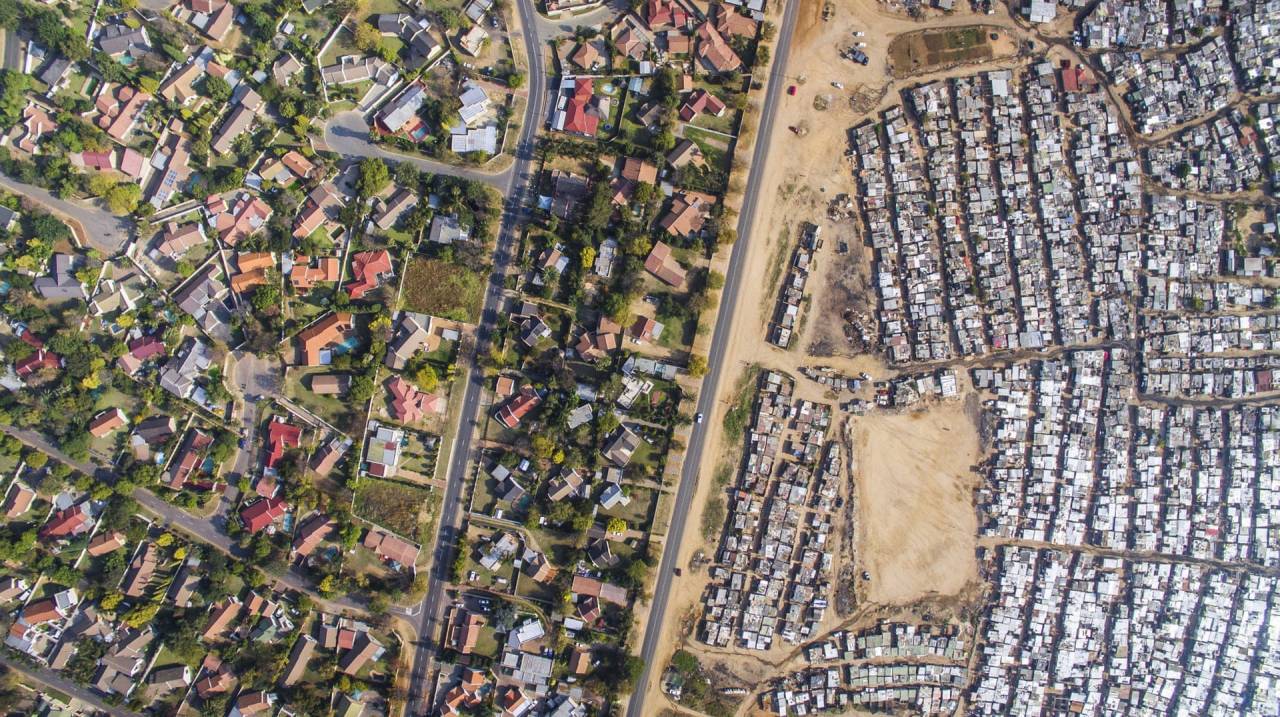
Johnny Miller, Unequal Scenes
Johnny Miller
Kya Sands/Bloubosrand, Johannesburg, 2016

From Unequal Scenes, a series documenting segregation of urban spaces throughout the world

Why?

Now that we have introduced postcolonialism, the question is, what we we do with colonial histories (and present iterations) rather than just study them, and what does this have to do with art? I’m sure you can probably quickly identify a few points where postcolonialism and art intersect, but we want to dig a bit deeper and walk around the issue a bit to see it from different sides. You’ll also start to notice where this might overlap with our discussions of economy, gender, education, semiotics, and ethics.

Required

Mapping, Critical Perspectives on Art History
Discrimination by Design, ProPublica

Supplementary Readings

Race and Postcolonialism in Art and Design
Art On My Mind
“In her first book about art and the ‘politics of the visual,’ hooks, a writer known for her clarifying views on feminism and black women, addresses the deplorable absence of discourse on black artists, especially by black critics. Why, she asks, has art played a minimal role in the lives of most African Americans?”
Where Are the Women of Color in New Media Art?, Hyperallergic
“With Santos’s encouragement, I decided it would be valuable to do a follow-up piece and include perspectives from WOC and QTWOC (queer or transgender women of color) artists and writers regarding Deep Lab, new media and technology-based art, and representation. We emailed a small questionnaire to 20 such women. Seven responded, and their comments are featured below along with Santos’s own answers.”
Why Get an MFA?, The New York Times
“Do you care about the oppressive lack of diversity in M.F.A. programs—what Junot Díaz calls ’M.F.A. vs. P.O.C.’ [People of Color]—that seems to translate into the astonishingly narrow range of contemporary writing? How is any of this relevant for you?”
ARTS.BLACK: An Editorial Note, Temporary Art Review
“Though we are in the age of ‘democratized media’, its facilitators and content are hardly reflective of the artists, and the individuals who consume it. The lack of Black writers in the critical arts realm influences an industry that is completely one dimensional.”
This is What Intersectional Feminist Art Looks Like, Chicago Tribune
“The Vietnamese language does not have a word for feminism. But the country did and does have feminists, including Nguyen Thi Minh Khai, a revolutionary leader of the Indochinese Communist Party in the 1930s. Her elusive figure lurks everywhere and nowhere in "To Name It is to See It," a solo exhibition by Huong Ngo upstairs at the DePaul Art Museum.”
The Age of the Algorithm, 99% Invisible
“Most recidivism algorithms look at a few types of data—including a person’s record of arrests and convictions and their responses to a questionnaire—then they generate a score. But the questions, about things like whether one grew up in a high-crime neighborhood or have a family member in prison, are in many cases ‘basically proxies for race and class,’ explains O’Neil. The score generated by the algorithm is used by judges when making decisions about the defendant. People with higher scores will often face higher bail, longer sentences, and lower chances of parole. Instead, O’Neil believes these results could be used to select people for rehabilitation programs or to better understand society’s structural inequalities.”
How the Racism Baked Into Technology Hurts Teens, The Atlantic
“Last month, Twitter users uncovered a disturbing example of bias on the platform: An image-detection algorithm designed to optimize photo previews was cropping out Black faces in favor of white ones. Twitter apologized for this botched algorithm, but the bug remains.”
“The Evolution of a Black Aesthetic, 1920-195”: David C. Driskell and Race, Ethics, and Aesthetics, Callaloo

“This article considers David Driskell's catalogue essay, "The Evolution of a Black Aesthetic, 1920-1950," in the context of the author, the times, and exigencies behind the exhibition "Two Centuries of Black American Art" (1976). Situated historically, Driskell's essay manifests the dominant voices and parameters relative to race and artistic practice in African-American art at that time (1970s). Nonetheless, it is also a deeply individualistic essay, written from the perspective of a practicing artist significantly indebted to modernist conceptions of art and scholastic aesthetic philosophy.”

Black Art: In the Absence of Light
Requires HBO subscription. “Inspired by the late David Driskell’s landmark 1976 exhibition, ‘Two Centuries of Black American Art,’ the documentary Black Art: In the Absence of Light offers an illuminating introduction to the work of some of the foremost Black visual artists working today. Directed by Sam Pollard (Atlanta's Missing and Murdered: The Lost Children) the film shines a light on the extraordinary impact of Driskell’s exhibit on generations of Black artists who have staked a claim on their rightful place within the 21st-Century art world. Interweaving insights and context from scholars and historians, along with interviews from a new generation of working African American curators and artists including Theaster Gates, Kerry James Marshall, Faith Ringgold, Amy Sherald and Carrie Mae Weems, the documentary is a look at the Contributions of Black American artists in today’s contemporary art world.”
Race in Art and Design Education
Decolonial Strategies for the Art History Classroom
“A (more) decolonized art history may be possible, if we are able to rethink both what we teach and how we teach it. How might this manifest through re-reading and reassessing the traditional canon? How might it manifest through challenging the traditional lecture format, inviting students to relate to each other and their own histories more closely? We come together in this open workshop format to discuss how we are working towards decolonizing our art history classrooms. This workshop unites educators committed to such a material reconfiguration of art history, as well as the potential impacts of such a reconfiguration beyond the classroom.”
Decolonizing and Diversifying Are Two Different Things: A Workshop Case Study, Art History Teaching Resources
“There is a long history of decolonial work in educational spaces. We acknowledge that the tools we shared with participants during this workshop as well as the thoughts we share here are a small part of this process. We recommend continuing this work in conversation with others who are also attempting to decolonize their classrooms (as well as spaces outside of academia).”
Why Get an MFA?, The New York Times
“Do you care about the oppressive lack of diversity in M.F.A. programs—what Junot Díaz calls ’M.F.A. vs. P.O.C.’ [People of Color]—that seems to translate into the astonishingly narrow range of contemporary writing? How is any of this relevant for you?”
Episode 51: Race & Racism in Ancient & Medieval Studies, Part One: the Problem, The Endless Knot
“What are the problems surrounding race and racism in the fields of Classics and Medieval Studies today? Where did these fields come from, and how does that affect the way we think about the past, and how we construct the present? For this episode (and the next) we interviewed eight scholars and put it together into an exploration of these unfortunately timely topics. Thank you to Katherine Blouin, Damian Fleming, Usama Ali Gad, Rebecca Futo Kennedy, Asa Mittman, Dimitri Nakassis, Helen Young, and Donna Zuckerberg for their generous contributions of time and thoughtful discussion of these difficult subjects.”
Episode 52: Race & Racism in Ancient & Medieval Studies, Part Two: Responses, The Endless Knot
“In part two of our discussion about racism, we talk about ways to respond to the problems in the field, in teaching, scholarship, and more.”
Renowned Feminist Art Historian Amelia Jones Believes that the Discipline of Art History Should be Restructured to Embrace New Narratives and Diverse Voices
“What I am trying to do in my academic life is change art discourse. I want to change the field of art history. It is time to have a new narrative and it is time to bring new, more diverse voices to the field.”
A Toolkit for Breaking Down Racialized Design in the Classroom, Racism Untaught, AIGA
“Constructing necessary conversations in the classroom about issues of race in design isn’t an easy or comfortable task to take on. Our lack of information, limited personal experiences, or the fact that the conversation has been absent from design classrooms during our own education, make many design educators reluctant to integrate the concept of race into their classrooms. Many institutions offer resources and methods on how to initiate the conversation and create awareness in the classroom in order to support greater diversity and inclusion efforts, but little hone in on the forms of racialized design that surround us everyday. Two design educators, Terresa Moses and Lisa Mercer, are passionate about creating a design approach for other educators that provide an informed and intentional process to analyzing racialized design, understanding how it is systemically perpetuated, and then working to unteach it. The following Q+A with Lisa and Terresa share their project titled ‘Racism Untaught’.”
Decolonizing/Decanonizing/Decentering
Decolonization is Not a Metaphor, Decolonization: Indigeneity, Education & Society
“Our goal in this article is to remind readers what is unsettling about decolonization. Decolonization brings about the repatriation of Indigenous land and life; it is not a metaphor for other things we want to do to improve our societies and schools. The easy adoption of decolonizing discourse by educational advocacy and scholarship, evidenced by the increasing number of calls to ‘decolonize our schools,’ or use ‘decolonizing methods,’ or, “decolonize student thinking”, turns decolonization into a metaphor. As important as their goals may be, social justice, critical methodologies, or approaches that decenter settler perspectives have objectives that may be incommensurable with decolonization. Because settler colonialism is built upon an entangled triad structure of settler-native-slave, the decolonial desires of white, nonwhite, immigrant, postcolonial, and oppressed people, can similarly be entangled in resettlement, reoccupation, and reinhabitation that actually further settler colonialism.”
Decolonial Strategies for the Art History Classroom
“A (more) decolonized art history may be possible, if we are able to rethink both what we teach and how we teach it. How might this manifest through re-reading and reassessing the traditional canon? How might it manifest through challenging the traditional lecture format, inviting students to relate to each other and their own histories more closely? We come together in this open workshop format to discuss how we are working towards decolonizing our art history classrooms. This workshop unites educators committed to such a material reconfiguration of art history, as well as the potential impacts of such a reconfiguration beyond the classroom.”
Decolonizing and Diversifying Are Two Different Things: A Workshop Case Study, Art History Teaching Resources
“There is a long history of decolonial work in educational spaces. We acknowledge that the tools we shared with participants during this workshop as well as the thoughts we share here are a small part of this process. We recommend continuing this work in conversation with others who are also attempting to decolonize their classrooms (as well as spaces outside of academia).”
Do Not ‘Decolonize’ . . . If You Are Not Decolonizing: Progressive Language and Planning Beyond a Hollow Academic Rebranding, Critical Ethnic Studies
“ I have started to see the complexity inherent in how decolonizing has been co-opted from a vibrant and critical engagement to an academic buzzword. This was recently bought home to me when I saw a student wearing a rather colourful t-shirt with a ‘Decolonize the …” typed in boldface in the front. While it was unclear to me what they wanted to decolonize, I was troubled by the text on the shirt, not because of my dislike of buzzwords (I’ve used them before) or because of the student wearing it, but rather it was just at the end of a long line of hollow ‘decolonizing’ moves I had witnessed—online and offline. Within the academy, I have seen the sloppy attempts to ‘decolonize’ a syllabus or a programme without any real structural changes—in the programme, the class, the faculty, or the university. This is NOT decolonizing the syllabus, or the programme, or the university. To take on decolonizing work without having ever engaged with the long tradition of scholars who have written on decolonizing—is sloppy and opportunistic. Especially sloppy if you have not read the seminal Tuck and Yang article which asks you to not use decolonizing as a metaphor.”
Cultural Appropriation
Teenager’s Prom Dress Stirs Furor in U.S. — but Not in China, The New York Times
“When Keziah Daum wore a Chinese-style dress to her high school prom in Utah, it set off an uproar—but not because of its tight fit or thigh-high slit. After Ms. Daum, 18, shared pictures on social media of her prom night, a Twitter user named Jeremy Lam hotly responded in a post that has been retweeted nearly 42,000 times. ‘My culture is NOT’ your prom dress, he wrote, adding profanity for effect. ‘I’m proud of my culture,’ he wrote in another post. ‘For it to simply be subject to American consumerism and cater to a white audience, is parallel to colonial ideology.’ Other Twitter users who described themselves as Asian-American seized on Ms. Daum’s dress—a form-fitting red cheongsam (also known as a qipao) with black and gold ornamental designs—as an example of cultural appropriation, a sign of disrespect and exploitation.”
Someone I’m Not: Chris Ware, Art21
“From his home and studio in Oak Park, Illinois, artist Chris Ware shares motivations and challenges for telling stories from the perspectives of others in his work. ‘I distinctly remember being told by my teachers, if you draw women, you’re colonizing them with your eyes,’ Ware recalls of art school. ‘Do you not draw women and then maintain an allegiance to some sort of experience that only you have had? Or do you try to expand your understanding and your empathy for other human beings?’”
When Chefs Become Famous Cooking Other Cultures’ Food, NPR
“So you walk into the new Korean joint around the corner and discover that (gasp) the head chef is a white guy from Des Moines. What’s your gut reaction? Do you want to walk out? Why? The question of who gets to cook other people’s food can be squishy—just like the question of who gets to tell other people’s stories. For some non-white Americans, the idea of eating ‘ethnic cuisine’ (and there’s a whole other debate about that term) not cooked by someone of that ethnicity can feel like a form of cultural theft. Where does inspiration end? When is riffing off someone’s cuisine an homage, and when does it feel like a form of co-opting? And then there’s the question of money: If you’re financially benefiting from selling the cuisine of others, is that always wrong?”
A Much-Needed Primer on Cultural Appropriation, Jezebel
“This can include unauthorized use of another culture’s dance, dress, music, language, folklore, cuisine, traditional medicine, religious symbols, etc. It’s most likely to be harmful when the source community is a minority group that has been oppressed or exploited in other ways or when the object of appropriation is particularly sensitive, e.g. sacred objects.”
The Dos and Don’ts of Cultural Appropriation, The Atlantic
“‘It’s not fair to ask any culture to freeze itself in time and live as though they were a museum diorama,’ says Susan Scafidi, a lawyer and the author of Who Owns Culture?: Appropriation and Authenticity in American Law. ‘Cultural appropriation can sometimes be the savior of a cultural product that has faded away.’”
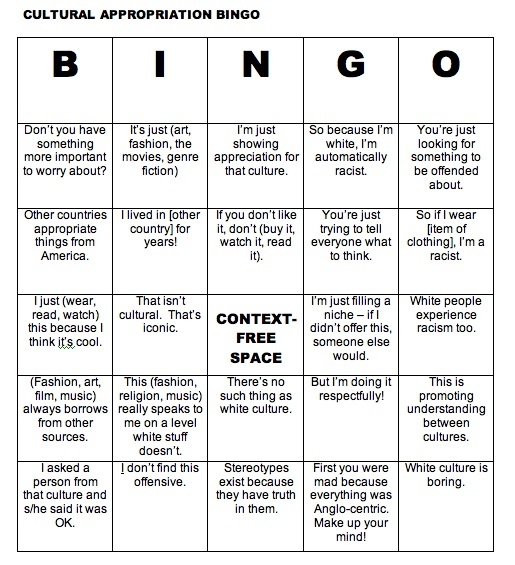
Cultural Appropriation Bingo: Proving your Comments are Unoriginal and Ignorant, Native Appropriations
Dr. Sheila Addison, Cultural Appropriation Bingo

Dr. Sheila Addison
Cultural Appropriation Bingo

Pretendians and What to Do with People Who Falsely Say They’re Indigenous Put Infocus, APTN News

“Pretendians – noun – A person who falsely claims to have Indigenous ancestry – meaning it’s people who fake an Indigenous identity or dig up an old ancestor from hundreds of years ago to proclaim themselves as Indigenous today. They take up a lot of space and income from First Nation, Inuit and Metis Peoples. It’s not a new phenomenon – but the conversation about what to do about these fraudsters continues to evolve. In the wake of the most recent identity scandal that rocked the arts world and ended with award-winning filmmaker Michelle Latimer apologizing for falsely claiming connection to Kitigan Zibi, some are calling for harsh penalties for anyone who can’t back up their identity claim – fines of $250,000 or five years in jail.”

Afrofuturism
The Origins and Impact of Afrofuturism, African and Afro-Diasporan Talks
“‘The Origins and Impact of Afrofuturism’, with Naima Keith and Zoe Whitley, curators of 'The Shadows Took Shape’ on at Studio Museum until March 2014.”
Afrofuturism Takes Flight: from Sun Ra to Janelle Monáe, the Guardian
“Culturally, Afrofuturism’s reach is vast. It encompasses the literature of writers such as Octavia E Butler and Ishmael Reed, films such as John Sayles’s The Brother From Another Planet, and the visual art of Jean-Michel Basquiat and Ellen Gallagher. It has been retrospectively applied to the work of musicians ranging from Jimi Hendrix and Sun Ra to Public Enemy and Lee "Scratch” Perry. It has an expansive and pliant musical heritage, which film-maker and Afrofuturist author Ytasha Womack argues stretches all the way back to ancient African griot traditions; she also notes the frequent references to Egyptian astronomy and the pyramids.“
George Clinton, Sun Ra And The Sci-Fi Funk Of Afrofuturism, WBUR
“Cultural critic Mark Dery coined the term 'Afrofuturism’ in 1993 to describe the particular strain of science fiction concerned with black experiences. P-Funk’s universe was inspired by Clinton’s love of television shows like ‘Star Trek’ and films like ‘Close Encounters of the Third Kind.’”
Space is the Place
“Avant-garde jazz musician Sun Ra stars in the movie version of his concept album Space Is the Place. Not following a linear plot line, this experimental film is a bizarre combination of social commentary, blaxploitation, science fiction, and concert performance. The opening scene is set in an intergalactic forest, with Sun Ra introducing his plan to use music as salvation for the black community. Back on Earth, he wears a disguise as Sunny Ray, a piano player in a 1940s Chicago strip club who causes an explosion with his sounds. Switching to a scene in a desert, he plays a card game called "The End of the World,” with the Overseer (Ray Johnson), who is dressed in white and drives a white Cadillac. Sun Ra pulls out a spaceship card and the Arkestra play the song “Calling Planet Earth” as their spaceship lands in Oakland, CA. Perpetually dressed in sparkling gold robes and headdresses, he sets out to save the black people from oppression.“
The Mundane Afrofuturism Manifesto
"The undersigned, being alternately pissed off and bored, need a means of speculation and asserting a different set of values with which to re-imagine the future. In looking for a new framework for black diasporic artistic production, we are temporarily united in the following actions. […] The most likely future is one in which we only have ourselves and this planet.” See also the Mundane Afrofuturist Manifesto page on Martine Syms' site.
We Are in the Future, This American Life
“One of our producers, Neil Drumming, has recently become fascinated with Afrofuturism. It's more than sci-fi. It’s a way of looking at black culture that’s fantastic, creative, and oddly hopeful—which feels especially urgent during a time without a lot of optimism.”
Intersectionality
Introduction, Black Feminism Reimagined: After Intersectionality
“In Black Feminism Reimagined Jennifer C. Nash reframes black feminism's engagement with intersectionality, often celebrated as its primary intellectual and political contribution to feminist theory. Charting the institutional history and contemporary uses of intersectionality in the academy, Nash outlines how women's studies has both elevated intersectionality to the discipline's primary program-building initiative and cast intersectionality as a threat to feminism's coherence. As intersectionality has become a central feminist preoccupation, Nash argues that black feminism has been marked by a single affect—defensiveness—manifested by efforts to police intersectionality's usages and circulations. Nash contends that only by letting go of this deeply alluring protectionist stance, the desire to make property of knowledge, can black feminists reimagine intellectual production in ways that unleash black feminist theory's visionary world-making possibilities”
Mapping the Margins: Intersectionality, Identity Politics, and Violence Against Women of Color, Stanford Law Review
“The problem with identity politics is not that it fails to transcend difference, as some critics charge, but rather the opposite—that it frequently conflates or ignores intra group differences. In the context of violence against women, this elision of difference is problematic, fundamentally because the violence that many women experience is often shaped by other dimensions of their identities, such as race and class. Moreover, ignoring differences within groups frequently contributes to tension among groups, another problem of identity politics that frustrates efforts to politicize violence against women. Feminist efforts to politicize experiences of women and antiracist efforts to politicize experiences of people of color' have frequently proceeded as though the issues and experiences they each detail occur on mutually exclusive terrains. Although racism and sexism readily intersect in the lives of real people, they seldom do in feminist and antiracist practices. And so, when the practices expound identity as "woman" or ‘person of color’ as an either/or proposition, they relegate the identity of women of color to a location that resists telling.”
Demarginalizing the Intersection of Race and Sex: A Black Feminist Critique of Antidiscrimination Doctrine, Feminist Theory and Antiracist Politics, The University of Chicago Legal Forum
“One way to approach the problem of intersectionality is to examine how courts frame and interpret the stories of Black women plaintiffs. While I cannot claim to know the circumstances underlying the cases that I will discuss, I nevertheless believe that the way courts interpret claims made by Black women is itself part of Black women's experience and, consequently, a cursory review of cases involving Black female plaintiffs is quite revealing. To illustrate the difficulties inherent in judicial treatment of intersectionality, I will consider three Title VIP cases: DeGraffenreid v General Motors,5 Moore v Hughes Helicopter6 and Payne v Travenol.”
The Urgency of Intersectionality, TED
“Now more than ever, it's important to look boldly at the reality of race and gender bias -- and understand how the two can combine to create even more harm. Kimberlé Crenshaw uses the term "intersectionality" to describe this phenomenon; as she says, if you're standing in the path of multiple forms of exclusion, you're likely to get hit by both. In this moving talk, she calls on us to bear witness to this reality and speak up for victims of prejudice.”
Age Against the Machine: The Fatal Intersection of Racism & Ageism In the Time of Coronavirus, Intersectionality Matters with Kimberlé Crenshaw
“On this episode of Intersectionality Matters, Kimberle Crenshaw is joined by two timely voices—Ashton Applewhite, author of This Chair Rocks: A Manifesto Against Ageism, and Willie ‘J.R.’ Fleming, Executive Director of the Chicago Anti-Eviction Campaign—to discuss how ageism, and its varying intersections with race, class, ability, and gender, is materializing in the fight against COVID-19.”
What Slavery Engendered: An Intersectional Look at 1619, Intersectionality Matters with Kimberlé Crenshaw
“In this episode, Kimberlé chops it up with Dorothy Roberts, a professor at the University of Pennsylvania and a leading scholar in race, gender, bioethics, and the law. In a conversation that merges intersectional inquiry with The 1619 Project, which interrogates America’s history of slavery in order to understand racial disparities in 2019, Crenshaw and Roberts shed light on the lasting consequences of slavery, segregation, and White Supremacy, and their impact on Black women specifically. Their timely conversation highlights the relationship between the legacy of slavery and instances of modern oppression against Black women, such as the curbing of welfare, forced sterilization, and mass incarceration.”
This is What Intersectional Feminist Art Looks Like, Chicago Tribune
“The Vietnamese language does not have a word for feminism. But the country did and does have feminists, including Nguyen Thi Minh Khai, a revolutionary leader of the Indochinese Communist Party in the 1930s. Her elusive figure lurks everywhere and nowhere in "To Name It is to See It," a solo exhibition by Huong Ngo upstairs at the DePaul Art Museum.”
The Combahee River Collective Statement
“One issue that is of major concern to us and that we have begun to publicly address is racism in the white women’s movement. As Black feminists we are made constantly and painfully aware of how little effort white women have made to understand and combat their racism, which requires among other things that they have a more than superficial comprehension of race, color, and Black history and culture. Eliminating racism in the white women’s movement is by definition work for white women to do, but we will continue to speak to and demand accountability on this issue.”
Why I’m Giving up on Intersectional Feminism, Quartz
“As the honeymoon wore off, I began to notice some things I hadn’t before. For starters, many white women announced themselves as intersectional feminists, yet, were still completely detached from the lives and issues of cis and trans black women and women of color. I also noticed that black women and women of color weren’t too quick to join the intersectional movement either. Instincts and too many bad experiences in white-centered environments made them very distrustful of intersectional feminism.”

Response Questions

Remember to cite specific instances from the text to support your views.

  • How can racism be woven into images, objects, services, content, systems, and aesthetics?
  • How might you check yourself and your work against inadvertent racism or cultural insensitivity?
  • How do we accommodate and make space for fluid and complex cultural identities, and therefore culture rooted in complex issues?
  • How are issues of “quality” used as code for exclusion? What are the measuring sticks used to ascertain “quality?” Are those measuring sticks racist or sexist?
  • How might you deal with the pitfalls of representing cultures/races/nationalities that are not your own?