Why?
To better understand where current practice came from, and where it may go, we need to look back over the last 100+ years to gain insights, and spot trends and trajectories. For the next few weeks, we will be studying historical perspective that will reveal useful information about issues in contemporary design. To begin, we will study 19th century technological and aesthetic innovations in the lead-up to and the early days of the Modern era—said to begin around 1870. In particular, the readings below focus on early camera photography, the Arts and Crafts Movement, Post-Impressionism, and Impressionism.
Required
Supplementary Readings
- Timeline
- 19th Century Camera Photography
-
Julia Margaret Cameron
“On the bicentenary of the birth of Julia Margaret Cameron (1815-1879), this film explores the life and work of one of the most important and innovative photographers of the 19th century.”Photography and the Civil War, 1861–1865, Heilbrunn Timeline of Art History, the Metropolitan Museum of Art
“Mathew B. Brady secured permission from Lincoln to follow the troops in what was expected to be a short and glorious war; he saw only the first engagement, however, and lost his wagons and equipment in the tumult of defeat. Deciding to forgo further action himself, Brady instead financed a corps of field photographers who, together with those employed by the Union military command and by Alexander Gardner, made the first extended photographic coverage of a war.”The Daguerreian Era and Early American Photography on Paper, 1839–60, Heilbrunn Timeline of Art History, the Metropolitan Museum of Art
“Elite daguerreotype studios were outfitted with colorful velvet tapestry, frescoed ceilings, six-light chandeliers, and, of course, impressive daguerreotype portraits of kings and queens, politicians, and even Native American chiefs (2005.100.82) displayed on the walls, dressed up in fine frames. Nevertheless, the medium’s success in America was built upon the patronage of the average worker who desired a simple likeness to keep for himself, or more likely, to send to a loved one as the era’s most enduring pledge of friendship.”The Rise of Paper Photography in 1850s France, Heilbrunn Timeline of Art History, the Metropolitan Museum of Art
“While the 1840s were overwhelmingly dominated by the daguerreotype —magically precise, one-of-a-kind images on highly polished, silver-plated sheets of copper—the 1850s saw the rise of paper photography, invented by the Englishman William Henry Fox Talbot . His ‘calotype’ process, though lacking the clarity of daguerreotypes, had one distinct advantage: from a single negative, scores—even hundreds—of virtually identical photographic prints could be produced, and their paper support made them more easily integrated into the realm of graphic arts; they could be pasted in albums, matted and framed like engravings, or tipped into printed books.”Early Photographers of the American West: 1860s–70s, Heilbrunn Timeline of Art History, the Metropolitan Museum of Art
“If the Civil War was the greatest test of the young American republic’s commitment to its founding precepts, it was also the watershed in its history. The feudal agrarian life gave way to the dominance of the industrialized North, which now turned its well-oiled centralized organization and genius for engineering toward the West, launching across the continent wave upon wave of migration and exploration, consolidation and appropriation. The camera went along for the ride, often in the hands of one of Mathew B. Brady’s and Alexander Gardner’s well-trained field photographers such as Timothy H. O’Sullivan.”The Industrialization of French Photography after 1860, Heilbrunn Timeline of Art History, the Metropolitan Museum of Art
“Within a quarter-century of its birth, photography had established a ubiquitous presence in society. The medium’s most profound and lasting expressions, however, were no longer the work of its leading professionals, but rather of those who consciously set themselves apart from the accepted rules of commercial practice and took photography into new arenas of technique, subject, and expression.”Photographers in Egypt, Heilbrunn Timeline of Art History, the Metropolitan Museum of Art
“With the exception of the Englishman Francis Frith, the earliest photographers chose the paper negative over the glass plate for its ease of handling during perilous voyages and in extreme climates. The process was naturally attuned to the unique qualities of the Egyptian landscape; the paper fibers beautifully enhanced the textures of sand and stone and exaggerated the strong contrasts of sunlight and shadow.”Daguerre (1787–1851) and the Invention of Photography, Heilbrunn Timeline of Art History, the Metropolitan Museum of Art
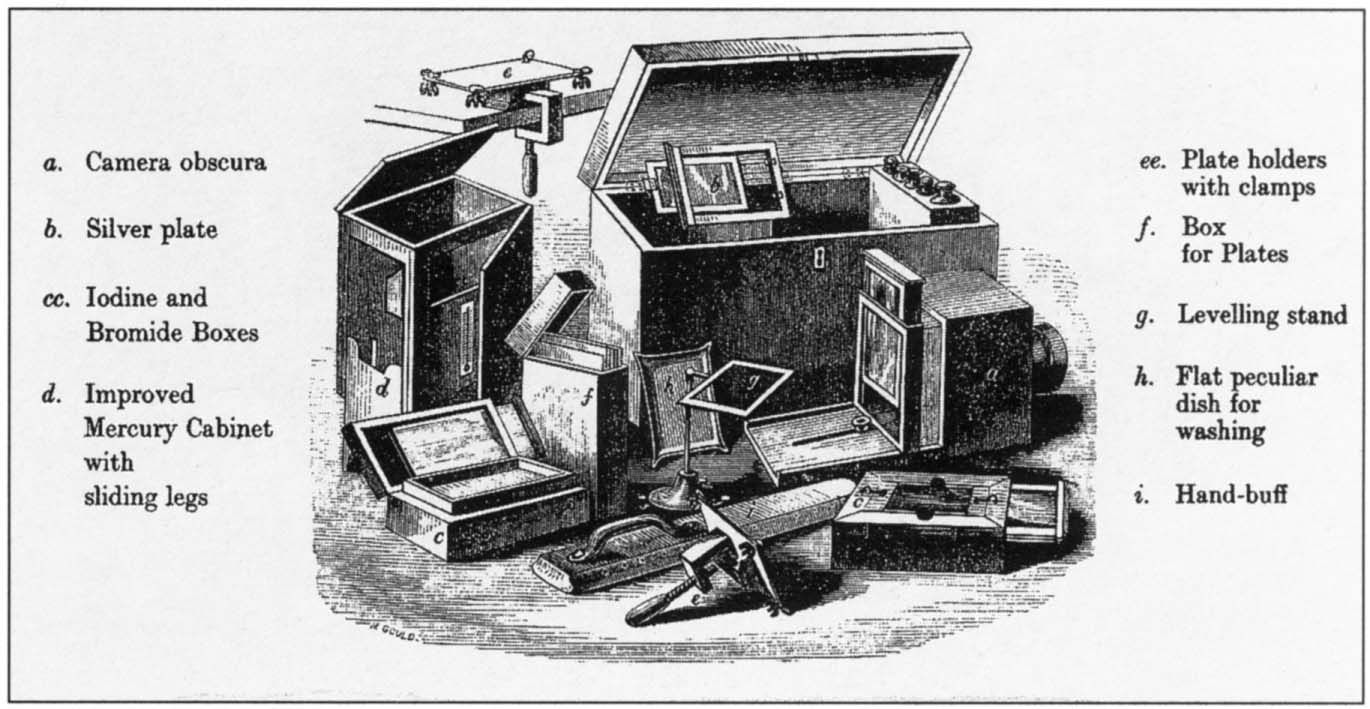
“On January 7, 1839, members of the French Académie des Sciences were shown products of an invention that would forever change the nature of visual representation: photography. The astonishingly precise pictures they saw were the work of Louis-Jacques-Mandé Daguerre (1787–1851), a Romantic painter and printmaker most famous until then as the proprietor of the Diorama, a popular Parisian spectacle featuring theatrical painting and lighting effects. Each daguerreotype (as Daguerre dubbed his invention) was a one-of-a-kind image on a highly polished, silver-plated sheet of copper.”International Pictorialism, Heilbrunn Timeline of Art History, the Metropolitan Museum of Art
“The controversy between the two aesthetic camps—those who insisted that photographs should not be altered at any stage of development and those who believed that such manual intervention was necessary to make clear the artist’s role—was continued in lively debates that clarified the aesthetic role of photography in late nineteenth- and early twentieth-century art.”The Developing Image: 1900–1934 (excerpts: Pictorialist and Straight Photography), American Photography: A Century of Images
“Two short clips from a documentary on photography; the first part discusses the Pictorialist movement, and the second part deals with Straight Photography. This came from a PBS documentary titled: ‘American Photography: A Century of Images.’” - Arts & Crafts Movement
-
Memories of the Future: John Ruskin & William Morris
This documentary outlines the intersection of William Morris’ and John Ruskin’s ideas as they helped shape the Arts & Crafts movement.The Arts and Crafts Movement in America, Heilbrunn Timeline of Art History, the Metropolitan Museum of Art
“The British movement derived its philosophical underpinnings from two important sources: first, the designer A. W. N. Pugin (1812–1852), whose early writings promoting the Gothic Revival presaged English apprehension about industrialization, and second, theorist and art critic John Ruskin (1819–1900), who advocated medieval architecture as a model for honest craftsmanship and quality materials. Ruskin’s persuasive rhetoric influenced the movement’s figurehead (and ardent socialist) William Morris (1834–1896), who believed that industrialization alienated labor and created a dehumanizing distance between the designer and manufacturer. Morris strove to unite all the arts within the decoration of the home, emphasizing nature and simplicity of form.”Political Theory: John Ruskin
“John Ruskin was an art critic who believed the immorality of 19th century capitalism could be highlighted by one thing above all others: the ugliness of the environment.” - The Industrializatioin of Design
-
Linotype: The Film
“Linotype: The Film is a feature-length documentary centered around the Linotype type casting machine. Called the "Eighth Wonder of the World" by Thomas Edison, it revolutionized printing and society. The film tells the charming and emotional story of the people connected to the Linotype and how it impacted the world.”
Note: You may be able to find this on other streaming services to which you are already subscribed or have free access.
- Post-Impressionism
-
Exhibition Catalog: Manet and the Post-Impressionists
Note: Read the essay and peruse the object list in the catalog. This catalog for the exhibition that gave the Post-Impressionists their name spells out Roger Fry’s case for the nomenclature. He also addresses some of the selected artists from the exhibition. Reading a primary source like this is very helpful and informative. - Paul Cézanne
-
Paul Cézanne
“Three Colours: Cezanne from the Art Lives Series introduces the life and work of the artist identified by presenter Matthew Collings as 'the father of modern painting’. The film takes the viewer on a journey through Cezanne’s often troubled life and career. The painter was a shy and reclusive figure whose immense talent was only widely recognised late on in his life. It may seem incredible to us today, but Paul Cezanne (1839–1906) did not even have an individual exhibition until the age of 53. By that stage he was so embittered and ambivalent towards the Parisian art world that he refused to attend. Cezanne’s relationships with important figures like the writer Emile Zola and the painter Camille Pissarro are explored, alongside his unhappy marriage to Marie-Hortense Fiquet. The various stages of his work are also sensitively analysed, with the success of his painting seeming to stem, at least in part, from his own neuroses. Cezanne was painfully socially inept and this clouded his relationships with women, as well as with many of his Impressionist contemporaries.” - Paul Gauguin (was a jerk)
-
Art in the Age of Sexual Harassment Allegations—Where do We Draw the Line?, Widewalls
“It seems as though nearly every single new day brings another headline about sexual harassment stories emerging from the world of art. While some see these events as a misguided crusade, others are calling it a true revolution of the art world, a revamping turning point that will cause real changes down the road. And as foundations for these changes are being laid down, museums and galleries are put into a hard spot that forces them to decide what should be done with the work of artists accused of improper behavior.”Gauguin and Van Gogh
“In the fascinating Great Artist series, we investigate some of the best artists in history - examining their influence, style and what exactly made them so unique. In this double package we examine two of the most revered Post-Impressionists; Gauguin, the bold experimenter, influenced by the art of Asia and Africa, and Van Gogh, the uniquely bold and colourful genius who has come to epitomise great art in the minds of many.”Gauguin’s Erotic Tahiti Idyll Exposed as a Sham, The Guardian
“Paul Gauguin, renowned for his paintings of exotic idylls and Polynesian beauties, was a sadist who battered his wife, exploited his friends and lied to the world about the erotic Eden he claimed to have discovered on the South Sea island of Tahiti. The most exhaustive study ever of Gauguin’s life has revealed a brutal man who falsely cast himself as a creature of exotic sexuality, a defender of women’s rights and a bastion of socialist ideals.”Is It Wrong to Admire Paul Gauguin’s Art?, The Telegraph
“Life’s not easy as a Paul Gauguin fan. You are on the defensive too much to be effusive. Gauguin was both a syphilitic paedophile and an artist more important than Van Gogh. See the problem? Foul man, fine artist. Some say our knowledge of the former should change our opinion on the latter. Others, myself among them, think otherwise.” - Édouard Manet
-
Monet and Manet
“In the fascinating Great Artist series, we investigate some of the best artists in history - examining their influence, style and what exactly made them so unique. In this double package we examine two giant figures of the Impressionist movement; Monet, founder of the French movement and landscape painter who captured the essence of light in the beauty of his famed garden, and Manet, pivotal figure in the transition from Realism to Impressionism, and one of the first nineteenth century artists to approach modern-life subjects, that served as rallying points for many subsequent young painters.”Exhibition on Screen: Manet: Portraying Life
“In this acclaimed film, focussing on the sell-out exhibition at the Royal Academy of Arts, London, we ask just who was Edouard Manet—the ‘Father of Modern Art.’ We enjoy exclusive access to the show as well as a behind-the-scenes look at the exhibition’s preparation. In a fascinating exploration of his life and works we offer a detailed biography of Manet and his environment—a rapidly changing 19th century Paris. Presented by leading art historian Tim Marlow; special guests and contemporary painters provide their analysis—and all in stunning HD. In this acclaimed film, focussing on the sell-out exhibition at the Royal Academy of Arts, London, we ask just who was Edouard Manet—the ‘Father of Modern Art.’ We enjoy exclusive access to the show as well as a behind-the-scenes look at the exhibition’s preparation. In a fascinating exploration of his life and works we offer a detailed biography of Manet and his environment—a rapidly changing 19th century Paris.”Édouard Manet
“Édouard Manet (1832–1883) was a French painter and, as one of the first nineteenth century artists to approach modern-life subjects, he was a pivotal figure in the transition from Realism to Impressionism. His early masterworks The Luncheon on the Grass and Olympia engendered great controversy, and served as rallying points for the young painters who would create Impressionism. Today these are considered watershed paintings that mark the genesis of modern art.”Manet and Modern Beauty — The Late Career of the Painter, Getty: Art + Ideas
“The exhibition Manet and Modern Beauty focuses on this often overlooked period of Manet’s career, from the late 1870s through his early death in 1883. In this episode, curators Emily Beeny and Scott Allan discuss key works from the exhibition and what they teach us about modernity and Manet.”The Lives of Vincent van Gogh and Édouard Manet, Getty: Art + Ideas
“In this episode of Art + Ideas, curator Scott Allan discusses two artist biographies: one of Édouard Manet by author and art critic Émile Zola and the other of Vincent van Gogh written by his sister in law Jo van Gogh-Bonger. Both artists proved controversial or difficult during their lifetimes, and these accounts, written by people who knew them well, provide insight into their lives and their art. These texts have recently been published as short books as part of the Getty Publications Lives of the Artists series. Scott Allan is curator of paintings at the J. Paul Getty Museum.”Manet & Morisot & Manet, The Land of Desire: French History and Culture
“This week’s episode continues my new series which I’m really excited about: La Belle Époque, the Golden Age of Paris. This week I’ll focus on one of my favorite artists and female heroes, the Impressionist painter Berthe Morisot. I wish I could devote an entire series to Berthe’s story, but today I’m going to focus on one of the more interesting, and underpublicized, aspects of her life: her complex relationship with Edouard Manet . . . and his brother, Eugene. Zut alors! Christmas must have been awkward at the Manet household… This week, put on your painter’s smock and join me as we discuss the inner lives of ‘Manet & Morisot & Manet.’”The Mother and Sister of the Artist by Berthe Morisot, A Long Look: Slow Art at the National Gallery in Washington, D.C.
“When Berthe Morisot and her sister Edma wanted to learn how to paint, their parents willingly obliged. After all, that was part of an upper-class young woman’s education. But when their teacher saw their incredible talent, he warned their mother, ‘They will become painters. Are you fully aware of what that means? It will be revolutionary . . .’ And he was right! For a woman to become a professional painter was almost unheard of in 1850s Paris. But Berthe did it, even after her well-meaning mentor Édouard Manet made some . . . uh . . . improvements to this painting just before the deadline for submission to the all-important Salon. Prepare to cringe!” - Henri de Toulouse-Lautrec
-
Toulouse-Lautrec
“Known best for his vivid portrayals of the famous Moulin Rouge nightclub, 19th-century French painter Henri Toulouse-Lautrec had a difficult life: He was crippled by a genetic disease and died at 36 after years of alcoholism and syphilis had racked his body. This gripping program looks at Toulouse-Lautrec’s life and art, and leading authorities, art historians and scholars offer analysis and commentary that provide an inside look at the artist.” - Vincent van Gogh
-
The Lives of Vincent van Gogh and Édouard Manet, Getty: Art + Ideas
“In this episode of Art + Ideas, curator Scott Allan discusses two artist biographies: one of Édouard Manet by author and art critic Émile Zola and the other of Vincent van Gogh written by his sister in law Jo van Gogh-Bonger. Both artists proved controversial or difficult during their lifetimes, and these accounts, written by people who knew them well, provide insight into their lives and their art. These texts have recently been published as short books as part of the Getty Publications Lives of the Artists series. Scott Allan is curator of paintings at the J. Paul Getty Museum.”Exhibition on Screen: Van Gogh
“Given complete and unprecedented access to the treasures of Amsterdam's Van Gogh Museum, this is a major new film about one of the world's greatest and most popular artists. This film provides viewers with the moving and inspiring experience of seeing Vincent's iconic masterpieces close-up on the screen. New insights and interpretations are offered by specially invited guests including V. Willem van Gogh, great-grandson of Theo van Gogh, and contemporary artist Lachlan Goudie.”Gauguin and Van Gogh
“In the fascinating Great Artist series, we investigate some of the best artists in history - examining their influence, style and what exactly made them so unique. In this double package we examine two of the most revered Post-Impressionists; Gauguin, the bold experimenter, influenced by the art of Asia and Africa, and Van Gogh, the uniquely bold and colourful genius who has come to epitomise great art in the minds of many.” - Impressionism
-
Durand-Ruel: The Art Dealer Who Liked Impressionists Before They Were Cool, NPR
Note: You can also listen to the story (different than the article): 07:17 Paul Durand-Ruel was quite the shopper. He was the first buyer of Renoir’s Luncheon of the Boating Party, Monet’s Stacks of Wheat (End of Day Autumn), some 100 works in the Musée d'Orsay’s impressionist collection in Paris, and more than than 100 paintings in Dr. Albert Barnes’ Foundation in Philadelphia—all purchased from Durand-Ruel. ‘He bought over 1,000 Monets, 1,500 Renoirs, 800 Pissarros, 400 Sisleys, 400 Cassatts, and about 200 Manets,’ says Philadelphia Museum of Art curator Jennifer Thompson. ‘So over 5,000 impressionist pictures all told.’”Impressionist Exhibitions
This spreadsheet (I know, it already sounds super-exciting) outlines the participating artists and the details of the eight Impressionist Exhibitions that took place between 1874–1886. It allows you to see who floated in and out, and who were the stalwart cornerstones of the movement. There is also an interactive map showing where each of the eight exhibitions took place.Paul Durand-Ruel, the Champion of the Impressionists, Washington Post
“Durand-Ruel, who was a monarchist and deeply traditional Catholic, doesn’t emerge as a warm, fuzzy figure, but he was clearly devoted to the artists he championed and often gave them direct financial support and moral encouragement. The exhibition is careful not to overemphasize the tired narrative of the daring, innovative dealer doing combat with entrenched philistine forces, the story was much more complicated, and Durand-Ruel’s business much bigger than just the Impressionists.”Exhibition on Screen: The Impressionists
“An eagerly anticipated exhibition travelling from the Musee d'Orsay Paris to the National Gallery London and onto the Philadelphia Museum of Art is the focus of the most comprehensive film ever made about the Impressionists. The exhibition brings together Impressionist art accumulated by Paul Durand-Ruel, the 19th century Parisian art collector. Degas, Manet Monet, Pissarro, Renoir, Sisley, are among the artists that he helped to establish through his galleries in London, New York and Paris. The exhibition, bringing together Durand-Ruel’s treasures, is the focus of the film, which also interweaves the story of Impressionism and a look at highlights from Impressionist collections in several prominent American galleries.” - Mary Stevenson Cassatt
-
Mary Stevenson Cassatt (1844–1926), Heilbrunn Timeline of Art History, the Metropolitan Museum of Art
“Mary Stevenson Cassatt (1844–1926), born in Allegheny City (now part of Pittsburgh), Pennsylvania, spent her early years with her family in France and Germany. From 1860 to 1862, she studied at the Pennsylvania Academy of the Fine Arts. By 1865, she had convinced her parents to let her study in Paris , where she took private lessons from leading academic painter Jean-Léon Gérôme, copied works of the old masters, and went sketching. She stayed in Courance and Écouen and studied with Édouard Frère and Paul Soyer. In 1868, Cassatt’s painting The Mandolin Player (private collection) was accepted at the Paris Salon , the first time her work was represented there. After three-and-a-half years in France, the Franco-Prussian War interrupted Cassatt’s studies and she returned to Philadelphia in the late summer of 1870.” - Edgar Degas
-
Edgar Degas
“Edgar Degas (1834–1917) was one of the greatest French painters of the late nineteenth century. This film subtly examines the relationship between his life and work, exploring his preoccupation with themes of tension, isolation and vulnerability.”Memories of Degas, Getty: Art + Ideas
“Getty Publications has recently published two biographical essays, both titled ‘Memories of Degas.’ One is by the Irish writer and critic George Moore and the other by the Munich-born, London-based artist and critic Walter Sickert. Both Moore and Sickert were Degas’s contemporaries and write from personal experience with the artist. In this episode, Getty associate curator Emily Beeny discusses the life of Degas as it is revealed in these two essays.” - Claude Monet
-
Exhibition on Screen: I, Claude Monet
“Monet’s life is a gripping tale about a man who, behind his sun-dazzled canvases, suffered from feelings of depression, loneliness, even suicide. However, as his art developed and his love of gardening led to the glories of his Giverny garden, his humor, insight and love of life are revealed.Told through Monet’s own words and shot on location at the very spots he painted, the film features his most loved paintings in an unforgettable, immersive art experience.”Monet and Manet
“In the fascinating Great Artist series, we investigate some of the best artists in history - examining their influence, style and what exactly made them so unique. In this double package we examine two giant figures of the Impressionist movement; Monet, founder of the French movement and landscape painter who captured the essence of light in the beauty of his famed garden, and Manet, pivotal figure in the transition from Realism to Impressionism, and one of the first nineteenth century artists to approach modern-life subjects, that served as rallying points for many subsequent young painters.” - Berthe Morisot
-
Berthe Morisot, “Woman Impressionist,” Emerges from the Margins, The New Yorker
“There’s something disheartening—a note of special pleading—about the subtitle, ‘Woman Impressionist,’ of a breathtaking Berthe Morisot retrospective at the Barnes Foundation, in Philadelphia. (Imagine a parallel case: say, ‘Georges Braque: Man Cubist.’) But I see the polemical point of the emphasis as the defiant flipping of, yes, sexist condescension to a great artist who is not so much underrated in standard art history as not rated at all against the big guns of Impressionism: Manet, Degas, Renoir, and Monet, each of whom was a close friend and admiring colleague of hers.”Manet & Morisot & Manet, The Land of Desire: French History and Culture
“This week’s episode continues my new series which I’m really excited about: La Belle Époque, the Golden Age of Paris. This week I’ll focus on one of my favorite artists and female heroes, the Impressionist painter Berthe Morisot. I wish I could devote an entire series to Berthe’s story, but today I’m going to focus on one of the more interesting, and underpublicized, aspects of her life: her complex relationship with Edouard Manet . . . and his brother, Eugene. Zut alors! Christmas must have been awkward at the Manet household… This week, put on your painter’s smock and join me as we discuss the inner lives of ‘Manet & Morisot & Manet.’”The Mother and Sister of the Artist by Berthe Morisot, A Long Look: Slow Art at the National Gallery in Washington, D.C.
“When Berthe Morisot and her sister Edma wanted to learn how to paint, their parents willingly obliged. After all, that was part of an upper-class young woman’s education. But when their teacher saw their incredible talent, he warned their mother, ‘They will become painters. Are you fully aware of what that means? It will be revolutionary . . .’ And he was right! For a woman to become a professional painter was almost unheard of in 1850s Paris. But Berthe did it, even after her well-meaning mentor Édouard Manet made some . . . uh . . . improvements to this painting just before the deadline for submission to the all-important Salon. Prepare to cringe!”
Response Questions
Remember to cite specific instances from the text to support your views.
- Art has always been tied to science and technology—the chemistry of paint pigments and how they are produced, how sculpture materials are harvested, the invention of camera photography, the introduction of the digital age, etc. Should artists and designers be part scientist or engineer? Why or why not?
- In The Genius of Photography, there are a few examples of self-taught photographers—Lartigue, the NYPD crime scene photographers, and so on. What is your opinion of self-taught creatives?
- In The Genius of Photography, regarding New York City crime scene photographs, the writer Luc Sante says, “There is a genius of the medium—the camera is doing the work, not the human operator who is just pushing the button.” How much work are we turning over to machines—i.e., correcting images, spacing lettering, etc.? What do you make of this and what is gained/lost?
- Are you more or less interested in dipping into the past to learn “outdated/obsolete” technology like wet-plate photography, or linotype, letterpress, lithography, or etching? Why or why not?
- The march toward Modernism generally included a move away from traditional representation and skill into different ways of portraying human thought and experience and the different skills to do so. What do you make of this shift?