13.2: Critical Practices: Critical, Associative, and Speculative Design, and Design Fiction

Turning the Lenses on Design
Read by Sat Apr 03,
Reading Response due Wed Apr 07,
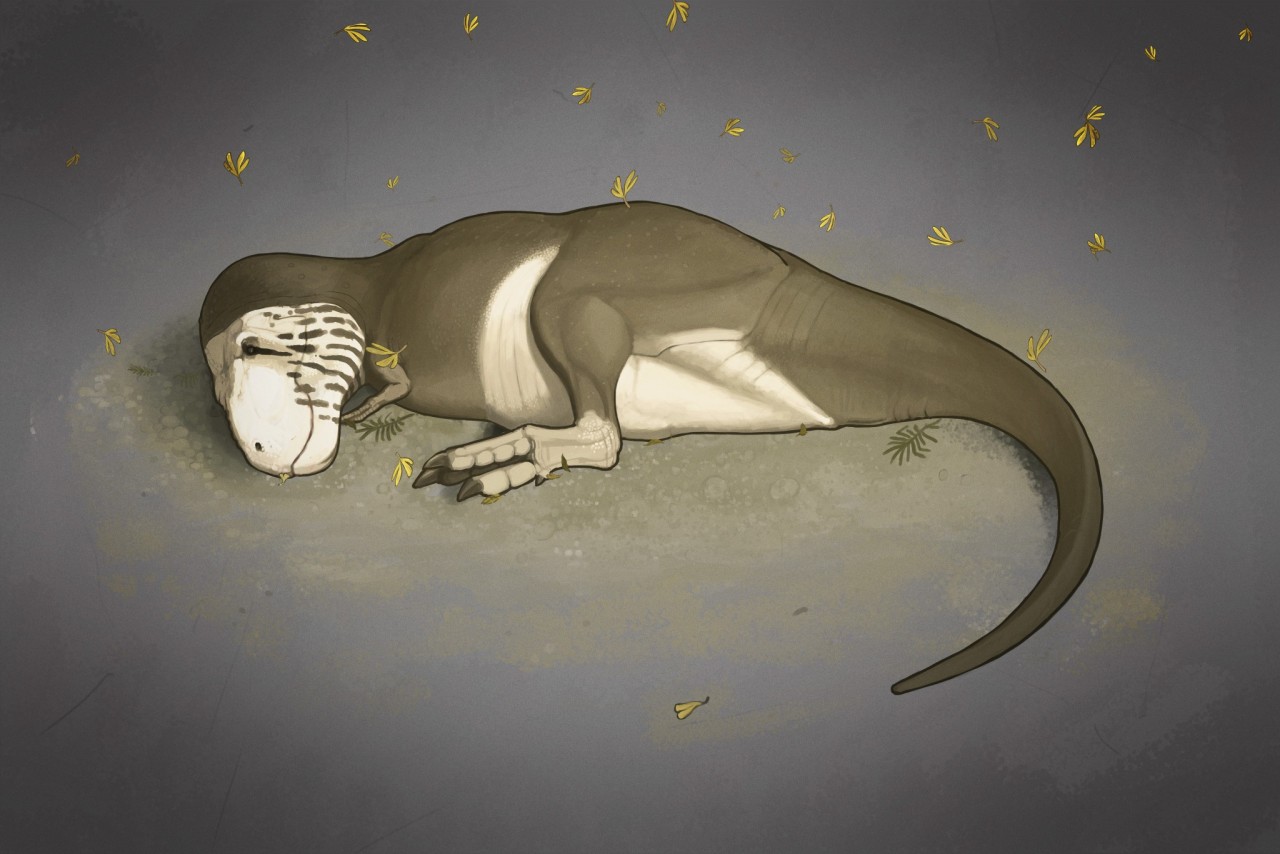
John Conway, Sleepy Stan
John Conway
Sleepy Stan

Why?

Critical practices is an umbrella term that stems from the work of Anthony Dunne and Fiona Raby where design is used as a critical tool—to dissect socio-political issues and the design field itself to achieve aims outside of the commercial markets. It’s less about problem solving, and more about problem finding or problem framing. Under the auspices of critical practices are a few sub-practices: critical design, associative design, and speculative design. Keep in mind, that since these are emerging fields, terminology is still being debated. You’ll see some readings where “critical practices” and “critical design” are used synonymously. You’ll also see “critical design” and “speculative design” used similarly. Matt Malpass (supplementary reading) is the only one who differentiates between “critical design” and “associative design;” most people see those are the same thing.

Speculative design is a key methodology within critical design. Speculative design is generally thought of as a forward looking practice—imagining possible futures. Another version of speculative design is design fiction which uses narrative prototypes (stories, films, television) to posit potential futures. One of the readings below is particularly interesting in that it involves looking backwards to speculate on what dinosaurs may have actually looked like and acted, rather than the standard illustrations to which we’ve become accustomed. Even in that case, design is being used as a critical practice to question the status quo.

Since this is our last reading for the semester, I hope that this gets you thinking not just about your design in the present, but your design in the future, and how you might be able to use your designs to challenge the status quo.

Required

Critical Design FAQ, Dunneandraby.co.uk
Welcome to Jurassic Art, 99% Invisible

Supplementary Readings

Critical Design
What is Critical About Critical Design?
“Critical design is a research through design methodology that foregrounds the ethics of design practice, reveals potentially hidden agendas and values, and explores alternative design values. While it seems to be a timely fit for today’s socially, aesthetically, and ethically oriented approaches to HCI, its adoption seems surprisingly limited. We argue that its central concepts and methods are unclear and difficult to adopt. Rather than merely attempting to decode the intentions of its originators, Dunne and Raby, we instead turn to traditions of critical thought in the past 150 years to explore a range of critical ideas and their practical uses. We then suggest ways that these ideas and uses can be leveraged as practical resources for HCI researchers interested in critical design. We also offer readings of two designs, which are not billed as critical designs, but which we argue are critical using a broader formulation of the concept than the one found in the current literature.”
Critical Design/Critical Futures 2015: Critical Design + Critical Futures

“How are contemporary designers and design theorists envisaging modes of design that are critical, future directed and challenge the status quo? In this round table panel, we explore and discuss the different ways in which forms of critical design are now being conceptualized and enacted from "speculative design” and transitional design to “discursive design” and beyond. Does the turn to critical design constitute a new kind of political and social engagement? Does it imply the need for new modes of critical design thinking beyond design thinking? Does it imply new modes of design pedagogy? Charlie Cannon, Susan Yelavich, Paolo Cardini and Cameron Tonkinwise.”

Critical Design and Empathetic Opportunities

“Dr Matt Malpass, programme quality coordinator and course coordinator of MA Industrial Design @ Central St Martins, gives a talk about critical design and empathy for social innovation.”

Critical Design as Approach to Next Thinking, The Design Journal

“Critical design offers opportunities to benefit considerably the future design thinking. This practice is based on premises that are meaningful for the whole design discipline if adopted as an integral part of design process. There are two valuable aspects, identified and discussed in this paper, that are underestimated or even omitted as quality criteria of the traditional industrial design practice, but are at the core of the critical design practice: it is critically concerned with future and aware of design’s potential in shaping it towards the preferable; and it is aimed at challenging the ideological constraints that limit the designers and the society, and impede the true progress of the humanity. Critical design thinking can be studied and applied as approach to favour the development of personal understanding and promote professional growth of all designers. It is proposed as a resource for expanding the meaning of design thinking.”

Beyond Design Thinking: an Incomplete Design Taxonomy, Critical Design Critical Futures

This article is a brief overview of contemporary thinking within design and covers the following movements and methodologies: design thinking, human-centered design, participatory design, critical design, discursive design, speculative design, design fiction, and positive sum design.

Unpleasant Design & Hostile Urban Architecture, 99% Invisible

The critical design part of this is the artists who chose to respond to and frustrate the “unpleasant design” near the end of the podcast.

“Benches in parks, train stations, bus shelters and other public places are meant to offer seating, but only for a limited duration. Many elements of such seats are subtly or overtly restrictive. Arm rests, for instance, indeed provide spaces to rest arms, but they also prevent people from lying down or sitting in anything but a prescribed position. This type of design strategy is sometimes classified as ‘hostile architecture,’ or simply: ‘unpleasant design.’”

Speculative Everything: Design, Fiction, and Social Dreaming

“How to use design as a tool to create not only things but ideas, to speculate about possible futures.Today designers often focus on making technology easy to use, sexy, and consumable. In Speculative Everything, Anthony Dunne and Fiona Raby propose a kind of design that is used as a tool to create not only things but ideas. For them, design is a means of speculating about how things could be—to imagine possible futures. This is not the usual sort of predicting or forecasting, spotting trends and extrapolating; these kinds of predictions have been proven wrong, again and again. Instead, Dunne and Raby pose ‘what if’ questions that are intended to open debate and discussion about the kind of future people want (and do not want).Speculative Everything offers a tour through an emerging cultural landscape of design ideas, ideals, and approaches.”

Speculative Design
Design is [Speculative] Futures Design Thinking: A New Toolkit for Preemptive Design

“Speculative Design is an approach that considers alternate futures for technology and society. Through prototyping and/or defining scenarios, important discussions about ethics or the impact of design on the environment and culture can be brought to the forefront of the design process. Sometimes considered alarmist and sensational, it’s still a powerful tool for design. Companies are applying this approach to business strategies or articulating visions for emerging technologies. They are speculating on everything from the future of their products to eliciting communities for input to developing new services. Speculative Design’s potential for application is so diverse that it can be used as a lens to consider a more holistic approach to problems and uncover new questions about the future that we may have never asked. Phil shares several projects from Apple’s early vision of the iPad to how governments are using it to design new services today. He also covers some basic framework for how to begin looking at the future and consider all the potential factors and environments that could influence your products or services.”

Anthony Dunne, Fiona Raby. “Speculative Everything” Book Presentation

Presentation starts at 05:31. “Speculative design allows us to see the public status quo from an unexpected side, and offers projects of radical change. A solar kitchen restaurant, a cloud-seeding truck, and a phantom-limb sensation recorder: speculative designers generate new perspectives and identify more desirable modes of existence. Dunne and Raby contend that if we speculate more—about everything—reality will become more malleable. In support of their argument, they cite examples from their own design and teaching and from other projects from fine art, design, architecture, cinema, and photography.”

Speculative Everything: Design, Fiction, and Social Dreaming

“How to use design as a tool to create not only things but ideas, to speculate about possible futures.Today designers often focus on making technology easy to use, sexy, and consumable. In Speculative Everything, Anthony Dunne and Fiona Raby propose a kind of design that is used as a tool to create not only things but ideas. For them, design is a means of speculating about how things could be—to imagine possible futures. This is not the usual sort of predicting or forecasting, spotting trends and extrapolating; these kinds of predictions have been proven wrong, again and again. Instead, Dunne and Raby pose ‘what if’ questions that are intended to open debate and discussion about the kind of future people want (and do not want).Speculative Everything offers a tour through an emerging cultural landscape of design ideas, ideals, and approaches.”

Design Fiction
Near Future Laboratory

“Near Future Laboratory is a thinking, making, design, development and research practice based in California and Europe. Our goal is to understand how imaginations and hypothesis become materialized to swerve the present into new, more habitable near future worlds. Our practice involves working closely with creative, thoughtful experts within various domains of work depending on the needs of any particular project. Our associations with a wide network of well-respected and accomplished practitioners makes it possible to work from concept development to construction of unique digital designs.”

Design Fiction: A Short Essay on Design, Science, Fact and Fiction

I recommend chapters 1, 2, and 4. “Design fiction as I am discussing it here is a conflation of design, science fact, and science fiction. It is a amalgamation of practices that together bends the expectations as to what each does on its own and ties them together into something new. It is a way of materializing ideas and speculations without the pragmatic curtailing that often happens when dead weights are fastened to the imagination.”

A Design Fiction Evening, with Julian Bleecker, James Bridle, Nick Foster, Cliff Kuang and Scott Paterson

Each speaker presents separately, followed by a panel discussion at the end.

Congratulations, you have an all male panel!

Sci-Fi Writer Bruce Sterling Explains the Intriguing New Concept of Design Fiction, Slate

“Slate: So what is a design fiction? Sterling: It’s the deliberate use of diegetic prototypes to suspend disbelief about change. That’s the best definition we’ve come up with. The important word there is diegetic. It means you’re thinking very seriously about potential objects and services and trying to get people to concentrate on those rather than entire worlds or political trends or geopolitical strategies. It’s not a kind of fiction. It’s a kind of design. It tells worlds rather than stories.”

Design Is A Method Of Action: A Design Fiction Primer

“A multidisciplinary group of fourteen artists, scientists, designers, writers, science fiction writers, and futurists gathered in detroit for the purpose of articulating a collective vision for the near future, namely the ‘TBD catalog.’ Rooted in the practice of world building, design fiction, and rapid prototyping, this view would express itself through a catalog of speculative objects, somewhere along the lines of sky mall, a sears roebuck mail order catalog, and the whole earth catalog, but for a future that is ten to fifteen years away.”

What Sci-Fi Gets Wrong, Design Fiction Could Get Right, Vice

“There is a sense in which design fiction can be viewed simply as prediction: an attempt to square fact with fiction. Designers strive to create a vision so good, the future moves to imitate the art. As Bleecker points out, “Minority Report interface” is now a watchword for computer interaction designers. The challenge for design fiction becomes whether or not one’s insight is good enough that one’s creativity can become reality. To deploy a less futuristic metaphor: everyone wants to back the winning horse.”

Response Questions

Remember to cite specific instances from the text to support your views.

  • What do you make of the Dunne and Raby quote in the Malpass essay: “The design profession needs to mature and find ways of operating outside the tight constraints of servicing industry”?
  • Since design may be viewed as a form of storytelling, what do you make of Malpass’ notion that to prove critical practices’ “continuing importance, it is essential to examine and understand design and critical practice not in terms of the arts, but rather in relation to traditional ideas of satire, narrative, and rationality”?
  • How might speculative design and/or design fiction work within your particular field?
  • Indicating that we live in a very different world than the design luminaries of the ’60s and ’70, Dunne and Raby state that in order to design a better present through envisioning different futures, “we need more pluralism in design, not of style but of ideology and values.” What do you think about that?
13.1: Socially Conscious/Engaged Design

Have I Done Any Good in the World Today?
Read by Thu Apr 01,
Reading Response due Wed Apr 07,
UNOCHA's new set of icons aims to streamline communication in response to humanitarian crises.
UNOCHA’s new set of icons aims to streamline communication in response to humanitarian crises.
United Nations Office for the Coordination of Humanitarian Affairs

Why?

We just addressed open texts and hypertexts, as well as social aesthetics, which address ideas of co-authors and connected information networks. We have also had conversations about ethics and truth in design that can apply to day-to-day design work—you can work ethically and honestly as you conduct your business. Leveraging design for public good has a number of names: socially engaged design, socially conscicous design, and humanitarian design and although there is a lot of overlap between them all, each are slightly different. These readings will give you an glimpse into some of these ideas and the discussions taking place around work that is seeking to do good in the world.

Required

Just Design: Socially Conscious Design for Critical Causes (excerpts)
Teaching Design for Change, TED

Supplementary Readings

Socially Conscious Design
What is ‘Good Design’ Anyway?, Think Design

“A requirement of good design must be to understand and to measure impact. Not just financial impact. But social impact. That’s complicated. It’s not easy. But that doesn’t mean we shouldn’t do it. How often do we ask, in what ways could this app / chatbot / website / brochure I’m designing cause someone harm? Who haven’t we spoken to? Who have we forgotten?”

Socially Conscious Graphic Design
Designing for Social Change
“Social responsibility needs to be addressed more within the design field. It needs to be introduced and taught to students at an early stage of their education, so as they fully understand the power and influence that their creations will have over society, and the role this plays in materialism, overconsumption and our modern day consumer-culture. Change needs to be made within graphic design and the urgency for this grows more and more for each day that passes. The graphic designer needs to critically reflect over the purpose of their work and answer the question of whom it stands to serve: their audience or consumer-culture. They need to move away from the creation of artificial needs and the promotion of unnecessary products, and move towards the creation of more useful and lasting communication that contributes to society.”
Socially Conscious Photography
How Images Trigger Empathy, The Atlantic

“While looking back and trying to make sense of a year just ended, we often focus on its most hopeless parts, the violence and acrimony. Last year did include plenty of negativity to mourn. But it also reminded us of an important lesson about how to access our better angels. Three recent events shined a light on how empathy works—and one reason why it often does not.”

Photographs from the Centre of a Tragedy, Al Jazeera

“When Massoud Hossaini arrived outside the Abdul-Fazil shrine in Kabul mid-morning on Tuesday he thought he would be there to photograph young Shia worshippers taking part in the Ashoura Day observances for the AFP news agency. As he walked towards the shrine, a little girl dressed in green—a traditional colour for Ashoura observances—caught his eye. He had no idea that amongst the very crowd he walked in was a bomber who would set off an unprecedented attack against Afghanistan’s Shia minority.”

Socially Conscious Illustration

I am still looking for good examples of writing for illustration.

Design as Activism
Girls Garage

“Girls Garage is a nonprofit design and building program and dedicated workspace for girls ages 9-18. Through classes in carpentry, welding, architecture, and activist art, we support and equip a community of fearless girls who are building the world they want to see. Established 2013.”

The Center for Artistic Activism

“In 2009, the Center for Artistic Activism saw artists struggling to affect change, but without the practical skills to implement their visions. Elsewhere we saw frustrated activists, repeating their traditional marches, petition drives, and vigils until they became frustrated and moved on. We saw movements for social change stagnating with wins coming more by luck than planning. The Center for Artistic Activism started bringing these practices together to transform art and activism, using the best of each to leverage creativity and culture and successfully bring about social change.”

What Design Can Do

“At What Design Can Do we believe in the power of design and creativity to transform society. Money, governments or science can’t solve complex global issues on their own. We need fresh ideas, alternative strategies and provocative thoughts.”

Epicenter

“Epicenter stewards creative initiatives that honor the past, strengthen the present, and build the future that we envision with our community. Located in Green River, Utah, Epicenter is a vibrant hub for rural development and cultural exploration of the high desert of southeastern Utah. Beyond our region, Epicenter advocates for rural communities and contributes to the dialogue on contemporary place-based work in the United States. Epicenter is a 501(c)(3) public charity nonprofit organization.”

Humanitarian Design
Just Design: Socially Conscious Design for Critical Causes (excerpts)
“Designer Paula Scher lamented that today's young designers have largely abandoned their roles as improvers of our general visual environment, asserting that many ‘only want to work in cultural work, or not-for-profit work, or on projects they perceive as “good-for-society.” She goes on to say that these designers are encouraged to shun mainstream corporate work by the way design is being taught in design schools an grad programs, and by the attention that the professional community lavishes on well-meaning but otherwise esoteric projects.”
Teaching Design for Change, TED

“Designer Emily Pilloton moved to rural Bertie County, in North Carolina, to engage in a bold experiment of design-led community transformation. She’s teaching a design-build class called Studio H that engages high schoolers’ minds and bodies while bringing smart design and new opportunities to the poorest county in the state.”

What Design Can Do: Emily Pilloton and Project H

“Emily Pilloton is the founder and executive director of Project H Design. She was recently awarded a $15,000 Adobe Foundation grant to support work on her new book Design Revolution: 100 Projects That Empower People, which is available for order now, from Metropolis Books.”

Is Humanitarian Design the New Imperialism?, Fast Company

“But should we take a moment now that the movement is gathering speed to ask whether or not American and European designers are collaborating with the right partners, learning from the best local people, and being as sensitive as they might to the colonial legacies of the countries they want to do good in. Do designers need to better see themselves through the eyes of the local professional and business classes who believe their countries are rising as the U.S. and Europe fall and wonder who, in the end, has the right answers? Might Indian, Brazilian and African designers have important design lessons to teach Western designers?”

Humanitarian Design vs. Design Imperialism: Debate Summary, Fast Company

“Bruce Nussbaum started a firestorm with the question ‘Is humanitarian design the new imperialism?’—and the conversation has spread through the blogosphere. Here, a digest of essays and related posts on this subject.”

Response Questions

Remember to cite specific instances from the text to support your views.

  • We often focus on the message of a design as being the thing that does good in the world. What might be other aspects of a design that could also be doing good? How might that impact your view of your current and future practice?
  • How might you approach doing good through your practice? Will it be the focus of your practice, ancillary, or absent (but found in other aspects of your life)? Does your design have to do good?

12.2: Social Aesthetics

Open, Closed, and Hyper Texts
Read by Sat Mar 27,
Reading Response due Wed Mar 31,
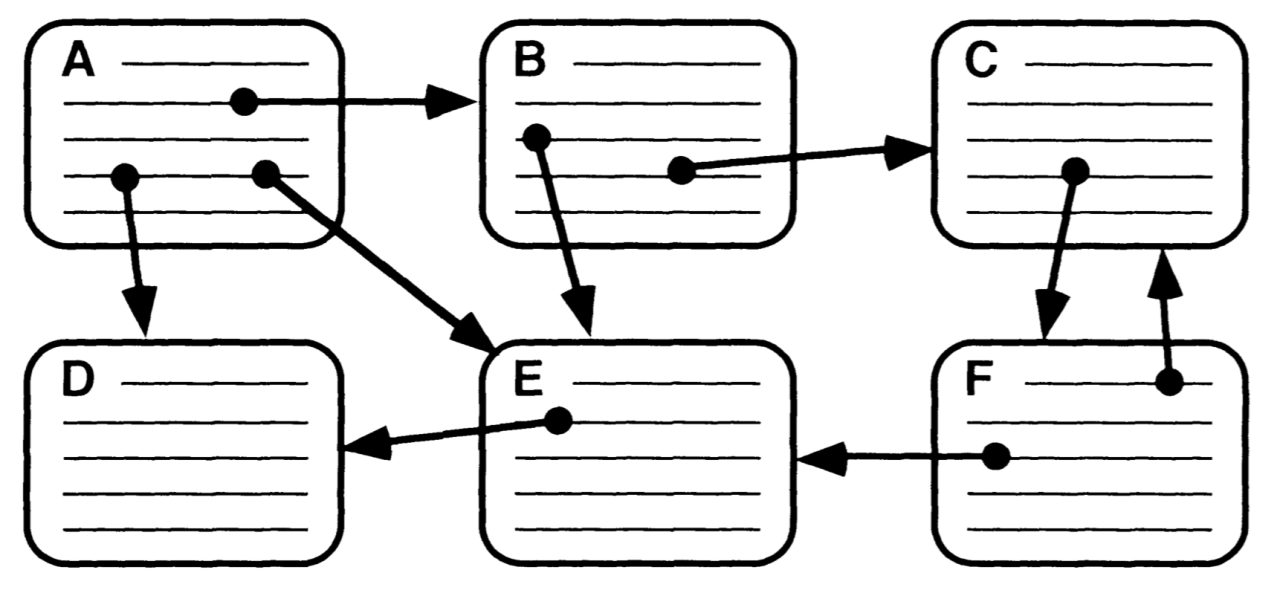
Jakob Nielsen, Simplified view of a small hypertext structure having six nodes and nine links.
Jakob Nielsen
Simplified view of a small hypertext structure having six nodes and nine links.

Why?

Early in the semester, when discussing semiotics and criticism, we spoke about open texts and closed texts—which Roland Barthes called writerly/scriptable texts and readerly/lisible texts, respectively. These indicated how amenable works were to interpretation and leaving room for the reader to act as a co-author of the work. Below is a brief recap:

open and closed texts A term deriving from the Italian semiotician and philosopher Umberto Eco (b. 1932). According to Eco, a “closed” text is one which encourages a particular interpretation, whereas an “open” text invites a diversity of readings. Such a distinction is also implied in Roland Barthes’s essay “From Work to Text” (1971), where he makes a distinction between “work,” which is more or less passively consumed, and “text,” which renders the process of reading active, productive and constitutive. The text requires of the reader a “practical collaboration.”1

Consider the following:

  • Open text: the final product of design can be an open or closed text. The design process can also be open or closed.
  • Hypertext: the basis of a hypertext is a series of dynamically linked texts. Design products and processes can also be thought of as hypertexts.
  • Social aesthetics/social practice/relational aesthetics: this field considers the value of art, not in visual aesthetics, but in the social relations that are generated through the art—how people are dynamically linked through art objects or processes.

The required readings below dive into these three ideas. As you read them, recognize the areas of overlap and where they may open up possibilities withing design practices.

Required

Preface, Open Design Now: Why Design Cannot Remain Exclusive
Introduction and Definitions, Education for Socially Engaged Art

Supplementary Readings

Open Text
Open Text, Wikipedia

“In semiotic analysis (the studies of signs or symbols), an open text is a text that allows multiple or mediated interpretation by the readers. In contrast, a closed text leads the reader to one intended interpretation. The concept of the open text comes from Umberto Eco’s collection of essays The Role of the Reader, but it is also derivative of Roland Barthes’s distinction between ‘readerly’ (lisible) and ‘writerly’ (scriptible) texts as set out in his 1968 essay, ‘The Death of the Author.’”

Roland Barthes: Understanding Text

“After using this learning object, you will be able to describe Roland Barthes’s theory of the work and the Text, explain the difference between writerly and readerly texts, and identify Barthes’s Five Codes in a text.”

The Death of the Author

“The absence of the Author (with Brecht, we might speak here of a real ‘alienation:’ the Author diminishing like a tiny figure at the far end of the literary stage) is not only a historical fact or an act of writing: it utterly transforms the modern text (or — what is the same thing — the text is henceforth written and read so that in it, on every level, the Author absents himself). Time, first of all, is no longer the same. The Author, when we believe in him, is always conceived as the past of his own book: the book and the author take their places of their own accord on the same line, cast as a before and an after: the Author is supposed to feed the book — that is, he pre-exists it, thinks, suffers, lives for it.”

S/Z

S/Z is the linguistic distillation of Barthes’s system of semiology, a science of signs and symbols, in which Balzac’s novella, Sarrasine, is dissected semantically to uncover layers of hidden meaning.”

The Role of the Reader: Explorations in the Semiotics of Texts

“In this erudite and imaginative book, Umberto Eco sets forth a dialectic between ‘open’ and ‘closed’ texts.”

Hypertext
The Secret History of Hypertext, The Atlantic

“In the years leading up to World War II, a number of European thinkers were exploring markedly similar ideas about information storage and retrieval, and even imagining the possibility of a global network—a feature notably absent from the Memex. Yet their contributions have remained largely overlooked in the conventional, Anglo-American history of computing. Chief among them was Paul Otlet, a Belgian bibliographer and entrepreneur who, in 1934, laid out a plan for a global network of “electric telescopes” that would allow anyone in the world to access to a vast library of books, articles, photographs, audio recordings, and films.”

As We May Think, The Atlantic

“Consider a future device for individual use, which is a sort of mechanized private file and library. It needs a name, and, to coin one at random, ‘memex’ will do. A memex is a device in which an individual stores all his books, records, and communications, and which is mechanized so that it may be consulted with exceeding speed and flexibility. It is an enlarged intimate supplement to his memory. It consists of a desk, and while it can presumably be operated from a distance, it is primarily the piece of furniture at which he works. On the top are slanting translucent screens, on which material can be projected for convenient reading. There is a keyboard, and sets of buttons and levers. Otherwise it looks like an ordinary desk.”

The Godfather, Wired

"Vannevar Bush is a great name for playing six degrees of separation. Turn back the clock on any aspect of information technology - from the birth of Silicon Valley and the marriage of science and the military to the advent of the World Wide Web - and you find his footprints. As historian Michael Sherry says, ‘To understand the world of Bill Gates and Bill Clinton, start with understanding Vannevar Bush.’”

The History of Hypertext, Nielsen Norman Group

“Hypertext has a surprisingly rich history compared to most phenomena in the personal computer industry, especially considering that most people had not heard of it until a few years ago. I have been to talks at major conferences where the speakers were ignorant of any hypertext developments preceding the introduction of the WWW. Table 3.1 gives an overview of the history of hypertext; the major events are discussed in more detail in this chapter.”

The Curse of Xanadu, Wired

“It was the most radical computer dream of the hacker era. Ted Nelson’s Xanadu project was supposed to be the universal, democratic hypertext library that would help human life evolve into an entirely new form. Instead, it sucked Nelson and his intrepid band of true believers into what became the longest-running vaporware project in the history of computing—a 30-year saga of rabid prototyping and heart-slashing despair. The amazing epic tragedy.”

Open Design
Designers Can Open Source Session Video, opendesign.foundation

“This is a video recording of Braithwaite’s presentation at Blend Conf in Charlotte, NC where he outlines the history and ethos of open-source design which is based on the idea of open-source software.”

Open Design Now

This is comprised of a number of essays, each of which could take between 5 to 30 minutes to read. “Open Design Now: Why Design Cannot Remain Exclusive surveys this emerging field for the first time. Insiders including John Thackara, Droog Design’s Renny Ramakers and Bre Pettis look at what’s driving open design and where it’s going. They examine new business models and issues of copyright, sustainability and social critique. Case studies show how projects ranging from the RepRap self-replicating 3D-printer to $50 prosthetic legs are changing the world. Open Design Now is essential reading for anyone concerned with the future of design and society.”

Co-Design & Participatory Design
Participatory Design, Wicked Problems Worth Solving

“Participatory Design is a broad label for creative activities that are done with end users—where designers act as facilitators or visual translators for people who may not be skilled or confident in idea expression. The activities can take many forms, but the most common ones use visual and semantic tools—such as stickers, blocks of words, or ambiguous shapes—to offer expression to nondesigners.”

Participatory Design in Practice, UX Magazine

“As organizations embrace design-led innovation, they can struggle to reap the full value of human-centered design. A design team’s interactions with customers may often be limited to only the early research and late evaluation phases of the design process, while the work in between – when ideas are being generated – is left to the internal team alone. When this is the case, we miss the opportunity to discover some of the most valuable and customer-centered solutions.”

Design for Remix
Patterns of Physical Design Remixing in Online Maker Communities, ACM’s SIGCHI (Association for Computing Machinery’s Special Interest Group on Computer-Human Interaction)
“Makers participate in remixing culture by drawing inspiration from, combining, and adapting designs for physical objects. To examine how makers remix each others’ designs on a community scale, we analyzed metadata from over 175,000 digital designs from Thingiverse, the largest online design community for digital fabrication. Remixed designs on Thingiverse are predominantly generated designs from Customizer a built-in web app for adjusting parametric designs. However, we find that these designs do not elicit subsequent user activity and the authors who generate them tend not to contribute additional content to Thingiverse. Outside of Customizer, influential sources of remixing include complex assemblies and design primitives, as well as non-physical resources posing as physical designs. Building on our findings, we discuss ways in which online maker communities could become more than just design repositories and better support collaborative remixing.”
Social Aesthetics and Social Practice
The Interventionists: Users’ Manual for the Creative Disruption of Everyday Life
“Art made to attach to buildings or to be given away? Wearable art for street demonstrations or art that sets up a booth at a trade show? This is the art of the interventionists, who trespass into the everyday world to raise our awareness of injustice and other social problems. These artists don’t preach or proselytize; they give us the tools to form our own opinions and create our own political actions. The Interventionists, which accompanies an exhibit at MASS MoCA, serves as a handbook to this new and varied work. It’s a user’s guide to art that is exciting”
Living as Form
“'Living as Form’ grew out of a major exhibition at Creative Time in New York City. Like the exhibition, the book is a landmark survey of more than 100 projects selected by a 30-person curatorial advisory team; each project is documented by a selection of colour images.”
Education for Socially Engaged Art: A Materials and Techniques Handbook
“For too long Social Practice has been the notoriously flimsy flipside of market-based contemporary art: a world of hand-wringing practitioners easily satisfied with the feeling of 'doing good’ in a community, and unaware that their quasi-activist, anti-formalist positions in fact have a long artistic heritage and can be critically dissected using the tools of art and theatre history. Helguera’s spunky primer promises to offer a much-needed critical compass for those adrift in the expanded social field.” –Claire Bishop, Professor of Contemporary Art and Exhibition History, CUNY, and author of Artificial Hells: Participatory Art and the Politics of Spectatorship
Artificial Hells: Participatory Art and the Politics of Spectatorship
“Since the 1990s, critics and curators have broadly accepted the notion that participatory art is the ultimate political art: that by encouraging an audience to take part an artist can promote new emancipatory social relations. Around the world, the champions of this form of expression are numerous, ranging from art historians such as Grant Kester, curators such as Nicolas Bourriaud and Nato Thompson, to performance theorists such as Shannon Jackson.”
Seeing Power: Art and Activism in the Twenty-first Century
“Like an updated version of John Berger’s groundbreaking Ways of Seeing, Nato Thompson’s Seeing Power delivers a smart, accessible introduction to the prevailing artistic predicaments of our time. Written by one of our leading public intellectuals, it covers a wide range of key issues from the cultural politics of Occupy Wall Street; to the use and abuse of accumulated social capital; to the perennial antagonism between sophisticated cultural ambiguity and didactic, artistic impact. Seeing Power is a twenty-first-century user’s manual for the social responsible artist, critic, and curator.” —Gregory Sholette, author of Dark Matter: Art and Politics in the Age of Enterprise Culture
Dialogues in Public Art
“Interviews with the artists who create public art and the people whose lives are changed by it. By the 1990s, public art had evolved far beyond the lonely monument on an open plaza. Now public artists might design the entire plaza, create an event to alter the social dynamics of an urban environment, or help to reconstruct a neighborhood. Dialogues in Public Art presents a rich blend of interviews with the people who create and experience public art–from an artist who mounted three bronze sculptures in the South Bronx to the bureaucrat who led the fight to have them removed; from an artist who describes his work as a "cancer” on architecture to a pair of architects who might agree with him; from an artist who formed a coalition to convert twenty-two derelict row houses into an art center/community revitalization project to a young woman who got her life back on track while living in one of the converted houses.”
Support Networks
“When artists break boundaries of traditional forms and work outside of institutionalized systems, they often must create new infrastructures to sustain their practices. Support Networks looks to Chicago’s deeply layered history of artists, scholars, and creative practitioners coming together to create, share, and maintain these alternative networks of exchange and collaboration.”
Collectivism after Modernism: The Art of Social Imagination after 1945
“The desire to speak in a collective voice has long fueled social imagination and artistic production. Prior to the Second World War, artists understood collectivization as an expression of the promise or failure of industrial and political modernity envisioned as a mass phenomenon. After the war, artists moved beyond the old ideal of progress by tying the radicalism of their political dreams to the free play of differences.Organized around a series of case studies spanning the globe from Europe, Japan, and the United States to Africa, Cuba, and Mexico, Collectivism after Modernism covers such renowned collectives as the Guerrilla Girls and the Yes Men, as well as lesser-known groups. Contributors explore the ways in which collectives function within cultural norms, social conventions, and corporate or state-sanctioned art.”
Introduction: What is Social Aesthetics?, Improvisation and Social Aesthetics
“While addressing the fundamental question, ‘What is social aesthetics?’ the introduction aims to situate the concept of social aesthetics within a number of distinct histories of art, musical, and cultural practices and theoretical paradigms. The editors demonstrate how the social and the aesthetic have come to be conceived and related (at times almost as opposed concepts; at other times as complementary notions) in a number of distinct intellectual and artistic traditions, themselves emerging out of particular histories concerning the theorization of both the social and the aesthetic. The introduction then gives a nuanced summary of the chapters in the volume, relating them to one another and showing in what ways they differ. It ends with a call for further inter- and transdisciplinary research to meet the challenges posed by the recognition, in the scholarship represented in this book, of the complex interpenetration and entanglement of aesthetic and social processes.”
Relational Aesthetics
“Where does our current obsession for interactivity stem from? After the consumer society and the communication era, does art still contribute to the emergence of a rational society? Bourriaud attempts to renew our approach toward contemporary art by getting as close as possible to the artists works, and by revealing the principles that structure their thoughts: an aesthetic of the inter-human, of the encounter; of proximity, of resisting social formatting.”
Critique of Relational Aesthetics, Third Text
“Bourriaud’s fetishism of the social produces an inversion of his critical claims for relational aesthetics. His realised utopianism echoes with the commodified friendship of customer services. For all his claims to the novelty of the idea of relational aesthetics, it is a reapplication of Romanticism. Art is conceived as an immediate form of non-capitalist life. But without an account of what mediates relational art’s disengagement from capitalist life, it is helplessly reversible, obliviously occupying the other side of capitalism’s coin.”
Antagonism and Relational Aesthetics, October
“But Bourriaud is at pains to distance contemporary work from that of previous generations. The main difference, as he sees it, is the shift in attitude toward social change: instead of a “utopian” agenda, today’s artists seek only to find provisional solutions in the here and now; instead of trying to change their environment, artists today are simply ‘learning to inhabit theworld in a better way’; instead of looking forward to a future utopia, this art sets up functioning 'microtopias’ in the present.
Response to Claire Bishop’s Paper on Relational Aesthetics, Circa
“It is unfortunate (but strategic) that Bishop’s only example of a relational artwork at first hand is so far removed from any of the above. Jerry Saltz, describing his experience of a work by Rirkrit Tiravanija for Art in America, gives us an exercise in namedropping and nepotism that demonstrates how familiar types of social practice based on networks of influence and exclusivity can surface anywhere. But as Bishop points out, this actually tells us little, because if we were to base our judgement on individual testimony then every participant in the work would have to be taken into account (suggesting a wildly democratic if untenable form of art criticism).”
Meet the Artist: Rirkrit Tiravanija
“Thai artist Rirkrit Tiravanija (b. Buenos Aires, Argentina, 1961; raised in Thailand, Ethiopia, and Canada) has developed a long and varied career that defies classification. For nearly thirty years, his artistic production has focused on real-time experience and exchange, breaking down the barriers between object and spectator. On the opening of our first exhibition of his work, Tiravanija joined Mark Beasley, Robert and Arlene Kogod Secretarial Scholar, Curator of Media and Performance Art, for a discussion about his performative practice, which changes how people connect with art. The interactive installation includes a large-scale mural, drawn on the walls over the course of the exhibition, which references Thai anti-government demonstrations that occurred in 2009–2010. The title of the work, (who’s afraid of red, yellow, and green), refers to the colors worn by the opposing factions in those protests as well as to the three curries that will be served to visitors in the gallery on select days throughout the run exhibition.”
Gabriel Orozco in “Loss & Desire”, Art21
“‘I don’t have a studio, so I don’t have a specific place of production,’ remarks Gabriel Orozco. ‘What happens when you don’t have a studio is that you have to be confronted with reality all the time.’ The segment follows Orozco as he creates situations with objects on the street and photographs them. Orozco’s interest in logic, systems, and physics is revealed in his series of games and in the dramatic La D.S.—a Citroën car split down the center and reassembled to elongate its shape.”
Felix Gonzalez-Torres: Specific Objects Without Specific Form
“Including both rarely seen and more known paintings, sculptures, photographic works, and public projects, reflecting the full scope of Gonzalez-Torres' short but prolific career and drawn from the Estate of Felix Gonzalez-Torres as well as public and private collections throughout the United States and Europe, this groundbreaking publication proposes an experimental form that is indebted to the artist's own radical conception of the artwork.”

Response Questions

Remember to cite specific instances from the text to support your views.

  • Do you see your current practice as creating open, closed, or hypertexts? Why?
  • How might you monetize open-source design work or is it inherently non-profit?
  • How might you employ participatory design within your own practice (graphic design, illustration, photography, animation, etc.)? What would be the potential benefits and pitfalls?
  • After reading in Helguera’s chapters that address symbolic and actual practice, where would you like to locate your practice? Is it possible to be a photographer, graphic designer, or illustrator whose practice has direct impact rather than just acting symbolically? Why or why not? Could your practice be a hybrid of the two? What might that look like?
  • If a work’s primary concern is not with visual aesthetics, but with social interaction, what are the evaluative criteria for such a work? If visual “aesthetics” are the rules/principles that govern the visual appeal of a work (shape and proportion, balance, harmony, negative space, color, contrast, etc.), what would you consider principles of “social aesthetics” or socially engaged art that would make it socially “beautiful?”
  1. J. A. Cuddon, “Open and Closed Texts,” A Dictionary of Literary Terms and Literary Theory (Oxford: Wiley-Blackwell, 2013), 494, https://onlinelibrary-wiley-com.erl.lib.byu.edu/doi/pdf/10.1002/9781118325988.ch15.

12.1: Post-Postmodernism

Or Postmodernism 2.0, or Metamodernism, or Altermodernism, or Transmodernism, or Whatever
Read by Thu Mar 25,
Reading Response due Wed Mar 31,
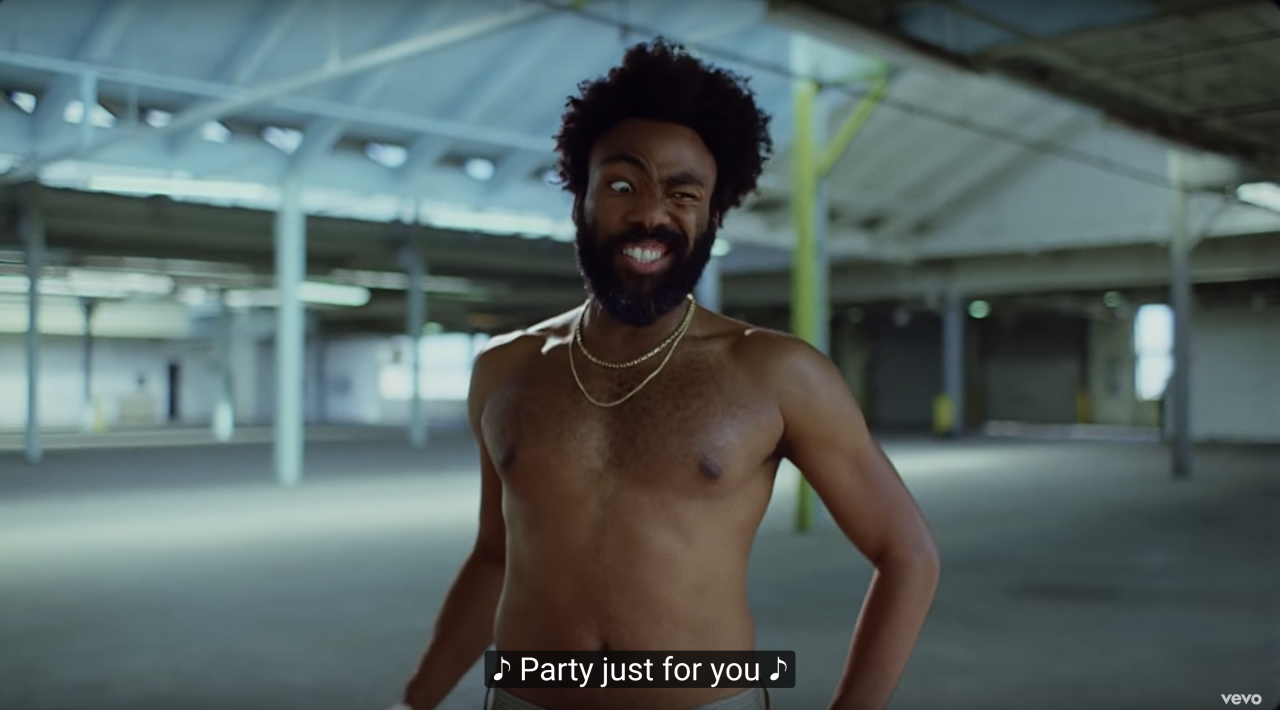
Childish Gambino, This is America, 2018, video still
Childish Gambino

“This is America,” 2018

video still

Why?

There are a number of individuals who have postulated that we have already moved past Postmodernism into a new era that can be called Post-Postmodernism, Postmodernism 2.0, Metamodernism, Altermodernism, Transmodernism, and other names. They point to the internet, new globalism, a rise in sincerity, and a return to grand narratives as some of the earmarks of this change. Not that to be a cultural producer in this age means that you must subscribe to these historical and theoretical framings, but it is useful to see how people are attempting to frame current practices.

Required

Postmodernism is Dead. What Comes Next?, The Times Literary Supplement
Metamodernism: A Brief Introduction, Notes on Metamodernism
Metamodernist Manifesto, Metamodernism.org
After Postmodernism: Eleven Metamodern Methods in the Arts, What is Metamodernism

Supplementary Readings

Post-Postmodernism
The Death of Postmodernism And Beyond, Philosophy Now
“Pseudo-modernism also encompasses contemporary news programmes, whose content increasingly consists of emails or text messages sent in commenting on the news items. The terminology of ‘interactivity’ is equally inappropriate here, since there is no exchange: instead, the viewer or listener enters—writes a segment of the programme—then departs, returning to a passive role. Pseudo-modernism also includes computer games, which similarly place the individual in a context where they invent the cultural content, within pre-delineated limits. The content of each individual act of playing the game varies according to the particular player.”
Post-Postmodernism, or, the Cultural Logic of Just-in-Time Capitalism

“Post-Postmodernism begins with a simple premise: we no longer live in the world of ‘postmodernism,’ famously dubbed 'the cultural logic of late capitalism’ by Fredric Jameson in 1984. Far from charting any simple move 'beyond’ postmodernism since the 1980s, though, this book argues that we’ve experienced an intensification of postmodern capitalism over the past decades, an increasing saturation of the economic sphere into formerly independent segments of everyday cultural life. If 'fragmentation’ was the preferred watchword of postmodern America, 'intensification’ is the dominant cultural logic of our contemporary era. Post-Postmodernism surveys a wide variety of cultural texts in pursuing its analyses—everything from the classic rock of Black Sabbath to the post-Marxism of Antonio Negri, from considerations of the corporate university to the fare at the cineplex, from reading experimental literature to gambling in Las Vegas, from Badiou to the undergraduate classroom.”

Metamodernism
Notes on Metamodernism, Journal of Aesthetics and Culture

“The postmodern years of plenty, pastiche, and parataxis are over. In fact, if we are to believe the many academics, critics, and pundits whose books and essays describe the decline and demise of the postmodern, they have been over for quite a while now. But if these commentators agree the postmodern condition has been abandoned, they appear less in accord as to what to make of the state it has been abandoned for. In this essay, we will outline the contours of this discourse by looking at recent developments in architecture, art, and film. We will call this discourse, oscillating between a modern enthusiasm and a postmodern irony, metamodernism. We argue that the metamodern is most clearly, yet not exclusively, expressed by the neoromantic turn of late associated with the architecture of Herzog & de Meuron, the installations of Bas Jan Ader, the collages of David Thorpe, the paintings of Kaye Donachie, and the films of Michel Gondry.”

Misunderstandings and Clarifications: Notes on ‘Notes on Metamodernism’, Notes on Metamodernism

“The reason for sharing all this with you, we guess, is that over the past few years there have been some misinterpretations about what we may have intended in those first notes on metamodernism. A number of the initial 6.000 words have been taken out of context or even misrepresented to suggest we said things that we most certainly did not say. To be sure, we do not have a problem with people criticizing our argument – indeed, we ourselves see how flawed it is, how misguided in some of its assessments and incomplete (and perhaps too hasty) in its theorization; nor, obviously, do we mind people using our essay as an explicit stub or implicit inspiration to develop their own, undoubtedly much more advanced theses. We also understand that once your words are jotted down, they are no longer yours, that they can be picked up by others. But it is important to us that our research is criticized or praised for what it does actually conclude, not for what it does not.”

The Metamodern Condition: A Report on ‘The Dutch School’ of Metamodernism

“In late November 2017, Robin van den Akker, Alison Gibbons, Timotheus Vermeulen published Metamodernism: Historicity, Affect and Depth After Postmodernism, an edited volume of critical debate about metamodern movements in aesthetics, arts, and culture. In it, they are able to update and refine the project they officially began in 2010. This was a much awaited sourcebook for the study of metamodernism, and represents a milestone for this intellectual movement. It is potent analysis of what it covers, but also leaves open a vast field for the development of metamodern theory and its transformative power.”

Whose (Meta)modernism?: Metamodernism, Race, and the Politics of Failure, Journal of Modern Literature

“Contemporary American poetry by black women writers challenges a theory of metamodernism that would identify the acceptance of “failure” as a central attitude of metamodern art and literature. Metadmodernist poetry by Harryette Mullen and Evie Shockley explicitly engages the politics of form that characterizes avant-garde modernism; rather than figure political and aesthetic failure as inevitable or even desirable, these writers revitalize formal techniques of modernism (often modernism's avant-garde strands in particular) in order to offer critiques of state-sanctioned racism and heterosexism. These critiques do not redeem failure by aestheticizing it but rather lay bare the ways in which American society has failed people of color. The varying degrees of attention afforded to such contemporary political concerns by theories of metamodernism prompts the question ‘Whose metamodernism are we theorizing?’”

What is Metamodernism?

“Philosophers Robin van den Akker and Timotheus Vermeulen talk about their concept of metamodernism, the waning of irony and the new forms of sincerity emerging in 21st century culture.”

Altermodernism
Altermodern: Manifesto, Tate.org

“A new modernity is emerging, reconfigured to an age of globalisation – understood in its economic, political and cultural aspects: an altermodern culture”

Altermodern: A Conversation with Nicolas Bourriaud, Art in America

“BR: What is the ‘Altermodern?’
NB: First, it is an attempt to reexamine our present, by replacing one periodizing tool with another. After 30 years into the ‘aftershock’ of modernism and its mourning, then into the necessary post-colonial reexamination of our cultural frames, ‘Altermodern’ is a word that intends to define the specific modernity according to the specific context we live in—globalization, and its economic, political and cultural conditions. The use of the prefix “alter” means that the historical period defined by postmodernism is coming to an end, and alludes to the local struggles against standardization. The core of this new modernity is, according to me, the experience of wandering—in time, space and mediums. But the definition is far from being complete.”

Response Questions

Remember to cite specific instances from the text to support your views.

  • Based on the readings, do you think that we are in a Modern, Postmodern, or Post-Postmodern era and why?
  • Which ideas addressed in the readings are the most intriguing to you and why?
  • Where have you seen Metamodernist methods at play in larger culture? Give clear examples and explain how they relate to the readings.

11.2: Truth in the Modern Age and Beyond, part II

Post-truth in the Postmodern Era
Read by Sat Mar 20,
Reading Response due Wed Mar 24,
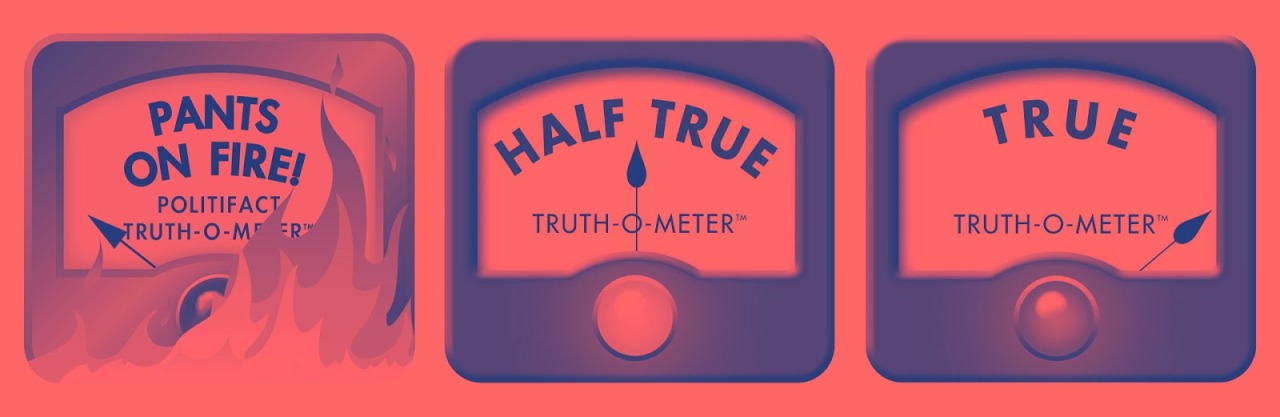
PolitiFact's Truth-o-meter
PolitiFact’s Truth-o-meter

Why?

Prior to Modernism, society generally held truth to be unalterable, absolute, and universal. Modernism began to question commonly held beliefs—religion, laws, aesthetics, and so on. Post-modernism threw Truth (capital “T”) out the window. It is now said that we live in a post-truth world. The Oxford Dictionaries noticed at 2000% spike in the use of the term “post-truth” in 2016 over 2015, and so declared it the word of the year in 2016. They define post-truth as an adjective “relating to or denoting circumstances in which objective facts are less influential in shaping public opinion than appeals to emotion and personal belief.” This set of readings covers truth, post-truth, and how truth directly ties to design work.

Required

Supplementary Readings

Post-Truth
Breaking News, Radiolab
“Simon Adler takes us down a technological rabbit hole of strangely contorted faces and words made out of thin air. And a wonderland full of computer scientists, journalists, and digital detectives forces us to rethink even the things we see with our very own eyes.”
Are We Living in a Post-truth Era? Yes, but That’s Because We’re a Post-truth Species, ideas.ted.com
“A cursory look at history reveals that propaganda and disinformation are nothing new. In fact, humans have always lived in the age of post-truth. Homo sapiens is a post-truth species, who conquered this planet thanks above all to the unique human ability to create and spread fictions. We are the only mammals that can cooperate with numerous strangers because only we can invent fictional stories, spread them around, and convince millions of others to believe in them. As long as everybody believes in the same fictions, we all obey the same laws and can thereby cooperate effectively.”
Truth Isn’t the Problem—We Are, The Wall Street Journal
“The term ‘post-truth’ has been around for decades, but its big moment came in 2016, with the Brexit vote in the U.K. and the presidential candidacy of Donald Trump. Usage of post-truth shot up twentyfold, according to the Oxford Dictionaries, which chose it as the 'word of the year’ for 2016. Since then, the term has become a commonplace in political commentary. It is not applied approvingly. To dub ours the era of post-truth is not to praise it.”
On Being Genuine, ChurchofJesusChrist.org
“Although modern historians have questioned the truthfulness of this story, the term ‘Potemkin village’ has entered the world’s vocabulary. It now refers to any attempt to make others believe we are better than we really are.”
Truth in Graphic Design
Infographics Lie. Here’s How To Spot The B.S., Fast Company
“Time and time again we have seen that data visualizations can easily be manipulated to lie. By misrepresenting, altering, or faking the data they visualize, data scientists can twist public opinion to their benefit and even profit at our expense.”
Are Some Fonts More Believable Than Others?, Fast Company
“Are some fonts more believable than others? A curious experiment by documentary filmmaker Errol Morris suggests as much. After polling approximately 45,000 unsuspecting readers on nytimes.com, Morris discovered that subjects were more likely to believe a statement when it was written in Baskerville than when it was written in Computer Modern, Georgia, Helvetica, Trebuchet, or Comic Sans. Baskerville: truth’s favorite typeface?”
Errol Morris: How Typography Shapes Our Perception Of Truth, Fast Company
“The results of Morris’s experiment were published online in a two-part essay called Hear, All Ye People; Hearken, O Earth! and have now been put into print, as the 44th edition of the Pentagram Papers, the monograph that the design firm Pentagram sends to an exclusive list of individuals each year. Pentagram partner and long-time Morris collaborator Michael Bierut put together the typographically exquisite monograph, with with the help of designer Jessica Svendsen.
Hear, All Ye People; Hearken, O Earth (Part 1), The New York Times

“My quiz wasn’t really a test of the optimism or pessimism of the reader. There was a hidden agenda. It was a test of the effect of typefaces on truth. Or to be precise, the effect on credulity. Are there certain typefaces that compel a belief that the sentences they are written in are true?”

Part II: “Hear, All Ye People; Hearken, O Earth (Part 2)

The original quiz: “Are You an Optimist or a Pessimist?

Truth in Illustration

I have not found any solid writings concerning truth and illlustration, so please send anything you find my way.

Truth in Photography
Posing Questions of Photographic Ethics, The New York Times
“During this year’s World Press photo contest, about 20 percent of the entrants that reached the second-to-last round of judging were disqualified for significantly altering images in post processing and Giovanni Troilo was stripped of a first prize in the face of charges of misrepresentation and posing images (the photographer said he had ‘made a mistake,’ but had not intended to deceive). In the vigorous debate that followed, some ridiculed the concept of 'objective photojournalism’ as philosophically tenuous in a postmodern world.”
Why Facts Aren’t Always Truths in Photography, Time
“Steve McCurry, a photographer who has reached iconic status following the publication of his Afghan Girl portrait in National Geographic in 1985, has found himself at the center of a controversy over image manipulation. The Magnum member is accused of photoshopping elements out of his photographs—a ‘mistake’ McCurry has blamed on bad procedures at his studio.”
Staging, Manipulation and Truth in Photography, The New York Times
“During this year’s tumultuous World Press photo competition, a large number of images were disqualified because of manipulation or excessive digital postprocessing. In addition, one major prize was revoked amid allegations of staging and misleading captioning. These events sparked months of spirited discussion and introspection about ethical practices in photojournalism. In response, the World Press organization is changing its rules for next year’s contest and creating a code of ethics for photographers entering the contest. […] To further the conversation on these ethical concerns, Lens asked several photographers and editors to comment on the issue and to share their experiences in the field. After reading those essays, we invite you to add your thoughts about staging journalistic photos in the comments below. We will add selected comments of fewer than 250 words to this text to further the conversation.”
Fauxtography, Snopes
“Numerous photographs and videos circulate on the Internet. Some are real. Some are fake. Some are real, but have been given false backstories.

Response Questions

Remember to cite specific instances from the text to support your views.

  • Consider Picasso’s quote, “We all know that Art is not truth. Art is a lie that makes us realize truth, at least the truth that is given us to understand. The artist must know the manner whereby to convince others of the truthfulness of his lies. If he only shows in his work that he has searched, and re-searched, for the way to put over lies, he would never accomplish anything.” Combined with the information from the readings, what do you make of this?
  • How might the notion of epistemic responsibility impact your work in your field?
  • Members of the Church believe the words of Moroni when he states that “by the power of the Holy Ghost ye may know the truth of all things.” How might science, logic, reason, and facts play into this belief system? For example, the Church has always been pro-science (Orson Pratt taught astronomy courses in the 1850s, an astronomical observatory was built on the south-east corner of Temple Square in 1869, our current prophet is a physician who believes in vaccinations, and BYU actively teaches evolution). Does a personal belief always trump science or vice versa? Why or why not?

11.1: Postmodernist Media, Semiotics, Aesthetics, part II: Electric Boogaloo

The digital revolution
Read by Thu Mar 18,
Reading Response due Wed Mar 24,
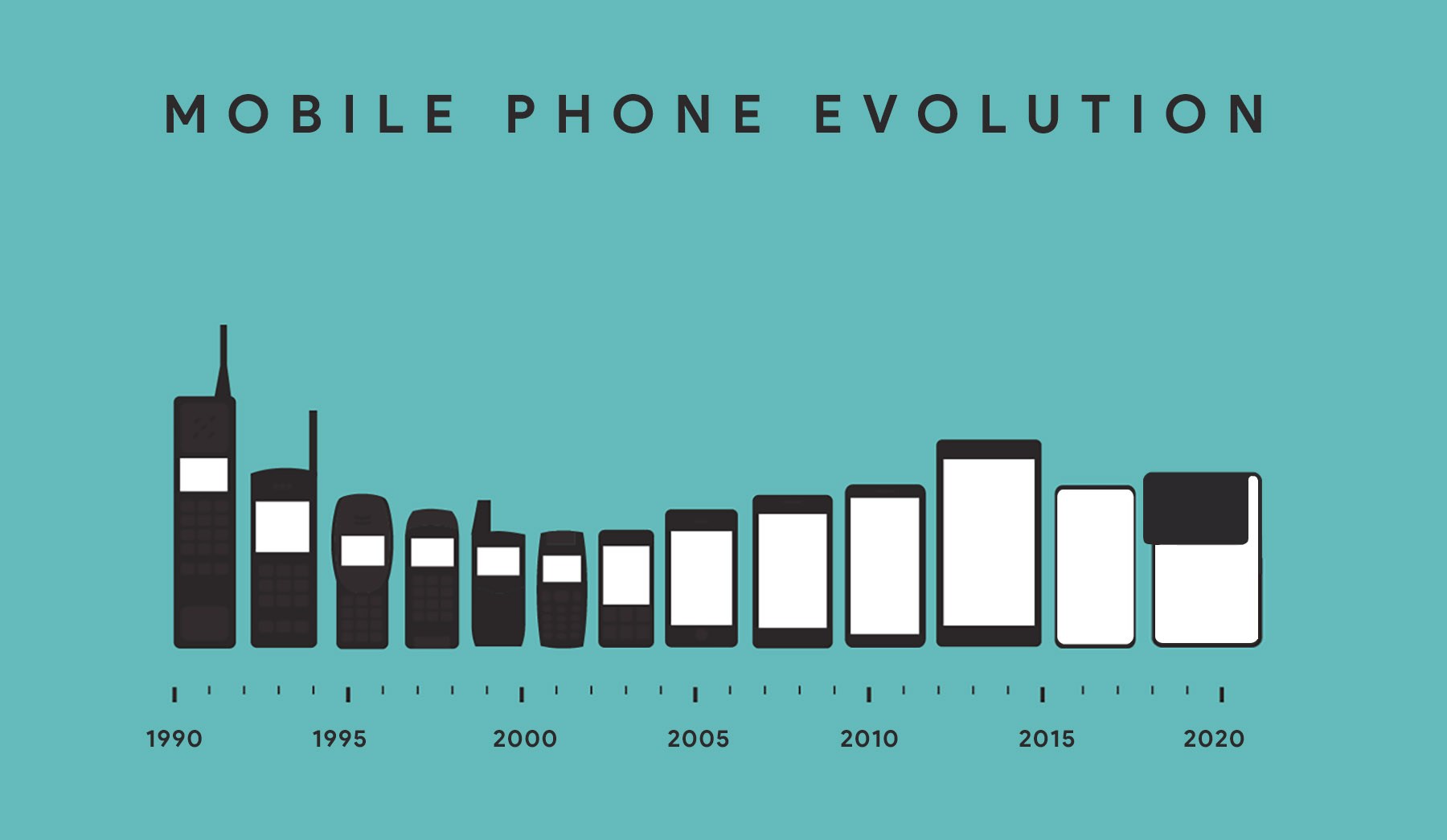
Mobile Phone Evolution
Source

Why?

Part of the shift from Modernism to Postmodernism was fueled by the digital revolution. As computers became faster, smaller, and more prevalent, global information became more accessible, new digital tools were available to companies and the general public, and the way we all think, speak, and act was changed. Few creative industries were as impacted as design. Photoshop, along with other design and image-manipulation tools, disrupted not only industries, but also our relationship to truth. The world had to start looking and thinking more critically about the veracity of photographic images. In addition, photography’s static nature had to make way for dynamic manifestations including hyperlinked images, GIFs, AI-generated imagery, new cameraless photography fields, and more. Focusing on this drastic shift is important in understanding design disciplines as ever-changing, unstable, and ripe for innovation.

Required

How Photoshop Changed the Way We Work, Creative Bloq
Toward a Hyperphotography, After Photography

Supplementary Readings

Timeline

View larger

Photoshop and Design Evolution
Startup Memories—The Beginning of Photoshop
“In this documentary, the founders of Adobe Photoshop—John Knoll, Thomas Knoll, Russell Brown, and Steve Guttman—tell the story of how an amazing coincidence of circumstances, that came together at just the right time 20 years ago, spawned a cultural paradigm shift unparalleled in our lifetime.”
Graphic Means: A History of Graphic Design Production
“Imagine designing and printing a brochure—without a computer. How would you set the type—making sure it fit your layout? How would you crop the images? How would you place those images alongside your text? And what would you hand over to the offset printer when you were done? Up until just 30 years ago when the desktop computer debuted, this whole process would have been primarily done by hand, and with the aide of fascinating machines that used a variety of ways to get type and image on to the printed page.”
Before there was Photoshop | graphic design tools | Photoshop 25th anniversary
“Follow along as Sean Adams mocks up a layout with a variety of traditional design tools. Join lynda.com as we celebrate 25 years of Photoshop with inspiring stories from luminaries who have helped shape the most prolific design tool of our time.”
The evolution of a tool palette | Photoshop 25th anniversary
“For over two decades, Photoshop has been an essential part of the digital artist’s toolset. To celebrate its 25th anniversary, we’ve taken a look back at Photoshop’s history: from the rise of desktop publishing and digital photography, to the evolution of Photoshop’s tool palette and its sometimes controversial but necessary role in modern photojournalism.”
The Internet
Evolution of the Web
This interactive timeline of the Internet allows you to see major events, the advent of various browsers, and usage and user figures.
Birth of the Internet
"In 1968, the nation’s top computer scientists and members of the U.S. government gathered inside the Rustler Lodge atop the Alta Ski Resort in Salt Lake County, Utah. They were about to change the world. It was during that meeting that this group talked about the novel idea of connecting computers together into the world’s first far-reaching communications network. A year later, four institutions—UCLA, the Stanford Research Institute, University of California at Santa Barbara and the University of Utah—became the first “nodes” to that network, then known as ARPANET, the Advanced Research Projects Agency Network. It was the precursor to what we now call the internet.”
Lo and Behold: Reveries of the Connected World
“Filmmaker Werner Herzog presents a history of the internet, starting with its birth in 1969, and ponders the joys and sorrows of its social influence.”
Post-Photography
Post-Photography: The Unknown Image, Elephant
“The photographic medium has been changing at an unprecedented pace in the last two decades. We now all have a camera in our pockets (or bags, or on our desks) or there’s one hovering over our heads ready to snap our image. So taking a picture, being at the right place at the right time (in the tradition of Cartier-Bresson’s decisive moment) is no longer the challenge. In our image-saturated world, the challenge is what to do with all these images, and photographers are finding innovative strategies for dealing with photographic material. For the artist-photographers in this piece, a picture is just a platform, the starting point (or end point) of a lengthy process, taking photography to places it has never been before.”
Post-Photography
“The real world is full of cameras; the virtual world is full of images. Where does all this photographic activity leave the artist-photographer? Post-Photography tries to answer that question by investigating the exciting new language of photographic image-making that is emerging in the digital age of anything-is-possible and everything-has-been-done-before. Found imagery has become increasingly important in post-photographic practice, with the internet serving as a laboratory for a major kind of image-making experimentation. But artists also continue to create entirely original works using avant-garde techniques drawn from both the digital and analogue eras. This book is split into six sections - Something Borrowed, Something New, Layers of Reality, Eye-Spy, Material Visions, Post-Photojournalism and All the World Is Staged - which cover the key strategies adopted by 53 of the most exciting and innovative artist-photographers of the 21st century, drawn from all over the world.”
Photography after Photography: Memory and Representation in the Digital Age
“Thanks to the tremendous impact of the digital process and its capacity for manipulation, our current notions of what photography is as well as what a photograph represents is changing. Accompanying an international exhibit sponsored by the Siemens Kulturprogramm, this collection of essays brings together a multitude of positions on the subject. For those who do not know much about photographic issues, whether historic or contemporary, this wide-ranging study is an interesting and fruitful place to start. The body of essays review, debate, and probe the potential of new technologies without ignoring the natural interactivity between photography and social norms. In that sense, this book can be read as a platform for cultural as well as artistic speculation. Now that we can technically alter the qualities of what used to be the smallest element, the pixel, we are verging on reinventing all notions of representation.”
Image Simulations, Computer Manipulations, Some Considerations, Photography after Photography: Memory and Representation in the Digital Age
“The identification of photography with objectivity is a modern idea, and the fascination with the precision of its rendering has only partly characterized its reception. Certainly, the artistic practice of photography incorporated markers of the effort to evade the mechanicity of ‘straight’ photography. The deceptive manipulation of images is another matter. The use of faked photographs is a long-standing political trick, in the form both of photographs misappropriated or changed after they were produced and in ones set up for the camera. Before lithography enabled newspapers to use photographs directly around 1880, photographs were at the mercy of the engravers who prepared the printing plates for reproduction. Even now cropping and airbrushing are decisive methods of manipulating existing imagery, and set-up or staged (‘restaged’) images are always a possibility.”

Response Questions

Remember to cite specific instances from the text to support your views.

  • Photoshop and its ilk have overwritten so many jobs that used to exist 20–30 years ago. That also means that designers, illustrators, and photographers today now do, or know how to do jobs that used to belong to specialists—they wear many hats. Do you see that as a good or bad thing? Why?
  • Think back to the readings on Marshall McLuhan and how the medium supercedes the message or individual messages created through the medium. How does this shape your thinking of Photoshop and digital photography?
  • Who do you think makes a larger impact on the world, the programmers, engineers, and industrial designers who create design programs, computers, digital cameras, etc., or the artists who use the tools?
  • Harkening back to McLuhan again, what does the shift from analog to digital mean? How is that shaping how we think and act? For example, do you have your best friend’s phone number memorized, or is it just in your phone? Ho many physical music albums do you own vs. how many live on the cloud or a hard drive? How do you experience or access those albums? How many photos do you have on your camera/cloud account? How do you parse those?
  • In what ways has the internet altered the fabric of our lives? In what ways has it just doubled down on pre-existing structures (power structures, information structures, social structures)?

10.2: Postmodernist Media, Semiotics, Aesthetics, part I

The 1970s to the 1990s: The Pictures Generation, Hip-Hop, and Punk
Read by Sat Mar 13,
Reading Response due Wed Mar 17,
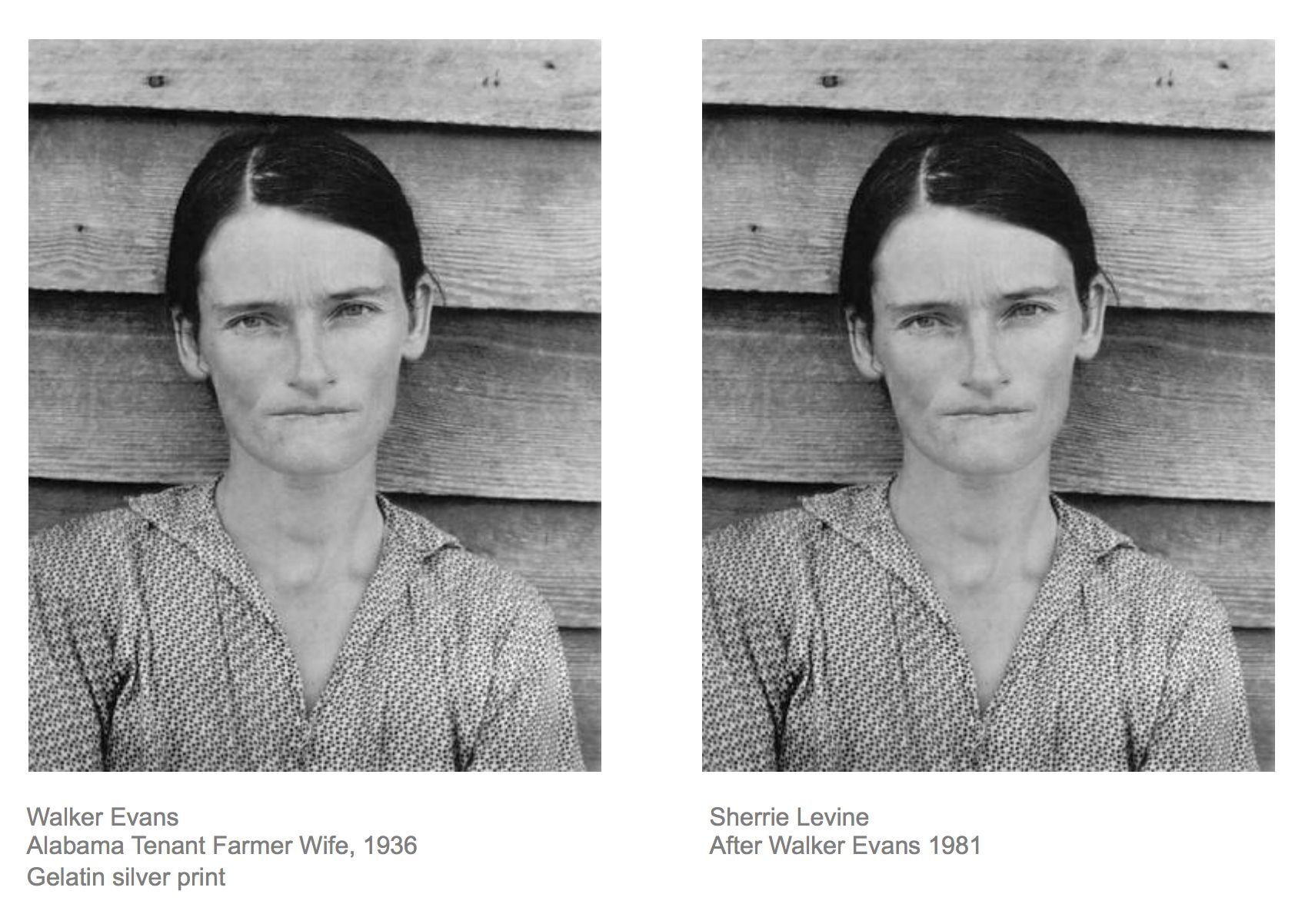
Left: Walker Evans, Alabama Tenant Farmer Wife, 1936; Right: Sherrie Levine, After Walker Evans, 1981

Why?

These readings give examples of Postmodernism in action—double-coding, irony, parody, pastiche, satire, quoting, appropriation, sampling, remixing, and so on. When many of the underlying tenets of Modernism were questioned, it opened up many possibilities to artists and designers.

The punk movement took late Modernism’s tendency toward minimalism, but removed any utopic leanings. Simple, three-chord songs, played with very little musicianship, layered with snotty, antisocial lyrics were a mainstay of early punk, post-punk, and new wave. The music was a transition from the austerity, purity, and optimism of Modernism into the plurality, impurity, and cynicism of Postmodernism.

Hip-hop, arising in the 1970s, was a quintessentially postmodern art form— sampling from other artist’s records and pop culture. Other artists coming to prominence at the time were those of the Pictures Generation. Many of these artists quoted styles from the past within their work, and some just rephotographed the work of other artists. Although you may balk at the validity of some of these practices—i.e. Sherrie Levine or Richard Prince copying other photographers’ works—you should ask yourself, “What is my breaking point? Where do I draw the line between legitimate and illegitimate appropriation?” If you consider hip-hop a legitimate art form, but not Levine’s rephotographing of Walker Evans’ photographs, why is that?

Required

The Foundation, Season 1, Episode 1, Hip-Hop Evolution
If you don’t have a Netflix account, see if you can bum off of a friend’s account, or organize a viewing party with other members of the class. Make sure you are watching the episode titled “The Foundation,” Season 1, Episode 1. Apparently, on some people’s Netflix account, episodes are labeled differently, and they end up watching a different episode that is peppered with f-bombs.

Supplementary Readings

Timeline

View larger

The Pictures Generation
The Pictures Generation, 1974–1984
“This catalogue is published in conjunction with the exhibition The Pictures Generation, 1974–1984, on view at the Metropolitan Museum of Art, New York, from April 21 to August 2, 2009.”
Sarah Charlesworth
Sarah Charlesworth – Pictures Generation Artist, Interview 2004
“Sarah Charlesworth (1947-2013), along with Laurie Simmons, Barbara Kruger, Cindy Sherman, Richard Prince, Robert Longo, Charles Clough, was a seminal component of the conceptual wing that she had formulated in distinction, and the most intellectual investigator of media images of that group of groundbreaking artists. This montage of video clips is from a much longer interview that convened in 2004, and her invaluable contribution she made to educating us, the filmmakers, on what took place and her incisive views of the time she spent creating, and observing the changing landscape of the NY/international art world.”
Barbara Kruger
Barbara Kruger: In Her Own Words
Kruger talks about her history and work.
Louise Lawler
Louise Lawler | HOW TO SEE the artist with MoMA curator Roxana Marcoci, The Museum of Modern Art
“Can the exact same image have a completely different meaning if its title or medium is changed? Explore the work of one of today’s most influential female artists, Louise Lawler, in the new exhibition Louise Lawler: Why Pictures Now. MoMA curator Roxana Marcoci gives us a tour of the exhibition that charts Lawler’s continuous re-presentation, reframing, or restaging of the present, a strategy through which Lawler revisits her own images by transferring them to different formats—from photographs to paperweights, tracings, and works she calls “adjusted to fit” (images stretched or expanded to fit the location of their display).”
Sherrie Levine
Sherrie Levine; Mayhem
“Since the late 1970s, Sherrie Levine (b. 1947) has effectively rewritten the history of modern art by reprising images and objects—such as sculpture by Constantin Brancusi and Marcel Duchamp, photographs by Walker Evans and Alfred Stieglitz, and geometric forms from abstract modernist painting—and placing them before contemporary audiences to be experienced anew. This practice underscores the ways in which art accumulates different meanings over time and in different contexts. Levine suggests that how we see and understand things is conditioned by our own experiences, collective and singular, shared and private.”
Richard Prince
Cindy Sherman
Cindy Sherman in “Transformation”, Art21
“The segment surveys thirty years of untitled works in which the artist photographs herself in various scenes and guises, grouped into informally-named series such as fairy tales, centerfolds, history portraits, Hollywood/Hampton types, and clowns. Sherman used a digital camera and green screen for her most recent series of society portraits, modifying each image’s ‘background with the same kind of license that a painter would take.’ Sorting through test shots at the computer, Sherman leads the viewer through her iterative process.”
Robert Longo on Cindy Sherman’s Untitled Film Still #25 (1978), The Museum of Modern Art
“Artist Robert Longo speaks about his favorite Cindy Sherman work, "Untitled Film Still #25" (1978).”
Postmodernism in Photography
The Photographic Activity of Postmodernism, October
“That aspect of our culture which is most thoroughly manipulative of the roles we play is, of course, mass advertising, whose photographic strategy is to disguise the directorial mode as a form of documentary. Richard Prince steals the most frank and banal of these images, which register, in the context of photography-as-art, as a kind of shock. But ultimately their rather brutal familiarity gives way to strangeness, as an unintended and unwanted dimension of fiction reinvades them. By isolating, enlarging, and juxtaposing fragments of commercial images, Prince points to their invasion by these ghosts of fiction.”
Chapter 7: Benjamin, Atget and the ‘Readymade’ Politics of Postmodern Photography Studies, Photography: Theoretical Snapshots
“In what follows, I trace the formation of photography studies and its coincidence with postmodern art criticism in the 1980s, as well as their dual investment in both Atget and Benjamin. Many theorists of postmodern art legitimated and even institutionalized not only a discourse on photography, but also certain photographic practices that might be said to be constitutive of photography studies. The American version of photography studies in particular originated in the postmodern debate ostensibly as a reaction against a formalist narrative of modernism promulgated by Clement Greenberg, in favour of a conceptualist one begotten by Marcel Duchamp – and thus replaced one canon with another. What, however, is excluded from each of these narratives?”
Winning the Game When the Rules Have Been Changed: Art Photography and Postmodernism
“Often the reaction of art photographers to postmodernist photographic work is bafflement, if not a sense of affront. The irony is that photography, a medium which by its very nature is so utterly bound to the world and its objects, should have had, in a variety of ways, to divorce itself from this primary relationship in order to claim for itself a photographic aesthetics.”
Postmodernism in Graphic Design
The Art of Punk and the Punk Aesthetic, Design Observer
“For a musical and social movement that snarled in the face of authority and wasn’t averse to spitting at its friends, punk has received a great many shelf inches in the last 30 years respectfully devoted to histories, reassessments and eyewitness accounts. Today, there is even an academic journal exclusively devoted to the pursuit of punk and post-punk studies, which has just published its second issue. There can’t be much left to say about the music, clothing, media outrage and legendary gigs, but the graphic expression of punk has received less critical attention.”
Postmodernism in Illustration
Early Hip Hop Soundtrack

Listen to the sounds of early hip hop. This is for background listening and does not count toward your supplementary work time.

Hip Hop
Lights Out, 99% Invisible
This podcast lays out the myth behind the proliferation of hip-hop: “Caz also believes that the the 1977 blackout may have accelerated the growing hip hop movement, which was just beginning to put down roots in the Bronx. His theory: the looting that occurred during the blackout enabled people who couldn’t afford turntables and mixers to become DJs.”
Remixing, Sampling, and Appropriating
Everything is a Remix
In his four-part series, Kirby Ferguson outlines how remixing is a backbone of postmodern cultural production.
RIP: A Remix Manifest: Mash-Ups, Copyright, and Culture Creation
“Join filmmaker Brett Gaylor and mashup artist Girl Talk as they explore copyright and content creation in the digital age. In the process they dissect the media landscape of the 21st century and shatter the wall between users and producers. Creative Commons founder, Lawrence Lessig, Brazil's Minister of Culture, Gilberto Gil, and pop culture critic Cory Doctorow also come along for the ride.”
Appropriation in Contemporary Art, Inquiries Journal
“Appropriation refers to the act of borrowing or reusing existing elements within a new work. Post-modern appropriation artists, including Barbara Kruger, are keen to deny the notion of ‘originality.’ They believe that in borrowing existing imagery or elements of imagery, they are re-contextualising or appropriating the original imagery, allowing the viewer to renegotiate the meaning of the original in a different, more relevant, or more current context.”
Punk, Post-Punk, and New Wave Soundtrack

Listen to the sounds of the early punk, post-punk, and new wave of the 1970s and ealy ’80s. This is for background listening and does not count toward your supplementary work time.

Punk, Post-Punk, and New Wave
The Story of Feminist Punk in 33 Songs, Pitckfork
“‘Feminism,’ ‘punk,’ and ‘feminist punk’ can have many definitions, culturally and personally. In attempting to capture the spirit and story of this lineage, we had to narrow down these enormous fields. We looked for songs that make their feminist messages clear—not just songs by punks who are feminists, and not songs that were ‘punk’ or ‘feminist’ in spirit alone. In this context, we defined punk as some kind of raw expression, not only an attitude. We looked for rallying cries that have questioned, explored, and destroyed stereotypes, in which the form of the music has mirrored the message. We believe they are classics that cross canons, set precedents, and uphold virtues for the idea of feminism in punk, and the artists who wrote them have moved punk forward.”
Gary Panter, Matt Groening, and the Dual History of Punk and Comics: And the Outsider, DIY Ethic that Connects Them, Literary Hub
“Just about anyone who has paid any attention to pop culture in the past 30 years can picture Bart Simpson. He has popping saucer eyes, a red T-shirt, and what looks like a crown of jagged hair. First appearing on television in 1987, Bart is the perpetually-ten-year-old Simpson family son who quickly became a globally famous figure for pugnacity and rebellious disrespect (‘Don’t have a cow, man!’). What few people know, though, is that Bart’s iconic hairline is lovingly lifted from cartoonist Gary Panter’s punk everyman character Jimbo and his spiky hair—meaning that one of America’s most beloved pop culture characters actually springs from a key figure in its groundbreaking punk scene.”
The Very Black History Of Punk Music, AJ+
“Stories about punk music tend to picture thin-framed white guys and girls with shaved heads, part of an angry, energetic scene born out of the working class angst of young white England in the 1970s. But the actual history of punk—as a type of music and movement – is more complicated than that. Black punks have been an integral and pioneering part of punk history—and they’re keeping the movement alive and growing today. Host Sana Saeed explores that history and talks to proto-punk band Death, musician and journalist Greg Tate, the band The 1865 and festival organizer Shawna Shawnté.”
Punk Style: Articles of Interest #6, 99% Invisible
Note: Some adult language “For Punk, Avery Trufelman spoke with 99pi host Roman Mars; Don Letts, legendary DJ and filmmaker and creator of the documentary Punk Attitude; Claire Wilcox, senior curator at the Victoria and Albert Museum; Michael Costiff, a curator and long time neighbor of 430 Kings Road; Monica Sklar, fashion historian and author of the book Punk Style.”
Lipstrick Traces: a Secret History of the Twentieth Century
“Looking for an answer, with a high sense of the drama of the journey, Marcus takes us down the dark paths of counterhistory, a route of blasphemy, adventure, and surprise. This is no mere search for cultural antecedents. Instead, what Marcus so brilliantly shows is that various kinds of angry, absolute demands—demands on society, art, and all the governing structures of everyday life—seem to be coded in phrases, images, and actions passed on invisibly, but inevitably, by people quite unaware of each other.”
Please Kill Me: The Uncensored Oral History of Punk
“Though Britain’s notorious Sex Pistols shoved punk rock into the face of mainstream America, the movement was already brewing in the U.S. in the 1960s with bands like the Velvet Underground and Iggy and the Stooges. Through hundreds of interviews with forgotten bands as well as the ones that made names for themselves–including Blondie and the Ramones–Legs McNeil and Gillian McCain chronicle punk rock history through the people who really lived it. Please Kill Me is a thrash down memory lane for those hip to punk’s early years and an enlightening history lesson for youngsters interested in the origins of modern ‘alternative’ music.”
The Art of Punk and the Punk Aesthetic, Design Observer
“For a musical and social movement that snarled in the face of authority and wasn’t averse to spitting at its friends, punk has received a great many shelf inches in the last 30 years respectfully devoted to histories, reassessments and eyewitness accounts. Today, there is even an academic journal exclusively devoted to the pursuit of punk and post-punk studies, which has just published its second issue. There can’t be much left to say about the music, clothing, media outrage and legendary gigs, but the graphic expression of punk has received less critical attention.”

Response Questions

Remember to cite specific instances from the text to support your views.

  • The 1970s ushered in a new era of questioning concepts of originality and appropriation. With the Pictures Generation (of which Richard Prince was a part) and hip-hop, artists freely sampled and flat-out copied the work of others. What do you make of this?
  • Think back to Duchamp/Freytag-Loringhoven and Fountain (1917). The artist appropriated the work of someone else—something that already existed—and slapped a signature on it. What started happening in the 1970s is a continuation of this same practice. Does anything about this concern you? If so, what and why? If not, why?
  • What technological, economic, and political factors shaped the beginnings of hip-hop?
  • Mr. Keedy indicated his frustration at what was to be an “ideological victory over the tyranny of style mongering” was co-opted as the clichéd “ugly, grunge, layered, chaotic, postmodern design of the 90s.” What do you make of this inevitable movement from the avant-garde to the commonplace? What does that mean about you and your individual styles and/or practices?
  • Reflect on how attitudes shift, thereby creating new eras—from Modernism to Postmodernism, to Post-postmodernism, etc. Do you sense anything in the air that may indicate a new shift? What might you do to disrupt your field and help usher in a new way of looking at design?
  • Postmodernist styles are coming back into vogue. So, an era that was about borrowing from the past is now getting sampled itself (typically by artists who weren’t alive or cognizant when it was popular in the first place). What do you think of this backward looking tendency?

10.1: Postmodernism

Questioning Everything
Read by Thu Mar 11,
Reading Response due Wed Mar 17,

Demolition of the Pruitt-Igoe housing complex, 1972 (photo courtesy of U.S. Department of Housing and Urban Development)

Why?

There is much debate over when Modernism died and when Postmodernism began (or if either actually did). There is also debate over whether we are still in a Postmodern age, or if we have moved on to Post-Postmodernism, Metamodernism, Pseudomodernism, Jive Modernism, or any number of other permutations. The readings you have below help to define how academics see Postmodernism and the shift from Modernism. It’s up to you to determine if you think we are currently in a Modern, Postmodern, or Post-Postmodern condition and what that means.

Required

What is Postmodernism?
Ask an Expert: What is the Difference Between Modern and Postmodern Art?, Smithsonianmag.com

Supplementary Readings

Timeline

View larger

Postmodernism
Postmodern and Late Modern: the Essential Definitions, Chicago Review
“Clement Greenberg, long acknowledged as the theorist of American Modernism, defined Postmodernism in 1979 as the antithesis of all he loved: that is, as the lowering of aesthetic standards caused by 'the democratization of culture under industrialism.’ Like our 'Decadence’ columnist, he saw the danger as a lack of hierarchy in artistic judgment although he did not go so far as the Frenchman in calling it simply 'nihilism’. Another art critic, Walter Darby Bannard, writing in the same prestigious magazine five years later, continued Greenberg’s crusade against the heathens and restated the same (non-) definitions, except with more brutal elaboration: ‘Postmodernism is aimless, anarchic, amorphous, self-indulgent, inclusive, horizontally structured and aims for the popular.’”
Introduction & Chapter 2, Postmodernism, or, the Cultural Logic of Late Capitalism
“Fredric Jameson’s most wide-ranging work seeks to crystalize a definition of ‘postmodernism.’ Jameson’s inquiry looks at the postmodern across a wide landscape, from ‘high’ art to ‘low,’ from market ideology to architecture, from painting to ‘punk’ film, from video art to literature.” Full book: Postmodernism, or the Cultural Logic of Late Capitalism, 438 pages.
Good History/Bad History, Looking Closer: Critical Writings on Graphic Design
“The eighties were a decade of comebacks: suspenders, mini-skirts, Roy Orbison, Sugar Ray Leonard…. But the really big comeback was history. We got rid of history in the sixties; saw what the world looked like without it in the seventies; and begged it to come back in the eighties. And it did; it came back with a vengeance. In design, history came back as well. Suddenly, there were countless books-big, glossy, oversize volumes-and starchy little journals devoted to the history of design. Careers were constructed around this fascination. Conferences, too. And there’s nothing wrong with studying the history of design. In fact, it’s healthy and smart, especially for design professionals. At the same time, the indiscriminate use of history has produced some really bad, unhealthy design. History in itself isn’t bad, but its influence can be.”
Did We Ever Stop Being Postmodern?, Design Observer
“One probable reason for this decision is that postmodernity is simply too complicated to reference and explain in short introductory wall texts, which would have to be loaded with great gobbets of Jameson and Lyotard. Large-scale exhibitions in public museums must always strike a balance between doing a subject adequate intellectual justice and appealing to ordinary visitors who are likely to know little or nothing about the theme.”
Postmodernism: What is It Good For?, Up Close
“On this episode of the Up Close podcast, literary theorist Professor Brian McHale explains the origins and trajectory of postmodernism, muses on its role in our cultural expression, and speculates on its demise.”
Episode 21: Climate of Denial, Ministry of Culture
“Human-caused climate change is real and growing in impact. Yet many Americans see climate change as a belief that they can opt out of. Two belief structures are to blame: American Protestantism and postmodernism.”
Is Mormonism a Postmodern Religion?, Patheos
“I want to explain three postmodern themes and describe how they relate to Mormon theology. These postmodern themes often reveal a hidden tension within the Mormon faith, caused by seemingly paradoxical claims and suggestions. These themes are continuing revelation, the theological hierarchy of the church, and its approach to pluralism.”

Response Questions

Remember to cite specific instances from the text to support your views.

  • Modernism’s concerns with purity, reductionism, futurism, and utopias started to fall apart in the 1960s through the 1970s. How would you characterize Postmodernism?
  • How might second wave feminism, the civil rights movement, and postcolonial theory that pushed for plurality over single visions have led to the downfall of Modernism?
  • Make note of the various characteristics of Postmodernism stated within the various readings. Do you see those as still in effect today, or have we moved into a new era? What may be the events or technologies that signal that we are beyond Postmodernism?

9.2: Modernist Media, Semiotics, and Aesthetics, part II

The New Mediums
Read by Sat Mar 06,
Reading Response due Wed Mar 10,
Quentin Fiore The Medium is the Massage, 1967 With Marshall McLuhan and Jerome Agel
Quentin Fiore
The Medium is the Massage, 1967
With Marshall McLuhan and Jerome Agel

Why?

One of the largest shifts in the latter-half of the 20th century was technological. Computers, telecommunications, air travel, television, and the internet completely destabilized standard thinking and communication. The required readings from Marshall McLuhan (noted Canadian media theorist) and Guy Debord (French philosopher of the Situationist International movement) were both published in 1967 and were prophetic in nature. Both tackled how life was becoming increasingly mediated—we were experiencing things less directly, and more through technology and images. McLuhan’s main point in “The Medium is the Message” is that the mediums that are created are more important and influential than the messages carried by those mediums. For example, the telephone systems shape culture much more than the individual conversations that take place within that system. Debord focuses on capital and images and that as a society, we are moving from being, to having, to appearing (think of the shift from just experiencing the world directly, like a farmer, to constantly giving the appearance of living a full life through Instagram). McLuhan took a more neutral, academic tone in his writings whereas Debord—a neo-Marxist—was critical of these shifts. See if you can notice these tones within their texts, and what societal changes they saw as coming about through these changes in technology.

Required

This is Marshall McLuhan: The Medium is the Message
Watch both reels. “Investigates the central ideas of Marshall McLuhan using pictorial techniques and including his own comments. Examines the reaction of others to his views and points out that his interest is the impact of electronic technology on the contemporary world.”
Separation Perfected, Society of the Spectacle
This first chapter from Society of the Spectacle outlines Debord's critique of modern society being distracted by capital and images (and images as capital).

Supplementary Readings

Timeline

View larger

Marshall McLuhan
The Medium is the Massage
Note; Don't let the page count scare you, it's mostly pictures. “Marshall McLuhan argues that technologies—from clothing to the wheel to the book, and beyond—are the messages themselves, not the content of the communication. In essence, The Medium is the Massage is a graphical and creative representation of his ‘medium is the message’ thesis seen in Understanding Media. By playing on words and utilizing the term ‘massage,’ McLuhan is suggesting that modern audiences have found current media to be soothing, enjoyable, and relaxing; however, the pleasure we find in new media is deceiving, as the changes between society and technology are incongruent and are perpetuating an Age of Anxiety.”
Marshall McLuhan Full lecture: The medium is the message (1/3)
An interview with Marshall McLuhan on Australia’s ABC Radio National Network. See also part 2/3 (13:55) and part 3/3 (15:28).
Understanding Media: The Extension of Man
“When first published, Marshall McLuhan’s Understanding Media made history with its radical view of the effects of electronic communications upon man and life in the twentieth century. This edition of McLuhan’s best-known book both enhances its accessibility to a general audience and provides the full critical apparatus necessary for scholars. In Terrence Gordon’s own words, ‘McLuhan is in full flight already in the introduction, challenging us to plunge with him into what he calls “the creative process of knowing.”’ Much to the chagrin of his contemporary critics McLuhan’s preference was for a prose style that explored rather than explained. Probes, or aphorisms, were an indispensable tool with which he sought to prompt and prod the reader into an 'understanding of how media operates’ and to provoke reflection.”
The Medium is the Massage
The Life and Times of Marshall McLuhan, Out of Orbit
“Marshall McLuhan, one of Canada's most influential and controversial figures, burst into the centre of media circles in North America with his strange and prophetic pronouncements - "electric light is pure information" - on advertising, television and the emerging computer age. Known for his imaginative descriptions of the media environment, McLuhan coined the phrases 'the medium is the message' and 'the global village.' These two aphorisms still linger on the tongues of critics, philosophers and pop-culture makers as McLuhan's predictions and revelations continue to be proven true over and over again.”
Guy Debord and Society of the Spectacle
Society of the Spectacle
This is the first edition of the (English translation of) book in its entirety.
La société du spectacle (Society of the Spectacle)
Note: contains nudity and sexual themes. “La Société du Spectacle (Society of the Spectacle) is a black and white 1973 film by the Situationist Guy Debord based on his 1967 book of the same title. It was Debord’s first feature-length film. It uses found footage and détournement in a radical criticism of mass marketing and its role in the alienation of modern society.”
An Illustrated Guide to Guy Debord’s ‘The Society of the Spectacle’, Hyperallergic
“Debord observed that the spectacle actively alters human interactions and relationships. Images influence our lives and beliefs on a daily basis; advertising manufactures new desires and aspirations. The media interprets (and reduces) the world for us with the use of simple narratives. Photography and film collapses time and geographic distance—providing the illusion of universal connectivity. New products transform the way we live.”
Society of the Spectacle: WTF? Guy Debord, Situationism and the Spectacle Explained
“Need The Society of the Spectacle explained? Well, in this episode of What the Theory?, we’re doing just that. The Society of the Spectacle by Guy Debord (a key member of the Situationist International) argues that contemporary capitalist society has become obsessed with images and appearances over all else. Debord argues that “the spectacle” has invaded our everyday lives not just in the form of image-based advertising but also in the way that we interact with one another. In this Society of the Spectacle summary video, I provide a brief introduction to Debord’s concept of the spectacle, taking a brief look at the context in which the book was written (including both situationism and the May ’68 Paris uprisings) and unpacking the key arguments included within.”

Response Questions

Remember to cite specific instances from the text to support your views.

  • What does McLuhan mean by “the medium is the message?”
  • What do you make of McLuhan’s idea of the “global villiage?”
  • How would you define Debord’s spectacle? Keep in mind that often theorists and philosophers will employ terms differently than common usage. Debord is also a bit slippery about the term “spectacle” in that he offers up different facets of the idea of the spectacle, but no succinct definition.
  • Where might you see aspects of the spectacle at play today?
  • Since DeBord and Mcluhan were writing decades before the internet, cable television, 24-hour news, cellphone cameras, etc., what might they have missed in their individual critiques of media and images?

9.1: Modernist Media, Semiotics, and Aesthetics, part I

Order and Entropy
Read by Thu Mar 04,
Reading Response due Wed Mar 10,
Baroness Elsa von Freytag-Loringhoven, 1915 (Naumann Fine Art)
The Baroness Elsa von Freytag-Loringhoven
1915 (Naumann Fine Art)

Why?

The Modern era signaled a number of aesthetic shifts including abstraction, medium-specificity, and a growing emphasis on individuality and concept. In part one of our exploration of Modernist media, we will focus on the early 20th century movements, artists, and environmental factors. This period includes Art Nouveau, Fauvism, German Expressionism, Cubism, Futurism, Suprematism, Constructivism, Neoplasticism/DeStijl, the Photo Secession, Dada, the Bauhaus, the International Style, The New Typography, Art Deco, the Harlem Renaissance, The Photo League, and Surrealism. Needless to say, we won’t be discussing each and every movement, but rather overall similarities, influences, trends, and trajectories so we can understand the transition into mid-and late-century art and design including Postmodernism. In particular, we will be focusing on a few pivotal things that shifted the cultural landscape: pictorialism, abstraction, and Dada readymades.

Required

Supplementary Readings

Timeline

View larger

Cubism
William S. Rubin on Picasso and Braque: Pioneering Cubism
“In 1989, William S. Rubin, then Director Emeritus of the Museum of Modern Art’s Department of Painting and Sculpture, organized its groundbreaking exhibition Picasso and Braque: Pioneering Cubism. Rubin gathered over 400 paintings and sculptures by the artists for the exhibition and charted their artistic partnership from 1907 until Braque went off to the Great War in 1914. This unscripted lecture by Rubin was originally produced by The Museum of Modern Art and Checkerboard Film Foundation and was shown in conjunction with the 1989 exhibition. It was then reissued to commemorate William Rubin on the occasion of the 2007 exhibition ‘Picasso Cubiste,’ organized by the Musee Picasso in Paris.“
Picasso and Braque Go to the Movies
"Produced by Martin Scorsese and Robert Greenhut and directed by Arne Glimcher, Picasso and Braque go to the Movies is a cinematic tour through the effects of the technological revolution, specifically the invention of aviation, the creation of cinema and their interdependent influence on artists Pablo Picasso and Georges Braque. With narration by Scorsese, and interviews with art scholars and artists including Chuck Close, Julian Schnabel and Eric Fischl, the film looks at the collision between film and art at the turn of the 20th Century and helps us to realize cinema’s continuing influence on the art of our time.”
Cubism, Heilbrunn Timeline of Art History, the Metropolitan Museum of Art
“The Cubist painters rejected the inherited concept that art should copy nature, or that artists should adopt the traditional techniques of perspective, modeling, and foreshortening. They wanted instead to emphasize the two-dimensionality of the canvas. So they reduced and fractured objects into geometric forms, and then realigned these within a shallow, relieflike space. They also used multiple or contrasting vantage points.”
The Rise of Cubism, Art in Theory 1900–2000: An Anthology of Changing Ideas
Pages 208–214 “Kahnweiler was the leading dealer in Cubist art at the moment of its foundation. His contact, indeed his friendship, with Picasso and Braque enabled them to work relatively unhindered by the demands of public exhibition. Declared an enemy alien on the outbreak of war in 1914, when his collection was sequestrated, Kahnweiler retired to Switzerland. There, influenced by his readings in philosophy, particularly an interest in Kant, he composed a theoretical work Der Gegenstander Asthetik, which included his pioneering, study of Cubism.”
Thoughts on Painting, Art in Theory 1900–2000: An Anthology of Changing Ideas
“Braque’s aphorisms, purportedly jotted down in the margins of his drawings, emphasize both the autonomy of Cubism, the ‘constitution of a pictorial fact,’ and its status as a form of representation.”
Pablo Picasso: Women are either Goddesses or Doormats, The Telegraph
“From Rembrandt and Goya to Bonnard and Stanley Spencer, male artists have drawn obsessively and immensely productively on the faces and bodies of their wives and lovers. But no one used and abused his women quite like the greatest artist of the 20th century, Pablo Picasso.”
International Pictorialism
Pictorialism, Oxford Art Online
“Photographic style that began around 1890 and continued until at least World War II, in which photographers sought to convey subjective emotions rather than depict objective reality. Pictorialism became the first international movement of photography, with artists predominantly working in the USA, Europe and Asia. Pictorialists modelled their photographs after fine art, and they embraced a variety of artistic influences, including Symbolist literature and art, Impressionist and Pre-Raphaelite painting, Art Nouveau and Japonisme. Their works were generally characterized by picturesque subjects rendered in soft focus, with an emphasis on tone rather than line and detail.”
The Photo-Secession
All issues of Alfred Stieglitz’s 291
Alfred Stieglitz, Marius de Zayas, Agnes Ernest Meyer, and Paul Haviland created the arts and literary magazine 291 in 1915 in New York City. At first, the publication was meant to promote Stieglitz’s gallery of the same name (291), it grew to include essays, poems and artworks by the avant-garde of the time: Francis Picabia, John Marin, Max Jacob, Georges Ribemont-Dessaignes, de Zayas, and Stieglitz. It ran from 1915 to 1916 with a total of 9 issues.
Alfred Stieglitz (1864–1946) and His Circle, Heilbrunn Timeline of Art History, the Metropolitan Museum of Art
“Recognized as a pioneer in the advancement of Pictorial photography in America and abroad, Alfred Stieglitz (1864–1946), photographer, publisher, gallerist, and impresario, also made unparalleled contributions to the introduction of modern art in America and gave unequivocal support to young American modernist painters. In 1905, Stieglitz, in association with the photographer and painter Edward J. Steichen , opened the Little Galleries of the Photo-Secession in Steichen’s former studio at 291 Fifth Avenue. Commonly called ‘291,’ the small gallery was originally an outlet for exhibiting work by Photo-Secessionist photographers, but subsequently it became a preeminent center for the exhibition of modern European and American artists. With the aide of advisors Steichen, Marius de Zayas, and Max Weber, who had connections with artists and galleries in France, 291 became the first venue in America to show Auguste Rodin and Henri Matisse (in 1908), Paul Cézanne (in 1910), and Pablo Picasso (in 1911).”
Pictorialism in America, Heilbrunn Timeline of Art History, the Metropolitan Museum of Art
“After the introduction of the handheld amateur camera by Kodak in 1888, patrician gentlemen with artistic ambitions no longer dominated the medium of photography. As an army of weekend “snapshooters” invaded the photographic realm, a small but persistent group of photographers staked their medium’s claim to membership among the fine arts. They rejected the point-and-shoot approach to photography and embraced labor-intensive processes such as gum bichromate printing, which involved hand-coating artist papers with homemade emulsions and pigments, or they made platinum prints, which yielded rich, tonally subtle images. Such photographs emphasized the role of the photographer as craftsman and countered the argument that photography was an entirely mechanical medium. Alfred Stieglitz was the most prominent spokesperson for these photographers in America, and in 1902 he and several like-minded associates in the New York Camera Club—including Gertrude Käsebier (33.43.132), Alvin Langdon Coburn (1987.1100.13), and Frank Eugene (55.635.12)—broke away from the club to form what they dubbed the Photo-Secession.”
1916, Art Since 1900: 1900–1944 (2nd edition)
Pages 142–147 This section discusses Alfred Stieglitz and his cohort as they form the Photo-Secession and pursue Pictorialism.
Tantric Painting (Non-Western, Early Abstraction)
“An Egoless Practice”: Tantric Art, The Paris Review
“Tantra is extremely difficult to explain. But it’s important to note that these small paintings come from Tantric Hinduism, beginning in the fifth or sixth century, and not Tantric Buddhism. For instance, the goddess deities are Shiva, Kali, Tara, and so on. After painting, one is to meditate with these to finally make the divinity appear. It’s an egoless practice. In Sanskrit tantra means ‘loom’ or ‘weave,’ but also ‘treatise.’ The paintings date back to the handwritten Tantra treatises that have been copied over many generations, at least until the seventeenth century. At some point they evolved into this complex symbolic cosmology of signs.”
Tantric Paintings: Some Observations, Hyperallergic
“First of all I do not disrespect the fact that people are painstakingly collecting these paintings, researching and writing about them. But if we want to analyze them from art’s point of view, we will have to keep the excitement, romanticism and spiritual curiosity aside for a while. It is uncanny to see the “resemblance” these paintings have with many of the modern art works, but this does not mean that these paintings are a result of a conscious art practice from ancient Tantrism. These are instead the outcome of ritualistic processes. When art serves as a component of ritualism, the questioning stops and so does its evolution.”
European Abstraction
1921, Art Since 1900: 1900–1944 (2nd edition)
Pages 180–185 Constructivism
Mondrian at Tate Liverpool and Turner Contemporary
“Art Historian Rosie Rockel takes in two new exhibitions dedicated to Piet Mondrian: Mondrian and Colour at Turner Contemporary, and Mondrian and his Studios at Tate Liverpool.”
First three volumes of De Stijl + vol. 4 no. 11 (1917–1921)
“De Stijl, Dutch for ‘The Style’, also known as neoplasticism, was a Dutch artistic movement founded in 1917. In a narrower sense, the term De Stijl is used to refer to a body of work from 1917 to 1931 founded in the Netherlands. De Stijl is also the name of a journal that was published by the Dutch painter, designer, writer, and critic Theo van Doesburg (1883–1931), propagating the group’s theories.” (text from Ubu.com)
1913, Art Since 1900: 1900–1944 (2nd edition)
Pages 118–124 Early European abstraction
Abstraction in Illustration
Stylistic Illustration: 2. Abstraction, The Informed Illustrator
“From the late 1920s through the years of World War II, abstractionism became a predominant form of illustration. Pure shape, line, texture, and color became ever-present pictorial conventions in the illustrations of that era. Some illustrators, such as Joost Schmidt, E. A. Barton, Edward McKnight, and Leo Marfurt, created compositions that took the use of abstract form to the extreme. This presented quite a challenge for an audience that was primarily accustomed to realist imagery.”
Abstraction in Photography
Abstract Photography Show, Photo Arts
“Abstraction, like logic and what is termed the practical reason, is a way of man's thinking. Like all thought, abstraction is included in the more general process called symbolization. Its particular distinction is its quality of summary, the ability to treat many particular ideas in more easily handled general categories. Mathematics exemplifies this process more than any other branch of human endeavor. Abstractions are arrived at by eliminating the impurities of fact and retaining the essentials of structure or form. What, then, is abstract photography?”
Suprematism
Kazimir Malevich | TateShots
“Malevich’s Black Square is the Hour Zero of modern art for many artists, showing how much one work can change the course of art history. But what were Malevich’s motivations and where did this iconic painting take him after 1915?”
Art Historian Finds Racist Joke Hidden Under Malevich’s Black Square, Hyperallergic
“After examining ‘Black Square’ under a microscope, researchers from Russia’s State Tretyakov Gallery, which houses one of three versions of the Suprematist composition, found a handwritten inscription under a topcoat of black paint. They believe it reads ‘Battle of negroes in a dark cave.’”
Russian Avant-Garde | How to See the Art Movement with MoMA Curator Roxana Marconi
“For the hundredth anniversary of the 1917 Russian Revolution, MoMA curator Roxana Marcoci explains how artists such as Malevich, Rodchenko, and Vertov attempted to revolutionize Russian society through new means of artistic production—and how the styles developed by the Russian Avant-Garde still affect how we look at art today.”
De Stijl + Neoplasticism
Mondrian at Tate Liverpool and Turner Contemporary
“Art Historian Rosie Rockel takes in two new exhibitions dedicated to Piet Mondrian: Mondrian and Colour at Turner Contemporary, and Mondrian and his Studios at Tate Liverpool.”
First three volumes of De Stijl + vol. 4 no. 11 (1917–1921)
“De Stijl, Dutch for ‘The Style’, also known as neoplasticism, was a Dutch artistic movement founded in 1917. In a narrower sense, the term De Stijl is used to refer to a body of work from 1917 to 1931 founded in the Netherlands. De Stijl is also the name of a journal that was published by the Dutch painter, designer, writer, and critic Theo van Doesburg (1883–1931), propagating the group’s theories.” (text from Ubu.com)
1917, Art Since 1900: 1900–1944 (2nd edition)
Piet Mondiran, De Stijl, and Neoplasticism
Dada
391
This link will take you to some, but not all, issues of 391, a seminal Dada publication out of NYC. ​"Even if Picabia appeared to be duplicating 291 in the title and material presentation of his magazine, 391 is the instrument which allowed him to diffuse his art and his ideas: from the launch of the magazine in 1917 until 1924, each issue contained the artist’s poems, notes, and drawings, and the covers almost always reproduced one of his works. The periods in which Picabia experienced difficulty account for the magazine’s irregular rhythm of publication: a turning point in his art, boredom, solitude, and illness… ‘Better than nothing’: to do everything to avoid doing nothing, to work, to create to live. For Picabia, as for the Dada movement, which he joined after the creation of 391, these years of war were about battling nothingness, the vacuum that is civilization, with provocation.”
Dada Fragments, Art in Theory 1900–2000: An Anthology of Changing Ideas
Pages 250–251 “These Fragments and diary entries from 1916 to 17 were originally published in Ball’s book Flucht aus der Zeit (Flight from Time). Munich/Leipzig. 1927.”
Two issues of The Blind Man
“Three little magazines were produced by the French émigrés Marcel Duchamp and Henri-Pierre Roché in New York in 1917, and their role in the scandal of Duchamp’s Fountain has ensured their inscription in the history of Dada, though the name was then unknown to the protagonists. Duchamp’s close friend Francis Picabia was in New York at the same time and his 391 was also exploring Duchamp’s idea of the 'readymade’. The Blindman (its first issue ran the words together in the title) was published in April 1917 by Henri-Pierre Roché with contributions from Mina Loy and Beatrice Wood. […] The second issue in May of the same year, P.B.T. The Blind Man (the B stood apparently for Beatrice, the T for Totor, Duchamp’s nickname) carried the famous statement ‘The Richard Mutt Case’, which protested the suppression of R. Mutt’s Fountain-urinal from the Independents exhibition.”
All 8 issues of Dada
Dada: recueil littéraire et artistique [Dada: Literary and Artistic Review] was an avant-garde magazine published in 8 numbers (7 issues) between July 1917 and September 1921, first in Zürich (1-4/5) and later in Paris (6-8). The magazine was edited by Tristan Tzara; number 3 (1918) features his Dada manifesto in which he declared that ‘dada means nothing.’”
The Forgotten Legacy of Cult California Artist Beatrice Wood, Artsy
“Wood was a member of the New York Dada group and a pioneering sculptor. As a woman artist primarily working in ceramics, she also represented a demographic and a medium that were both marginalized during her lifetime. ‘More people know her for sleeping with Duchamp than for making her own work,’ the artist Arlene Shechet told me when we discussed Wood’s legacy. ‘That needs to be rectified.’”
Marcel Duchamp (1887–1968), Heilbrunn Timeline of Art History, the Metropolitan Museum of Art
“Subverting traditional or accepted modes of artistic production with irony and satire is a hallmark of Duchamp’s legendary career. His most striking, iconoclastic gesture, the readymade, is arguably the century’s most influential development on artists’ creative process. Duchamp, however, did not perceive his work with readymade objects as such a radical experiment, in part because he viewed paint as an industrially made product, and hence painting as an ‘assisted-readymade.’”
Elsa von Freytag-Loringhoven, the Dada Baroness Who Invented the Readymade, Artsy
“On a regular day, Baroness Elsa von Freytag-Loringhoven wore brightly colored makeup, postage stamps on each cheek, and a shaved head shellacked in various hues. Her accoutrements also included live birds, packs of dogs, a tomato-can bra, arms full of bangles, and flashing lights. Her unconventionally forthright poetry and rugged found-object sculptures—often incorporated into her outfits—unsettled social hierarchy and accepted gender norms, and distinctions between art and life. The Baroness was a dynamo in New York’s literary and art scene at the turn of the century, part of the Arensberg Salon group that included Marcel Duchamp, Man Ray, Beatrice Wood, Francis Picabia, Mina Loy, and many others.”
Marcel Duchamp: The Art of the Possible
“This documentary explores the life, philosophy and impact of one of the most influential early 20th century modernists. The film breaks down Marcel Duchamp's legacy, applying it to historical events and trends in modern day conceptual art, internet and meme culture.Featuring leading artists and thinkers in today's art world, the documentary reveals how Duchamp's vision forever shifted public consciousness, and our understanding of aesthetics, art, and the world we live in.”
Bauhaus
Photography at the Bauhaus, Heilbrunn Timeline of Art History, the Metropolitan Museum of Art
“Just as traditional media and materials were being subjected to intense reappraisal at the Bauhaus, Moholy-Nagy advocated unlimited experimentation with the photographic process. The photogram, created by placing objects on photographic paper and exposing them to light, exemplified the idea that the medium, formerly valued primarily for its ability to reproduce, was capable of producing entirely new art. In his 1926 Photogram (1987.1100.158 ), he deftly deals with light and issues then being explored in modern painting simply by using the play of light to create a radiant image of a hand and paintbrush floating serenely in dimensionless space.”
Teaching and Learning at the Bauhaus, Getty: Art + Ideas
“This episode commemorates the hundredth anniversary of the opening of the Bauhaus, the influential school founded in 1919 by Walter Gropius in Weimar, Germany. Revered for its experimental art and design curriculum, the Bauhaus sought to erode distinctions among crafts, the fine arts, and architecture through study centered on practical experience and a variety of traditional and experimental media. Two exhibitions from the Getty, one of which is online, explore the Bauhaus curriculum from the point of view of the instructors and students, largely through pedagogical exercises, notebooks, and images. In this episode, Getty curator Maristella Casciato, research assistant Gary Fox, and head of web and new media at the Getty Research Institute Liz McDermott discuss these exhibitions, Bauhaus Beginnings and Bauhaus: Building the New Artist.”
BBC Documentary – Bauhaus 100 – 100 Years of Bauhaus, BBC
“In 1919 an art school opened in Germany that would change the world forever. It was called the Bauhaus. A century later, its radical thinking still shapes our lives today. Bauhaus 100 is the story of Walter Gropius, architect and founder of the Bauhaus, and the teachers and students he gathered to form this influential school. Traumatised by his experiences during the Great War, and determined that technology should never again be used for destruction, Gropius decided to reinvent the way art and design were taught. At the Bauhaus, all the disciplines would come together to create the buildings of the future, and define a new way of living in the modern world.”
1923, Art Since 1900: 1900–1944 (2nd edition)
Pages 191–195 This chapter covers the Bauhaus.
Celebrating Six Trailblazing Bauhaus Women, Curbed
“As Sigrid Wortmann Weltge writes in the introduction to her book Women’s Work: Textile Art from the Bauhaus, female students ‘arrived at the school with an astonishing diversity of talents, convinced that this avant-garde institution would accept them as equals.’ Alas. Many of these students had already studied art elsewhere—and they were eager to learn from masters like Paul Klee, Wassily Kandinsky, and László Moholy-Nagy—but ‘they were segregated and given their own workshop, the Weaving Workshop, regardless of talent or inclination,’ Weltge writes.”
Haus Proud: The Women of Bauhaus, The Guardian
“More women than men applied to the school in 1919, and Gropius insisted that there would be ‘no difference between the beautiful and the strong sex’—those very words betraying his real views. Those of the 'strong sex’ were, in fact, marked out for painting, carving and, from 1927, the school’s new architecture department. The 'beautiful sex’ had to be content, mostly, with weaving.”
Women of the Bauhaus
Celebrating Six Trailblazing Bauhaus Women, Curbed
“As Sigrid Wortmann Weltge writes in the introduction to her book Women’s Work: Textile Art from the Bauhaus, female students ‘arrived at the school with an astonishing diversity of talents, convinced that this avant-garde institution would accept them as equals.’ Alas. Many of these students had already studied art elsewhere—and they were eager to learn from masters like Paul Klee, Wassily Kandinsky, and László Moholy-Nagy—but ‘they were segregated and given their own workshop, the Weaving Workshop, regardless of talent or inclination,’ Weltge writes.”
Haus Proud: The Women of Bauhaus, The Guardian
“More women than men applied to the school in 1919, and Gropius insisted that there would be ‘no difference between the beautiful and the strong sex’—those very words betraying his real views. Those of the 'strong sex’ were, in fact, marked out for painting, carving and, from 1927, the school’s new architecture department. The 'beautiful sex’ had to be content, mostly, with weaving.”
Surrealism
Photography and Surrealism, Heilbrunn Timeline of Art History, the Metropolitan Museum of Art
“Photography came to occupy a central role in Surrealist activity. In the works of Man Ray (2005.100.141) and Maurice Tabard (1987.1100.141), the use of such procedures as double exposure, combination printing, montage, and solarization dramatically evoked the union of dream and reality. Other photographers used techniques such as rotation (1987.1100.49) or distortion (1987.1100.321) to render their images uncanny.”
Surréalisme
This is the first issue of Surréalisme magazine (1924). Note: it is in French. “Surréalisme was a magazine edited by Ivan Goll and published in one issue in Paris in October 1924.”
How Two Curators Uncovered the Forgotten Story of the Egyptian Surrealists, Artsy
“Perhaps one of the most exciting discoveries of all was the existence of one of the Art and Liberty group’s contemporaries, Kamal Youssef, an artist who turned out to be alive, despite several sources claiming he had departed this mortal coil long ago. Youssef, 93, now lives on an Amish farm outside Pittsburgh, Pennsylvania. ‘He’s still painting every day!’ says Bardaouil. ‘We tracked him down through the most random set of coincidences. It turned out his best friend had been Art and Liberty member Hassan El-Telmisani (1923–87), and Hassan’s grandson’s cousin was in the process of tracking him down—and then along we came.’”
Salvador Dalí “I’m Not a Good Painter” Interview
“I’ve always said I’m a very bad painter, because I’m too intelligent to be a good painter.”
Mustache Intact, Salvador Dalí’s Remains Are Exhumed in Paternity Suit, The New York Times
“When the remains of the Surrealist painter Salvador Dalí were exhumed in Spain on Thursday night, forensics experts made a startling discovery: The artist’s trademark mustache was still intact. ‘The mustache kept its classic 10-past-10 position,’ Lluís Peñuelas, the secretary general of the foundation that oversees Dalí’s estate, told reporters on Friday, referring to the artist’s waxed and gravity-defying bristles, which Dalí kept pointed upward, like the hands of a clock. ‘Finding this out was a very emotional moment.’”
The Flowering of the Crone: Leonora Carrington, Another Reality
“Perhaps the last surviving artist of the original Surrealist artist movement, as well as the famously former lover of Max Ernst, Carrington’s life and work is arguably not 'surreal’ at all, nor is it classifiable in any sense of the word. Indebted to Surrealism, Carrington is nonetheless possessed of unique personal visions born from a fantastical interior life, one based in Celtic legend, alchemy, fairy tales, Tibetan Buddhism, Tarot, Kabbala, astrology, Mexican healing traditions and other mystical practices.”
Leonora Carrington: Britain’s Lost Surrealist, The Guardian
“Leonora Carrington escaped a stultifying Lancashire childhood to run off with Max Ernst and hang out with Picasso and André Breton in 1930s Paris. She fled the Nazis, escaped from a psychiatric hospital in Spain and became a national treasure in Mexico. What happened to one of Britain’s finest — and neglected — surrealists?”
René Magritte
”You had better look twice! In the works of Rene Magritte, an absurd assembly of everyday objects appear on the canvas. The leading figure of the Belgian surrealists has a brilliant way of showing the viewer the phenomena of art, reality, perception and language. The artist’s subversive humour is thereby omnipresent, as in the silent movies that he produced with his friends. The filmmaker Adrian Maben penetrates Magritte’s fantastic picture-puzzle world. He does this by merging pictures, childhood memories, objects from Magritte’s apartment in Brussels, old film clips and interviews to create a portrait of a unique artist and human being.”
First Manifesto of Surrealism (excerpt), Art in Theory 1900–2000: An Anthology of Changing Ideas
Pages 447–453 “Breton was introduced to Freudian analysis while serving in a medical capacity in the First World War. After the apparent exhaustion of Dada, Breton assumed the leadership of the left wing of the avant-garde, opposing the irrational and the work of the subconscious to the nationalism and technicism of the Esprit Nouveau group.To this end he articulated the definitive formulation of the concept of Surrealism. The term had been coined by Apollinaire, who had also promoted the idea of a ‘new spirit’. Breton's first ‘Manifest of Surrealism’ was originally published in Paris in 1924.”
What is Surrealism?, Art in Theory 1900–2000: An Anthology of Changing Ideas
Pages 491–493 “Educated in philosophy, psychiatry and art history, but self-taught as a painter, Ernst served in the German army from 1914 to 1918 and was thereafter involved in the activities of the Dada group in Cologne. An exhibition of his collages was staged by the Dada group in Paris in 1921, and he moved to the French capital the following year, staying with Paul and Gala Eluard. His early paintings reveal an interest in the theories of Freud and in imagery associated with dreams and neuroses. He acquired a copy of Prinzhorn Artistry of the Mentally Ill on its publication in 1922. Following publication of Breton's first ‘Manifesto of Surrealism’ in 1924, Ernst claimed the technique of frottage a sa form of pictorial automatism compatible with the ‘automatic writing’ practised by the literary Surrealists.”
Other Artists of the Period
Louise Bourgeois: The Spider, The Mistress and the Tangerine: A Modern Artist and Feminist Icon
“A journey inside the world of a legend of modern art and an icon of feminism. Onscreen, the nonagenarian Louise Bourgeois is magnetic, mercurial and emotionally raw. An uncompromising artist whose life and work are imbued with her ongoing obsession with the mysteries of childhood. Her process is on full display in this intimate documentary, which features the artist in her studio and with her installations, shedding light on her intentions and inspirations. Filmed with unparalleled access between 1993 and 2007, Louise Bourgeois: The Spider, The Mistress and the Tangerine is a comprehensive and dramatic documentary of creativity and revelation.”

Response Questions

Remember to cite specific instances from the text to support your views.

  • In the early twentieth century, you see photography fighting for legitimacy as an art form by trying to mimic the aesthetics of painting and drawing. About the same time, you see many painters abandoning representation in favor of pure abstraction. What do you make of this move to validation by mimicking another art form, while that other art form seeks legitimcay by abandoning its representational past? How might that inform your view of contemporary creative practices?
  • Much art and design education centers around assumed values of craftsmanship, originality, authorship, and making. Duchamp and/or Freytag-Loringhoven threw a lot of that out the window with readymades. What do you make of readymades and what impact do you see on contemporary creative activity (think of copy-and-paste creations in the digital era, stock photography, and similar readymades)? Be sure to support your views, do not just state a stance without backup.
  • Think back to our unit on languages and semiotics. Since much of semiotics is related to commonly understood languages, how might that play out with abstraction (think of Prisencolinensinainciusol)?